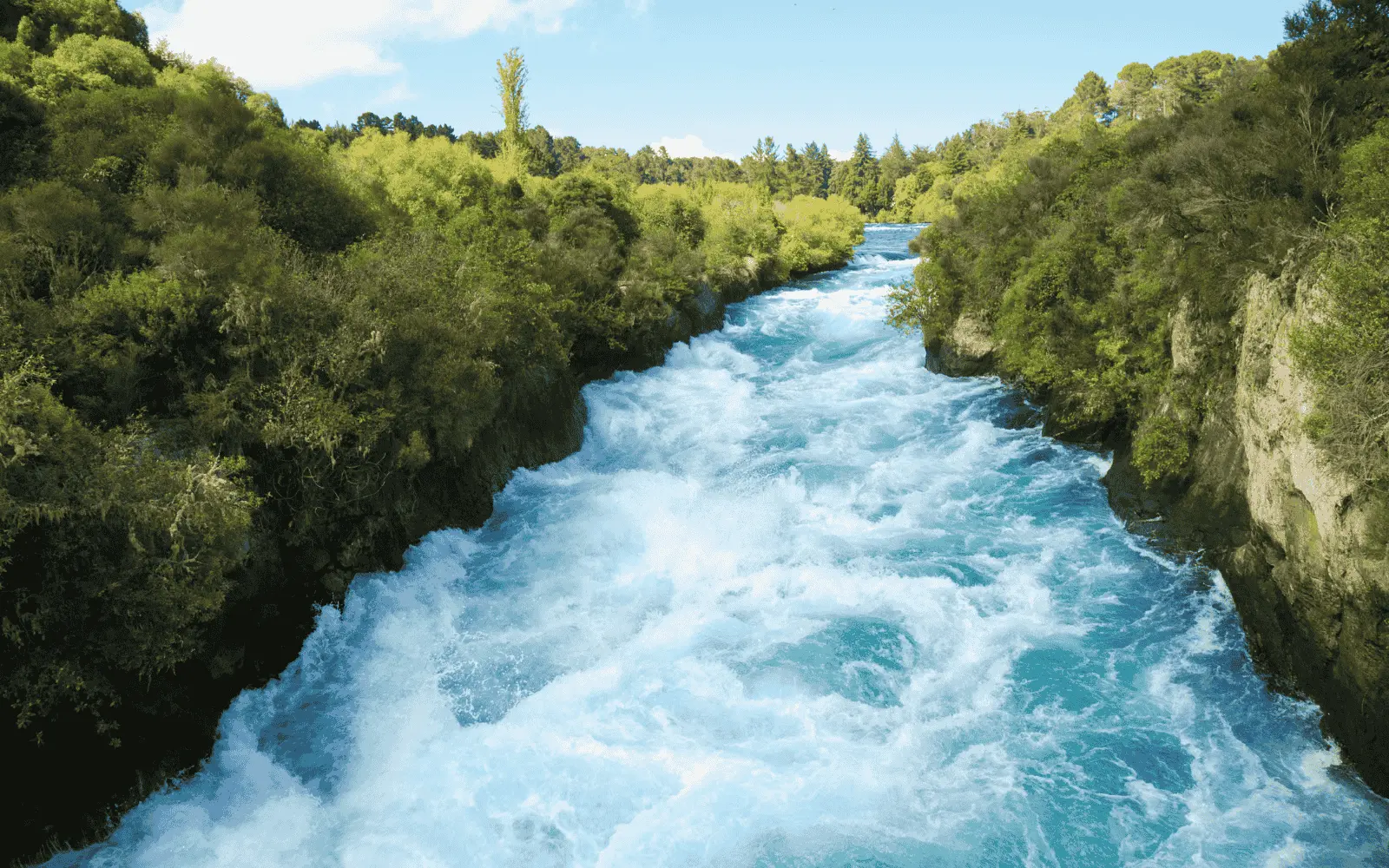
Water is the essence of life, a substance so vital that it flows through the veins of every living organism, sustains entire ecosystems, and shapes the very landscapes we inhabit. Despite its fundamental role in our existence, our relationship with water has often become one of neglect, exploitation, and misunderstanding. We treat it as a mere resource, a commodity to be consumed, manipulated, and discarded. Yet, if we pause to listen, to truly engage with water, we can rediscover the profound connections that bind us to this life-giving force.
In many cultures, especially within indigenous traditions, water is revered not only for its physical properties but also for its spiritual significance. Among the tangata whenua (indigenous Māori of Aotearoa New Zealand), water is seen as more than a natural resource - it is a living entity with its own mauri (life force), whakapapa (genealogy), wairua (spirit), and reo (voice). For us, water carries with it the stories of the past, the wisdom of tūpuna (ancestors), and the potential to shape the future. This understanding is reflected in a series of questions rooted in past, present, and future perspectives, which water asks of us, and we can ask of ourselves.
When I tell people about Te Rerenga Wai, Te Rerenga Mai (a framework for a respectful and holistic approach to water management) I suppose what I’m really trying to say is that te ao Māori (a Māori worldview) can be a useful framework for any engagement with te taiao (the natural world) and as such, it can be a lens for professionals working on infrastructure, water, energy or climate adaptation projects.
In the face of climate change - where droughts parch some regions, floods inundate others, and extreme weather events become increasingly common - our appreciation for water has never been more relevant or urgent.
Prolonged droughts will further strain already stressed drinking water and irrigation resources, increasing pressure on freshwater flows and overall water supply. Continued extraction may exacerbate these challenges. At the same time, more frequent and intense rainfall can overwhelm waterways, resulting in issues such as wastewater overflows and further intensifying the challenges we face. Given these converging pressures, it is imperative we put the health of our water at the heart of every decision we make - if we are to safeguard its life-giving qualities for generations to come.
Recently, I shared Te Rerenga Wai, Te Rerenga Mai at Ozwater 2025 in Adelaide. Regardless of your field or discipline, the framework offers a way to think about our interaction with natural resources – and I think that is worth sharing beyond the water industry.
The framework invites people to explore their connection with water through six reflective questions, to foster a deeper understanding and respect for water’s mauri and its role in all life forms. We can also consider these questions in relation to our use of other natural resources.
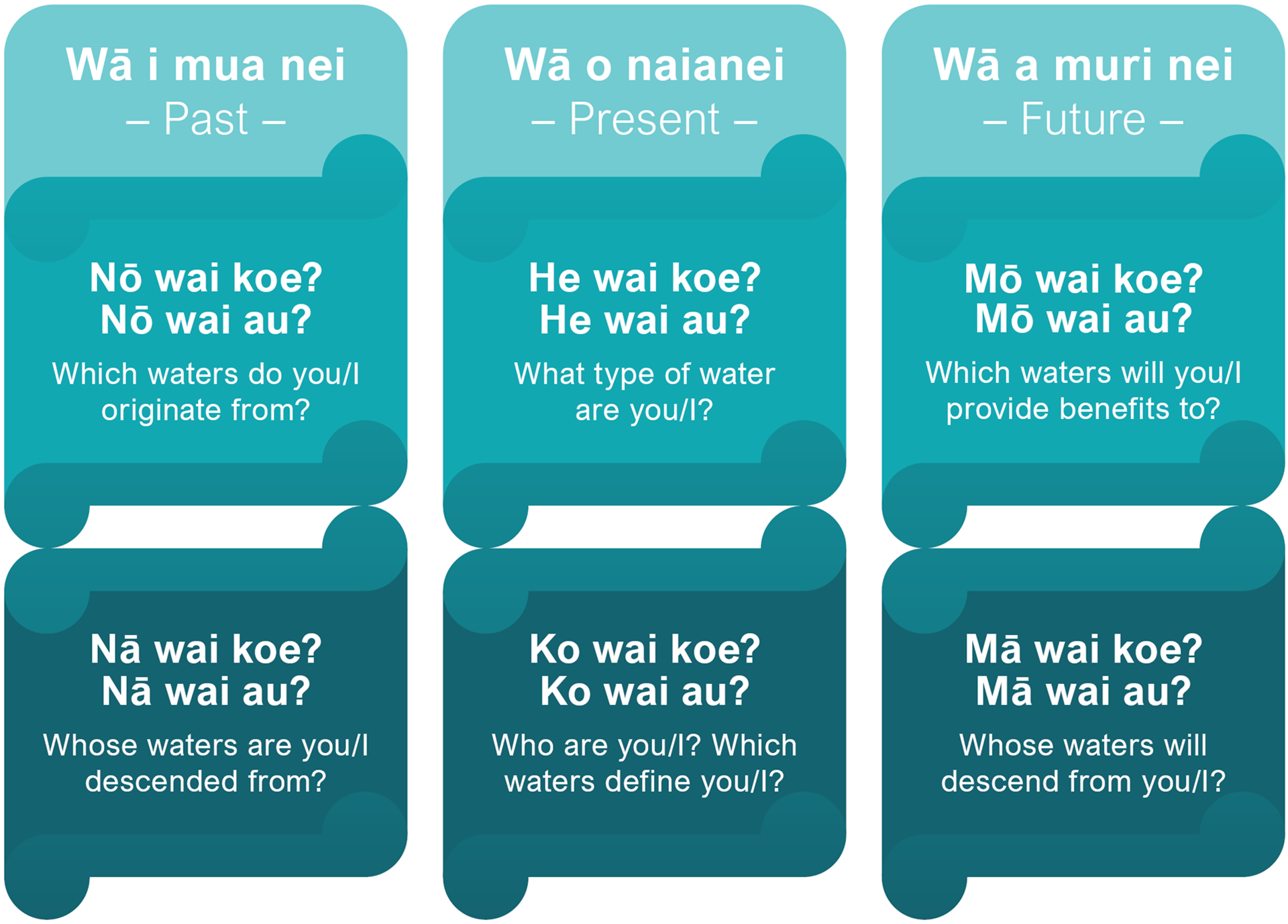
Nō wai koe? Nō wai au?
From which waters do you originate? From which waters do I originate?
This question asks us to reflect on the waters from which we come, not only in a biological sense but also in terms of ancestral connections and the ecosystems that sustain us.
In urbanised societies, the connection to water may be distant. By answering this question, we reflect on the waters that sustain us, the state of those waters today, and how we can better protect them.
Nā wai koe? Nā wai au?
Whose waters are you descended from? Whose waters am I descended from?
This question examines the lineage of water users and water itself, tracing the journey of water to better understand the processes and relationships that have influenced it over time. It emphasises that water possesses its own whakapapa. Just as we inherit characteristics, water carries the influence of environments it passes through. Understanding water’s history deepens our sense of responsibility as kaitiaki (guardians).
He wai koe? He wai au?
What type of water are you? What type of water am I?
This metaphorical question invites us to consider the present condition and quality of water, as well as to examine our attitudes and actions regarding our relationship with it. Water can take many forms, and humans can also embody different qualities that impact the world around them. Are you adaptable like a flowing river? Or stagnant like a polluted pond? This self-reflection encourages us to strive to be like waiora (pure and healthy water).
Ko wai koe? Ko wai au?
Who are you? Who am I? Which waters define you? Which waters define me?
This question connects water with identity. In Māori culture, water is tied to place and defines who we are. The rivers, lakes and oceans we live near shape our identity and are central to our stories. This drives a sense of responsibility for preserving the waters that define us.
Mā wai koe? Mā wai au?
Whose waters will descend from you? Whose waters will descend from me?
This question asks us to consider the legacy we will leave behind. Our actions today shape the water that our mokopuna will inherit. We must ensure we pass safe, clean, healthy water to those who come after us. This extends beyond literal waters to the metaphorical impact of our choices and behaviours.
Mō wai koe? Mō wai au?
Which waters will you provide benefits to? Which waters will I provide benefits to?
This question emphasises reciprocity. Water gives life, and in turn, we must give back to the waters that sustain us. In Māori culture, this is expressed through acts of care, protection and gratitude for water. Whether through conservation efforts, reducing pollution, or participating in rituals that honour water’s life force, we are reminded that our relationship with water must be one of mutual respect and exchange.
Whether you look at this as a framework for water, or a way of thinking about the use of other resources like soil, sunlight or fresh air, the questions encourage you to reflect on your connection to te taiao and your responsibilities as a steward for future generations.
In a world facing unprecedented environmental challenges, and as the impacts of climate change become ever-more pronounced, the need for this dialogue and looking to the future, has never been more urgent. Now more than ever, it is essential to recognise water’s central role: not merely as a resource to be managed, but as a taonga (treasure) that underpins the well-being of people and planet.
Finally, it’s worth noting that to be highly effective when working with indigenous people, you need to be anchored in your understanding of the culture and language of the people. In the absence of that knowledge, indigenous people and cultures tend to be de-prioritised or under-represented.
An indigenous worldview offers profound insights into how we understand and relate to the world around us. I invite you to embrace this perspective and explore how it can shape and enrich your professional practice.
At times, we must step into the turbulent confluence where different currents collide - it's in this space of tension and possibility that new potential can emerge.
E rua ngā awa, engari kia whakakotahi rāua, kia kaha ake ai
Two rivers, when joined are stronger