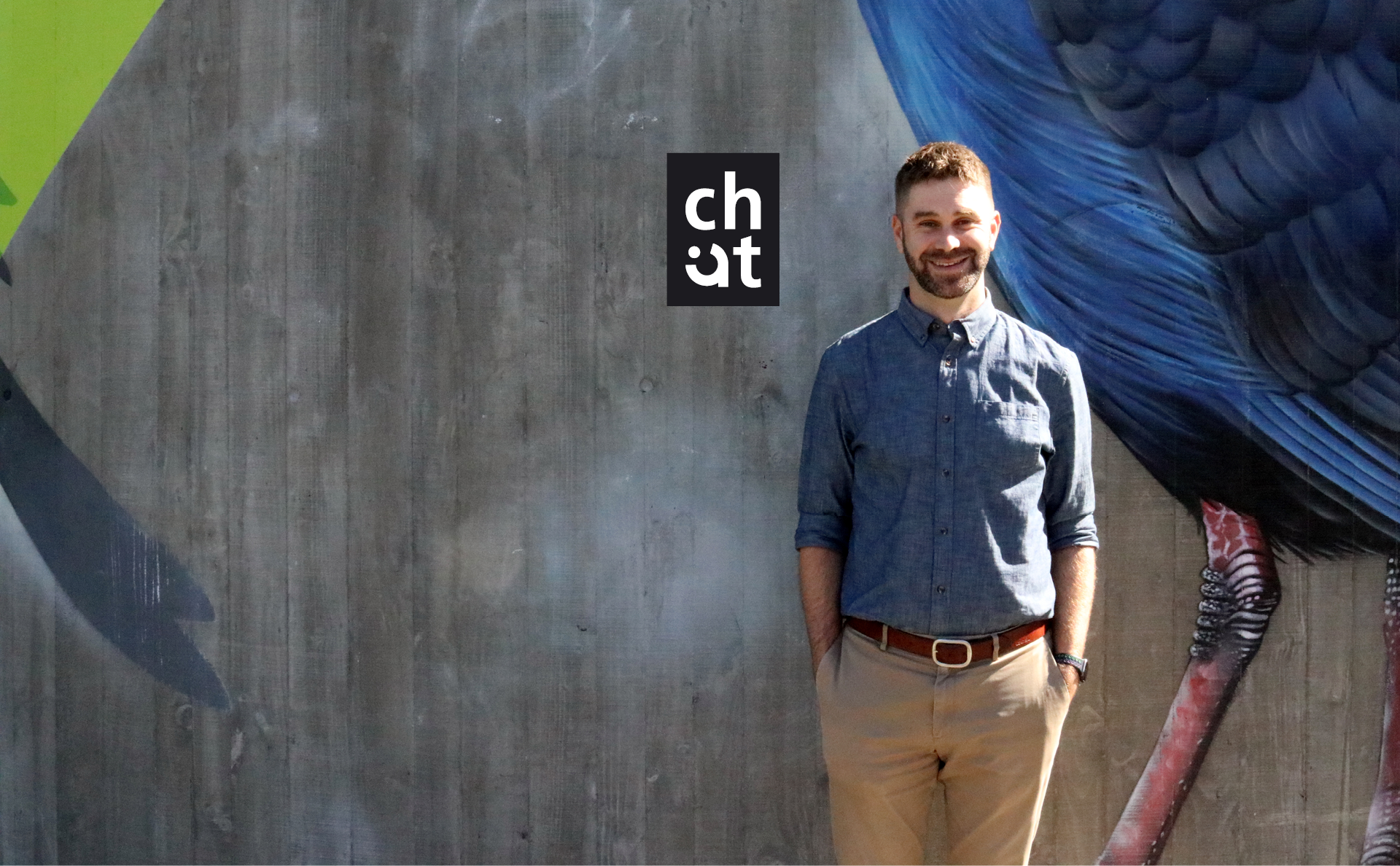
As a part of a series of stories profiling people of influence from around Beca, we asked Charlie McBroom – Manager of our Northern Civil Structures team – to tell us about his career journey and life outside of work.
Can you tell me a bit about what you do in your current role at Beca?
I’m the Section Manager for the bridges team here in Auckland, so I manage a team of more than 50 engineers. I’m a bridge engineer at heart, so I still do a lot of analysis and checks, and I help train and mentor young engineers in the company.
I facilitate and lead the yearly two-day training for all our second year structures grads in the company which is a good opportunity to meet all the different grads, support their growth, help them with their career – and also helping them understand what it actually is to be an engineer.
So what do you tell those grads about what it means to be an engineer?
Engineering, if you boil it down, is about serving communities. The technical stuff is important of course, but I think looking at it through the lens of service helps people understand the responsibility, it puts more weight on it. If you don’t do the job that’s been asked of you, that could hurt a community. But if you’re able to fix a problem – or as a bridge engineer, give people more freedom of movement for example – your work can really uplift the community and open up opportunities for them.
I think people sometimes think of engineers as people locked away in rooms, sitting on computers doing calculations all day. But engineers are actually at the forward-facing part of the science world in the sense that they’re the ones taking what researchers and academics are doing and putting it to use in real life.
I hear you’ve got an American accent – where did you grow up?
Yes, I was born and raised in the US. Born in Tennessee, but grew up mostly in Kentucky – the land of bourbon and horses. It’s a beautiful state, but very landlocked. You have to drive about eight hours to get to a beach.
Kentucky is considered a ‘flyover state’ – most people are probably not going to visit Kentucky if they were to travel to the US. But it’s a beautiful state with beautiful people. My experience growing up there really shaped who I am and the person I still wish to be.
When you were a child, what did you want to be when you grew up?
I was all over the place when I was growing up – I wanted to be a Disney animator to start off with. I also considered mechanical engineering as I had family who did that.
I was also really big into the music programmes at my high school, so I seriously considered going into jazz. I played the bass, and also the tuba and sousaphone in the marching band. But my now-wife, then-girlfriend, convinced me that music is a very good hobby… I still play guitar, a little bit of piano, and paint so she was probably right. Just don’t mention it to her and give her that satisfaction.
Where did you start your engineering career?
I started my career on the east coast of the US, in Maryland and Washington, DC . It was during the Global Financial Crisis, when a lot of companies were getting rid of people. So I applied for roles all over the US and was very lucky at one of the places I walked into and gave my resume – they said we need an inspector, and I said, “done!”
I did a lot of inspections early in my career, inspecting bridges on military facilities across the US. That’s a very different type of inspection because usually when you inspect a bridge and see some concrete falling off, you think “that’s deterioration”… But on these training grounds, you realise “oh, no, that’s from a military shell hitting the bridge”. It definitely makes you step a little more lightly as you’re going around the bridges!
I eventually moved into more analysis and design work. That’s what I love because it allows me plenty of opportunities to solve different problems, from different truss bridges we did along the Mississippi River to some of the bigger design build projects I did when I was in Kentucky and in Virginia.
What’s the most rewarding project you’ve worked on?
That’s kind of like naming a favourite child!
We do a lot of work in Northland, where there can be limited budgets and limited resources so doing a little can mean a lot. Working with the community there to figure out what we can do to positively influence the region is always well received, so that’s very rewarding.
You’re based in Auckland now. Did you always want to live overseas?
My partner studied International Studies, so it was always our plan to live overseas after we graduated from university. Some serious family health issues meant staying in the US longer than we’d planned. We had to do a lot of hard caregiving during that time, caring for them as well as raising our two boys.
That’s definitely made me more empathetic towards other people dealing with difficult situations, having the language to talk about it with others going through something similar. It makes you realise that while work is an important part of our life, it’s not the most important thing.
It wasn’t until the pandemic that we started really considering moving overseas again, and New Zealand popped up as a country with opportunities for both my wife and me. I applied to Beca right after Cyclone Gabrielle in 2023, so the country was looking for engineers to help with recovery and rebuilding. So I brought myself, my wife and our three kids over and it turned out to be a very, very wise decision.
How does engineering work in New Zealand compare to the US?
Everything is at such a large scale in the US, which brings a lot of standardised programmes, codes and manuals – it can be very prescriptive. Here in New Zealand, there’s still that same level of excellence and standards, but I find engineers tend to have a deeper technical understanding of things because they have to dive into problems more here… For example, a software tool that might cater to something in the US might not cater to New Zealand because of how small the population is, so engineers here need a deeper level of understanding of the mechanics and technical nature of things.
How has your family settled into Kiwi life?
My wife was a big proponent of moving overseas, and she’s really enjoying it here. I have a six-year-old, a nine-year-old and an 11-year-old, and they love the New Zealand school system. There’s a lot more freedom of play than at school in the US.
I think when you move as a family, it gives you an opportunity to do something for the first time as a group. As the adult, you’re usually the one who’s done everything before and showing the kids. But in a new place, you’re exploring and learning and experiencing things for the first time together. And there are many times when the kids are actually teaching us.
What are some of those things you’ve learnt together?
A lot of it comes with language, our kids’ vocabulary is becoming very Kiwi. When we first got here, they’d say something like “togs” and I would say, “I don’t know what that means…” Or “gumboots”… Those are just not terms I knew. So they would say, oh in the US, it’s like a bathing suit or, you know, rain boots.
So yeah, we’re learning together every day and really enjoying the Kiwi lifestyle. It’s been a very good move for us.