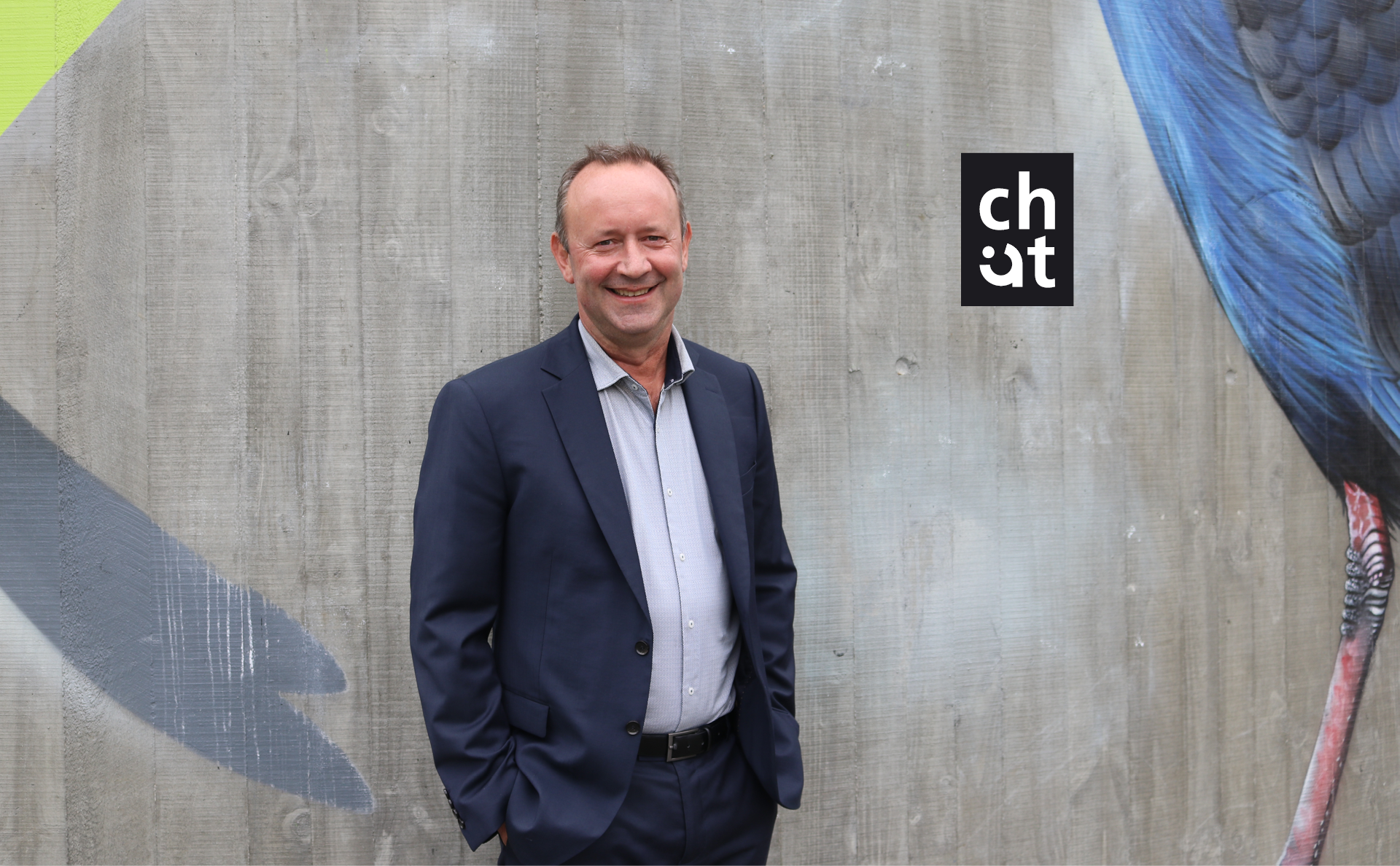
As a part of a series of stories profiling people of influence from around Beca, we asked Northern Regional Manager Harley James to tell us about his career journey and life outside of work.
Tell us a bit about your career so far. How did you end up here at Beca?
I joined the Air Force straight out of school at 17 and ended up doing 22 years there.
Towards the end of that time, the Air Force contracted Beca to undertake mission system software development on the P-3K2 Orion aircraft. I got to know the people at Beca really well and the two organisations formed a very integrated team. And Beca always let us win the sporting challeges which was a good move.
When I left the Air Force I ran a custom motorcycle business for a year. The day I left that business I received a call from the GM of Beca Applied Technologies, inviting me for a chat. It was a very good conversation and two days later I had a job with Beca. On the Tuesday I was in Australia doing work for Beca. What a whirlwind – that was 13 years ago.
What made you choose the Air Force?
I come from small town New Zealand. I grew up in Carterton in a dairy farming community, with not too much exposure to the city, university or anything like that. The Air Force always had a positive connotation in the community, so when the opportunity came to join, I thought, well I could go to university, but I want to earn some money while I learn. (And if I saved my money, within 18 months I could have a V8 Commodore!).
What kind of work did you do in the Air Force?
I joined as an avionics technician and worked on cool things like Skyhawks and Aermacchis. After eight years I joined the engineering officer branch, which is more akin to engineering management and leadership.
The highlights of my Air Force career are probably the maintenance flight commander roles, and I was lucky enough to get two of them, on 3 Sqn with the Iroquois and 5 Sqn with the Orions.
Tell us more about what you did between leaving the Air Force and joining Beca
It was a real challenge making the decision to leave Defence, having not been out in the ‘real world’ and having had that 22-year security blanket. Working with contractors like Beca, CAE and Boeing gave me some great insights. I ended up working with a coach whose advice was to simply get out of the Air Force and see what happens. It was good advice, a bit hard to swallow, but it certainly helped me get clarity about what I wanted to do next – it gave me a completely new focus.
I had always wanted to understand more about the commercial elements of business because we were essentially managing budgets in the Air Force. I wanted to learn about running a business and so I lined that up with another interest, motorcycles.
I found a motorcycle business for sale in Whakatāne called ‘Bat Out of Hell’. I jumped in the car one afternoon, drove over there and surprised them. It was pretty cool, they were building custom Choppers and importing a lot of Harley Davidsons, plus they had mechanics doing maintenance and repairs. I decided to press on with that and get into my own business. Probably the most intense learning period of my life!
What kind of work did you do at Beca before your current role?
I joined Beca as a Senior Systems Engineer. I did Systems Engineering work for clients like NZDF (including a P3 Orion project at Whenuapai), KiwiRail, CAA and Ventia. I led the team at Whenuapai, became a Section Manager and then General Manager of Beca Applied Technologies. That was an exciting role because you do feel very empowered to make decisions and support the team. I think it is important to set a clear strategy that all the team can see and pursue, which helps with focus and growth. That team is now doing some amazing projects across the aviation, maritime and security space across New Zealand and Australia – and world-leading when you talk about helping certify pilotless aircraft.
Tell us about your current role as Northern Regional Manager. How do you describe it?
Its massive, and awesome. After six months in the role, I am still learning a lot about Beca in this region. The somewhat unique lens of looking across all our clients, markets and capabilities means you can see quite a lot of opportunity to improve our performance as a collective.
But to break it down, the first is, you’re representing our people who work in the region, which covers Te Tai Tokerau (Northland) and Tāmaki Makaurau (Auckland). Bringing the broad high level view, you’re looking to improve the welfare, support and engagement of our people in the region. The second thing is you represent Beca externally, particularly at key events in the region and engaging with clients and partners. The third part is having that overarching view of business operations and performance in the region and making sure we’re engaging with clients, listening and responding to client feedback. And the fourth part is making sure we’re on track with our strategic plan.
In short, it’s about coordinating all the activities in the region to bring better outcomes for our clients and our people. The most rewarding part is seeing individual and project successes and the energy that comes from those. I like to support people to be better, believe in themselves, and help them grow and succeed – that’s where I get my buzz.
What opportunities are coming up that you’re excited about?
We have an opportunity to help shape the future of the Auckland region by bringing people together across our industry in partnership with community, iwi, government and the private sector. By taking a strategic and long-term approach to our largest city, we can collectively influence New Zealand’s future too. There is so much change and opportunity across the city, region, New Zealand and the globe at the moment that if we get a few strategies right and position ourselves with the right partners, we can truly help to positively transform Auckland and the North.
Why do you think Beca is a great place to work?
We are caring, flexible and dynamic as an organisation. I’ve had an amazing career in Beca. I really enjoy challenging my teams and myself to do new and exciting stuff. I have always been excited about something on the horizon with Beca, be it an awesome project opportunity, the team pulling off an impressive project or celebrating a win. A large organisation like ours also provides fantastic career opportunities. I was at a 30-year celebration for one of our executives recently where he commented that every 5 to 7 years it’s quite good to reinvent yourself. I feel that I’m in this category.
What were you into as a kid? What did you want to be?
Growing up on a farm, I was into a lot of motorbike riding, trail riding, adventure riding and motocross. I wanted to be a Formula 1 or rally driver when I was young – and I’m not giving up, I still want to be one.
Up until last year I had my own rallycross championship on our lifestyle block on the outskirts of Auckland. I’ve enjoyed a bit of adrenaline sport throughout my life, which is probably why I ride an electric unicycle to work now. It’s a great source of everyday thrill.
Tell us more about the lifestyle block
I lived there for about 11 years. I bought it as a 25-acre bare block of land. When I heard how much it was going to cost to do the earthworks, I decided to buy a digger and do it myself. Then, after the house was finished, I built the farm around it. I divided it up into 11 paddocks and ran beef. The herd was about 45 head at its largest. And then, since I had the digger and tractor, I built my own motocross and paddock racing tracks.
Part of the reason for moving from the farm to town was so Jules and I could see more of our kids. They are young adults now and were getting tired of having to drive so far to see me. Now that my partner and I have a house close to the city with a pool, we seem to be living in more of a train station!
How would your friends describe you?
I think they would describe me as someone who likes to try new things or have a crack at just about anything. That earthworks for example, it took me six months to do that on the lifestyle block – 3500 cubic metres. My mates came to help with truck driving while I loaded them up. And they’d say, “I don’t think many others would have taken this on!”
What do you like to do in your spare time?
Lots of things. I’m really interested in the future of cryptocurrency and believe before long we will all have a wallet or two on our phones. I’ve spent some time researching, trading and spot holding. I just started developing some trading bots using AI. You gotta love what AI can do.
I walk our newest family member a lot, wee Bailey, she’s a Spoodle and yes, they are needy. Once I thought it would be fun to shave a lightning bolt in her fur, and then I doubled down by dyeing it bright orange, which looked cool and it was a great conversation starter at the dog park. It backfired a bit though, because no-one else in the house would take her for walks – something about too embarrassing!
We go camping as a family every year, and I always like to bring some form of new challenge. So this year I bought a flying fish – look it up online, it’s hilarious fun! It’s an inflatable that you tow behind the boat, that flies. It’s terrifying to ride but nobody got hurt and crikey, do the kids have some good holiday stories.
The new Colin Dale motorsport park out by the airport looks really interesting. While it is an amazing go-kart track, apparently they are opening it up to scooter and electric unicycle racing. I’ll be taking a good look at that!
How did you decide on an electric unicycle as your way of getting to work?
Well, you could say I took a systems engineering approach to it. I was moving into the city and I was going to have a much shorter commute. So I wrote down a list of the things I needed it to do. I wanted to commute on it, have fun on it at the weekend, I wanted to be able to take it to a pub or to work and it not be a hassle. And these little unicycles were the thing that popped up as the best solution. Because they’re so small, you can take it to a restaurant or cafe and put it under the table. They go pretty quick which means my commute is only about 5 minutes these days, woohoo!