It’s no secret that the APAC region, and the whole world, has experienced rapid digital growth in recent years.
Increasing artificial intelligence (AI) use, always-on compute and ever-expanding needs for data storage have caused a spike in energy demand. When examined through a lens of grid constraints, water use and sustainability expectations, it’s little wonder that data centre energy consumption has become a focal point in discussions of sustainability, technological advancement, renewable energy sources and more.Finding solutions to multifaceted issues such as this requires multidisciplinary expertise. Beca has experience in energy, planning, water, decarbonisation and mission-critical infrastructure design. Let’s look at the facts regarding data centre energy use and discuss options to alleviate the problem.
Global and regional trends shaping data centre electricity consumption
The International Energy Agency (IEA) forecasts global data centre energy demand to grow to over 1,000 terawatt-hours (TWh) by 2030 and 1,300 TWh by 20351.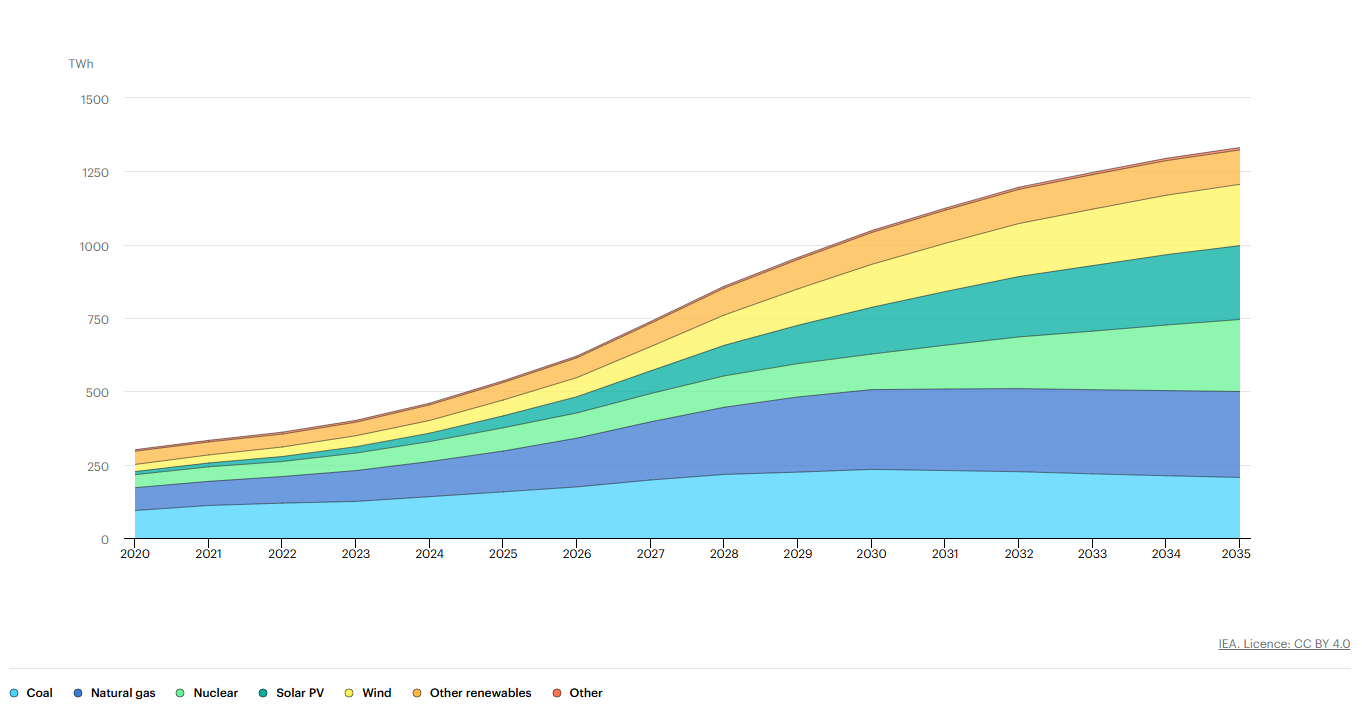
Source: IEA (2025), Sources of global electricity generation for data centres, Base Case, 2020-2035, IEA, Paris https://www.iea.org/data-and-statistics/charts/sources-of-global-electricity-generation-for-data-centres-base-case-2020-2035, Licence: CC BY 4.0
When you consider that the IEA found that data centres accounted for 1.5% of all energy generated in 2024, the massive scope of data centre power consumption becomes clear2.
By 2030, consumption could reach up to 13% of global power consumption3. Many of the factors accounting for this jump in electricity demand are well known, such as increasing needs for cloud computing and AI infrastructure. In tangible terms, this necessitates more hyperscale data centres. Demand for these huge facilities could increase by 35% a year until 2040.
Globally, there are numerous hotspots for data centre construction. Markets such as the United States, parts of Europe and Asia-Pacific are continuing to see significant data centre growth.
Emerging pressures on grids and water supplies in Australia
Numerous localities in Australia are experiencing rapid growth in hyperscale development, including the major population centres of Sydney, Melbourne and Brisbane. Expanding digital infrastructure in these urban areas has exacerbated grid constraint issues with limited substation capacity.
So far, we’ve focused largely on power usage. However, the energy sector is only one field that data centre operators impact. It’s also necessary to discuss water consumption. The computing power of AI data centres and hyperscale facilities generates a lot of heat that requires cooling. Often, this means using fresh water as a coolant.
This is at the heart of the water–energy nexus concern. Energy efficiency advances can reduce the electricity consumption of data centres. But this often means using more water. Governments and regulators must consider water consumption as well as energy usage when permitting. For example, Greater Western Water is currently reviewing 19 data centre applications with a proposed water demand equivalent to 330,000 residents annually4. This demonstrates that state planning authorities are increasingly focused on water-efficient cooling technologies and grid-ready design.
What drives energy consumption inside a data centre?
Achieving data centre energy efficiency requires knowing where each kilowatt goes inside a facility. In a traditional centre, the IT load (the servers, storage and networking hardware involved in actual computing) accounts for approximately 45% of energy used5. However, this hardware is changing. As we transition from standard CPU-led infrastructure to high-density graphics processing unit (GPU) clusters for AI training, we're seeing data centre energy consumption rates significantly outpace those of just a few years ago.Contrast the CPU- and GPU-led IT infrastructure with the overhead necessary to keep it running. This is the second major piece of the puzzle. Historically, cooling and water systems consumed approximately 38% of a facility’s energy. In Australia’s hot, humid regions, water requirements have become a significant issue, pushing designers toward closed-loop or hybrid cooling strategies that minimise consumption without impeding performance.
But “overhead” doesn’t just mean “cooling systems.” Converting power from high-voltage grid entry down to the rack isn’t a perfectly efficient process. This conversion loses some energy through uninterruptible power supply (UPS) inefficiencies and transformer heat. These losses, alongside electricity for lighting and security systems, can seem minor, but they add up. Reducing them is key to achieving a high power usage effectiveness (PUE) rating, a metric of a system’s efficiency.
By optimising every supporting system, from the CCTV to the building management system, Beca helps developers bridge the gap between legacy consumption and the ultra-efficient, AI-ready facilities of tomorrow.
The AI and cloud multiplier effect: Why energy demand is surging
AI infrastructure and cloud computing are producing a multiplier effect in data centre power demand. While traditional server racks typically operate at 5–10kW, modern GPU-heavy AI clusters are pushing densities toward 50–120kW per rack. Furthermore, hyperscale cloud platforms sustain a constant base load demand 24/7.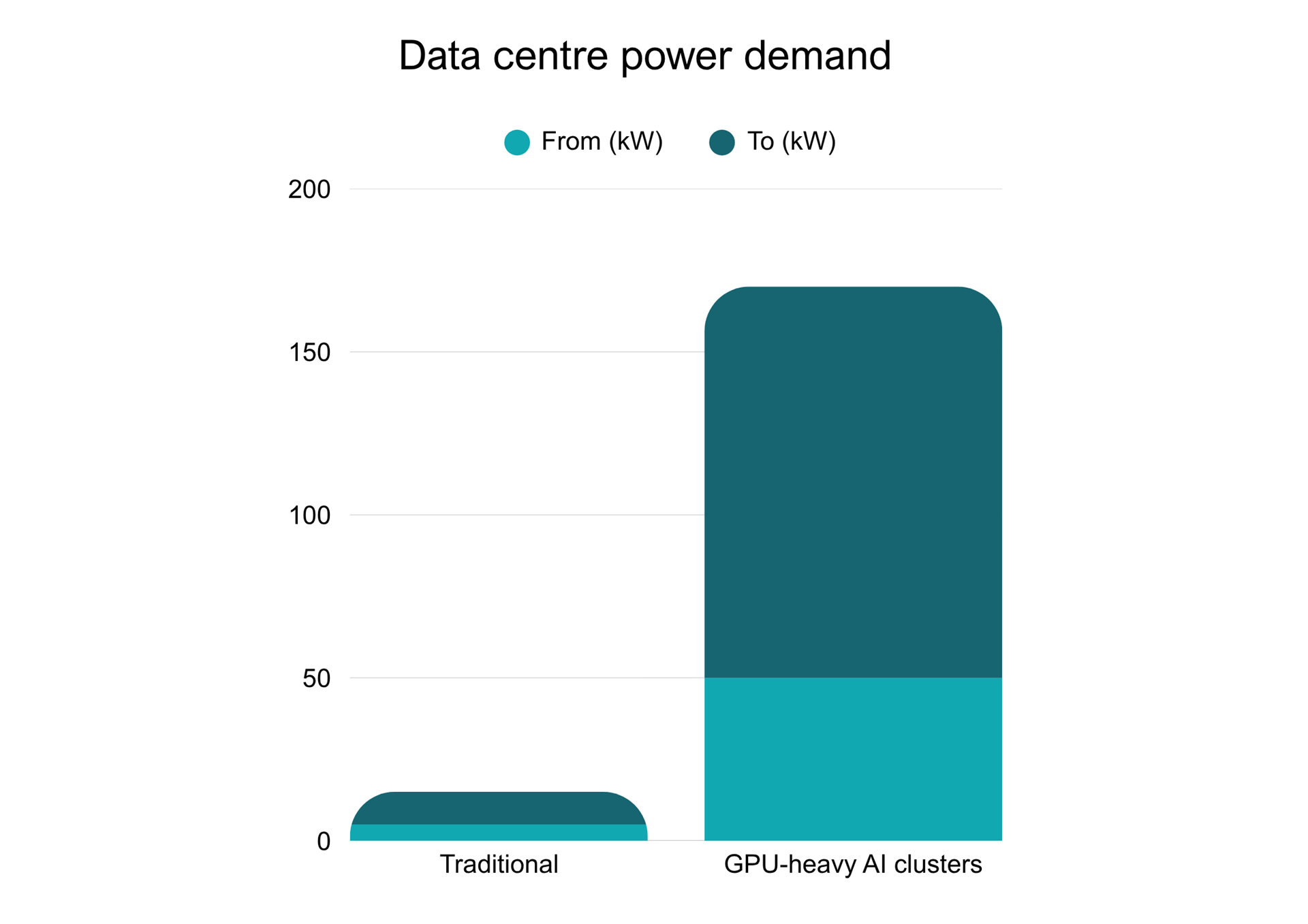
Given this, it’s difficult to conclude that standard air-cooling will be sufficient over the long term. Designers and engineers are increasingly adopting liquid-ready designs. However, doing this has effects beyond cooling. These newer designs require higher embodied carbon considerations for specialised infrastructure, such as massive UPS systems and high-capacity chillers, to manage the concentrated thermal loads.
Grid impacts: How high demand shapes local electricity infrastructure
It’s not an exaggeration to say the rapid build-out of data centres has the potential to fundamentally reshape Australia’s energy landscape. Perhaps this is already happening.A single large-scale facility can require between 40MW and 100MW+, a load comparable to an entire regional town. This creates timeline tension; data centre developers may hope and plan to build a new facility in as little as 18 months. However, major grid upgrades or substation augmentations can take years to complete.
At Beca, we recognise the frustration this can cause. That’s why we built our framework of Origin–Plan–Develop–Design–Operate on a foundation of early, holistic planning. Without early feasibility and grid-connection studies, data centre projects risk hitting approval bottlenecks as networks struggle to cope with regional load spikes and peak-period pressure.
Beyond electricity, land and water availability are also critical considerations. The earlier example of Greater Western Water demonstrates how data centre water usage projections can conflict with the needs of hundreds of thousands of residents. But by integrating grid and planning strategies early, we help our clients map these constraints and find firming capacity through solutions such as on-site storage or microgrids, which eases the burden on the wider network.
Best practices for energy-efficient and optimised data centre operation
Treating efficiency as just another metric is unlikely to breed success. However, when companies approach efficiency as an opportunity to develop a competitive advantage, they can thrive.Leading hyperscalers such as Google have set a high bar, reducing their fleetwide PUE from 1.21 in 2008 to a remarkable 1.09 in 20257. A PUE as close to 1.0 is the ideal, as that would demonstrate 100% of the energy is going to IT uses, so 1.09 is a high bar. Achieving this requires a combination of high-efficiency mechanical design and machine-learning optimisation that enables dynamically tuning cooling systems in real-time. For modern builds, Beca targets PUE ranges of 1.1–1.2. This often requires specialised strategies like free cooling or modular cooling blocks that scale alongside AI deployments.
On the power side, it’s possible to make major efficiency gains by reducing conversion losses. High-efficiency UPS systems can drastically reduce wasted energy. However, advanced hardware isn’t enough on its own to achieve major energy savings. For instance, incorporating computational fluid dynamics modelling can prevent thermal short circuits and high-density AI racks from overwhelming the facility's thermal envelope. Beca’s heritage in seismic resilience and System + System helps developers employ efficient systems that are also fault-tolerant, minimising the single points of failure that can derail a mission-critical operation.
Renewable energy and decarbonisation pathways
Energy efficiency is a worthy goal, no matter the energy source. But efficiencies alone won’t sufficiently address high greenhouse gas emissions, nor will they confer the other benefits clean energy generation can provide; specifically, cheaper electricity. All this makes decarbonisation an important objective to pursue directly and indirectly.Decarbonising a data centre requires looking at the meter and at the materials used. Power purchase agreements (PPAs) are useful tools to reach 24/7 carbon-free energy goals, but true net-zero operations involve a lifecycle approach. This includes conducting lifecycle assessments on structural materials and using modular, prefabricated MEP systems to reduce construction waste.
One of the most incredible opportunities for cost saving and decarbonisation is heat recovery. In areas where the climate and infrastructure allow for it, it’s possible to redirect waste heat from servers into district heating networks or neighbouring industrial facilities. This can turn an energy liability into a community asset.
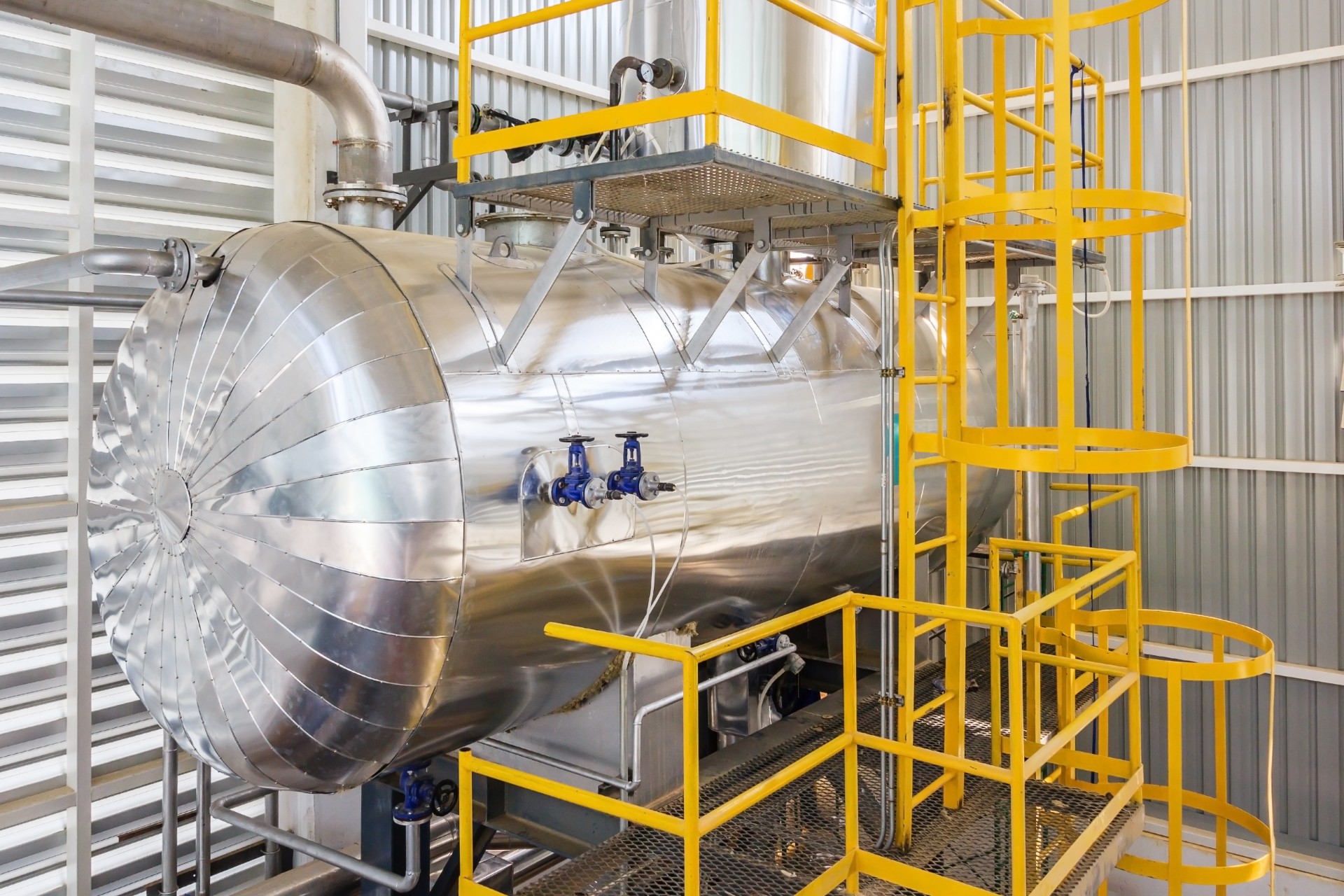
Beca is committed to this transition, with our own 32% carbon reduction target by 2030 underpinning the advice we give our clients. Whether through on-site solar PV, integrated battery energy storage systems or exploring low-carbon materials, we can weave sustainability considerations into the very fabric of data centre design.
What developers and OEMs should prioritise next
As we navigate this surge in digital, cloud and AI infrastructure construction, the path forward requires deeper collaboration between developers, OEMs and policymakers. Here’s what this might look like:- For developers: Consider grid and water feasibility as early as possible. Moving toward modular, liquid-ready designs is essential for scaling up to meet AI-ready rack densities without massive retrofits.
- For OEMs: Producing hardware that integrates with advanced cooling standards will be hugely important. It will be necessary to co-manage the thermal effects of the next generation of GPUs with facility operators to avoid overstressing mechanical systems.
- For policymakers: There is an urgent need for national frameworks that harmonise energy, water and land-use planning. Coordinated infrastructure preparation will be key to facilitating data centre growth that doesn't come at the expense of local communities, ecosystems and even the world at large.
By turning these complex technical challenges into practical, reliable solutions, Beca can help all stakeholders build the efficient digital infrastructure on which our future relies.
Building sustainable, resilient, energy-efficient data centres
While there will always be economic concerns, the next generation of data centres are poised to serve too many purposes to be unnecessary. And while they may cause or exacerbate different problems, by designing and constructing them to be as efficient and dependable as they can be, it’s possible to alleviate many of these concerns.Beca can act as a trusted, end-to-end advisor across the data centre lifecycle, helping to realise incredible outcomes with integrated planning, engineering expertise and decarbonisation insights. Get in touch to discuss sustainable, efficient and resilient data centre projects.

Sources
- IEA: Energy supply for AI
- IEA: Understanding the energy-AI nexus
- Socomec: Understanding the power consumption of data centres
- ABC News: Data centres bid to guzzle drinking water
- ResearchGate: Analysis of power consumption proportionality in data center
- IEA: Energy demand from AI
- Google: Growing the internet while reducing energy consumption