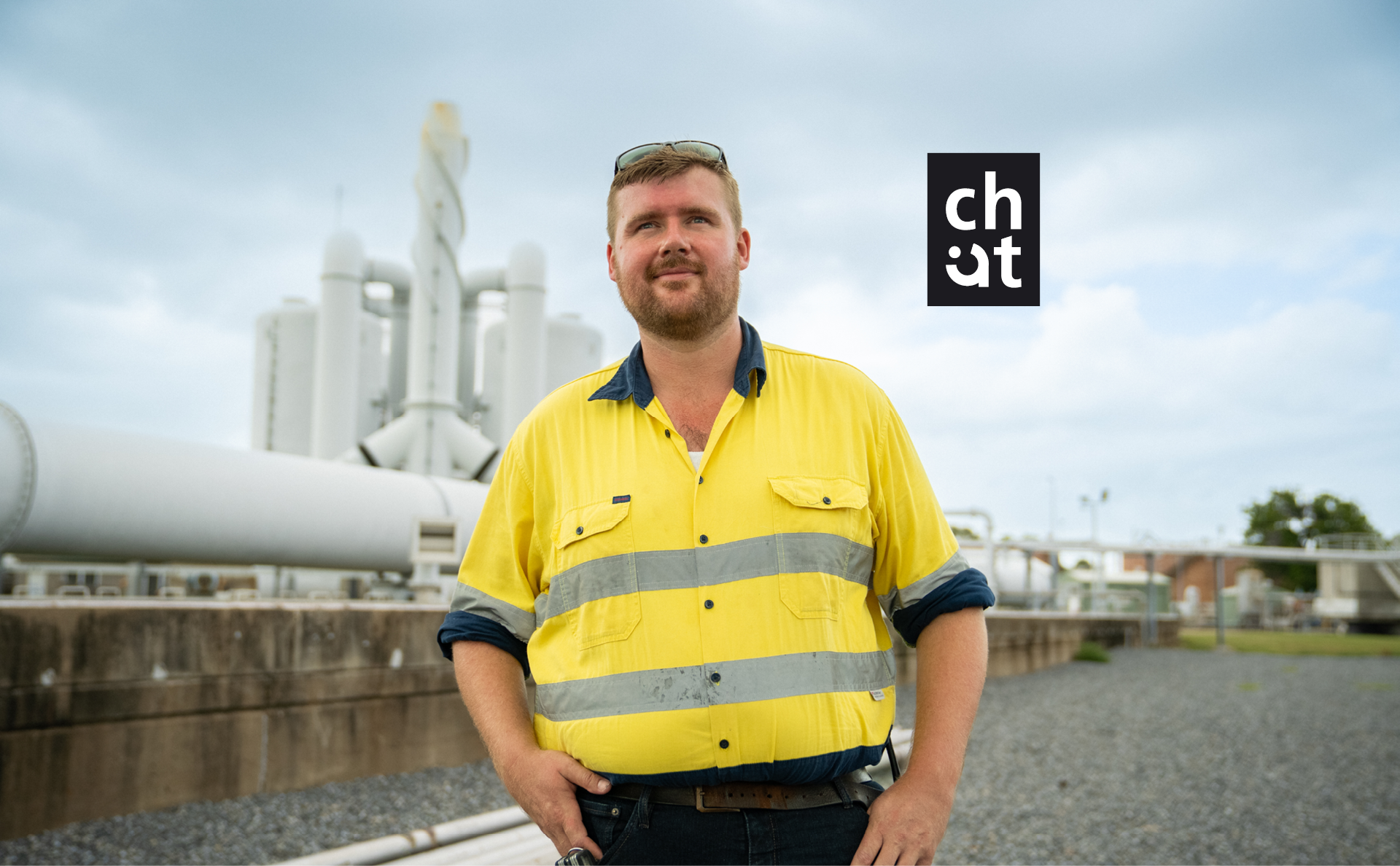
As part of a series of stories profiling people of influence from around Beca, we asked Process Engineer Nathan Dick to tell us about his career journey and life outside of work.
How long have you been with Beca HunterH2O?
It’s almost 10 years now. I started as an undergrad and have moved up from there. It all came about because one of the Principals from the office here in Newcastle was teaching a water treatment course at the university. I wandered up to the front at the end and asked if they had any work experience. Turns out it was a good question to ask – I’m still here!
Why did you decide to study engineering?
I took a bit of a convoluted path, even though I’d been interested in engineering since high school. My Dad is a real estate agent who started out in engineering and he always made it sound interesting.
I bombed out a bit in high school – I was a bit too interested in partying in my final year – and didn’t quite get the marks I needed to get into engineering. Following that, I worked in a few different jobs until I was 25, and got tired of working terrible hours. I made the decision to go to university and study environmental engineering, with the idea that I’d do something like flood modelling.
Do you think there were some advantages in starting university a bit later?
Definitely. I think having a bit of life experience gives you a leg up. There’s so much to learn about how the world works, and when you come out of school, you just don’t know what you don’t know.
To anyone in the same boat who’s thinking of applying for university after some time away from education, I’d say just do it. It’s only four years, which goes by really quickly. I did it while working at least 30 hours a week and it was hard but doable.
What kind of work did you do before?
I was in hospitality and then a taxi driver for seven years. For a good chunk of that I drove a wheelchair taxi. I got to meet some great people, some-long term clients who were very loyal. You’d take them on an outing, and you’d end up having lunch and a chat with them and taking them home again.
I had another job where I’d drive doctors around to their after-hours appointments at people’s homes. They’d usually get me to come inside with them, sort of as security. There was even a bit of medical note taking, which I am not sure was allowed but my handwriting was as bad as theirs so I doubt it got noticed! I also got quite good at triage, which is useful when you have kids and you’re wondering whether or not you should take them to a doctor!
You must have some good stories from driving taxis?
You do see and hear some interesting things on a Friday and Saturday night. Some of them I probably shouldn’t tell you about. You meet all sorts and most people are OK, but along the way you do get robbed, you get abuse hurled at you. The best thing for me was you really learn how to talk to people, to read people and understand them.
One of the weirdest experiences was driving along one night and looking out the window and realising there was a racehorse trotting alongside with its blanket on, keeping pace with the car! You just have to accept that the night is going to be weird and you just get through it.
What do you say when people ask you about your job these days? How do you describe what process engineering is?
When people ask what I do, I just say I work in water treatment. Some people are interested and some glaze over – like my wife! When we’re driving around I’ll point out water treatment plants to her, but she’s just not that interested.
It’s one of those industries where, if things are going right, no one thinks about water infrastructure. Water just comes out of the tap when you turn it on and it disappears down the drain.
In simple terms, I’d say that when you take something and turn it into something else, process engineering is what happens in the steps in between. In water treatment, you take water from a water source like a river or dam and you do something to it, to make it safe to drink. That could be removing dirt or softening it by removing minerals, or making it safe through chlorination and disinfection.
What are the most rewarding parts of your job?
I’m really fortunate that I am working across an eclectic range of things. I get to do some client relationship work with a Regional Council. I like doing investigative projects around water treatment – I actually started a PhD in microbiology but haven’t finished it. I supervise students who come into our lab to do research.
I get to go out on site to help clients operationally. Helping a client during a flooding event can be stressful but it’s also really fun and rewarding to help keep the water supply working for a community.
I travel a bit for work, both within New South Wales and interstate. You get to see a lot of the country and meet so many good people. I had the opportunity to go up to the Northern Territory and look at water treatment systems in remote Indigenous communities, which was really interesting.
I think the best thing about the job is having the technical, theoretical knowledge and then you get to go out on site and gain practical knowledge. You end up talking to operators who’ve been working in this industry for 40 years. I get to learn from their experience and work together to come up with practical solutions. It also gives you an operator focus when you’re doing design work – you’re thinking about the people who are going to interact with your design. I’m very fortunate to have been able to marry up the theoretical and the practical.
What has kept you at Beca HunterH2O?
Overall it’s the people I work with. It’s a very harmonious team, we all love what we do and you learn a lot. You’ve got access to lots of great technical people who are always happy to help you out. They’ll point you in the right direction or let you know when you haven’t gone in the right direction – which is sometimes more valuable!
Do you get to mentor younger people?
Yes, we’ve got a work experience student I’m working closely with at the moment. Also through supervising chemical engineering students from the university that come into our lab to do their research.
I’ve done some careers events at the uni too, and I tell the students that, when you’re working in water you can wake up every day feeling like you’re making a positive change in the world. I think that’s true, we’ve got a lot of municipal clients, and so you really are working for a community to make people’s lives better.
Any time I’m heading out to site I’ll take a grad. It’s really important, especially if you’re doing the design work, to get out there and see how people interact with your design.
What advice do you offer to young people who are trying to build their knowledge?
Working from home isn’t going to help you learn. Get into the office and keep your ears open. Listen out for conversations and ask questions. You learn so much just from hearing other people talk about their experience. Also take any opportunities to get out of the office – you learn so much from being onsite.
What’s life like for you in Newcastle?
I’m Newcastle born and bred. I like it because it’s not too busy, we have fantastic beaches and all my family and friends are here, so we have a big support network which is important when you have a young family.
My wife Mel and I have two kids. Henry is four and Jazzy is eight. On the weekend, I’ll usually take the kids to the beach – Jazzy is in Nippers and the kids love to swim.
Jazzy has been asking for a pet for such a long time and we had resisted. Eventually we said we’d consider it if she could keep her room tidy for 10 weeks – and she did! So we now have a very colourful little South American parrot called Macy. She’s pretty friendly, she’ll hop on your shoulder. The plan is to teach her to talk.
What do your kids think about your job?
I think my daughter has a reasonable grasp of what I do. I’ve done a bit of wastewater work as well, and so she focuses on the fact that I’ve had to deal with poo. I’ll tease her a bit and ask if she’d like me to come to her school and tell everyone all about wastewater. She says no, absolutely not!
What were you like as a kid? Did you have any other careers in mind?
I played a lot of sport. If I could have been a professional sportsperson, that would have been it. I was into rugby league, basketball, Aussie rules and swimming. Basketball would have been my pick – I played a lot of it. I was already 6 ft 2 at age 14, which was tall at the time. Not quite tall enough to play professionally though.
What are your interests outside of work?
My free time is usually focused on the kids – going to the beach or going fishing. I also got into fantasy NFL during COVID – it was a great way to keep in touch with some of my mates. We’ve started an office competition this year which has been great for office banter. We need a few more teams for next year actually, if anyone out there is keen to join us, get in touch!