Having worked in climate adaptation planning for nearly 10 years, I can say with certainty that there is no one-size-fits-all approach. However, there are a few principles that can be useful across a range of contexts – for individual assets or communities and for the public or private sector.
Adaptation plans can be driven by indigenous communities, they can be ground-up community approaches, or sometimes can be quite technocratic, individual asset-specific plans. All of these are important parts of reducing climate risks, but the process to develop these plans often differs, and you need to use the right approach in the right context. Civil Defence readiness or emergency management planning intersects with, and is complementary to adaptation planning.
Here are some common principles worth considering:
Adaptation plans are place-based
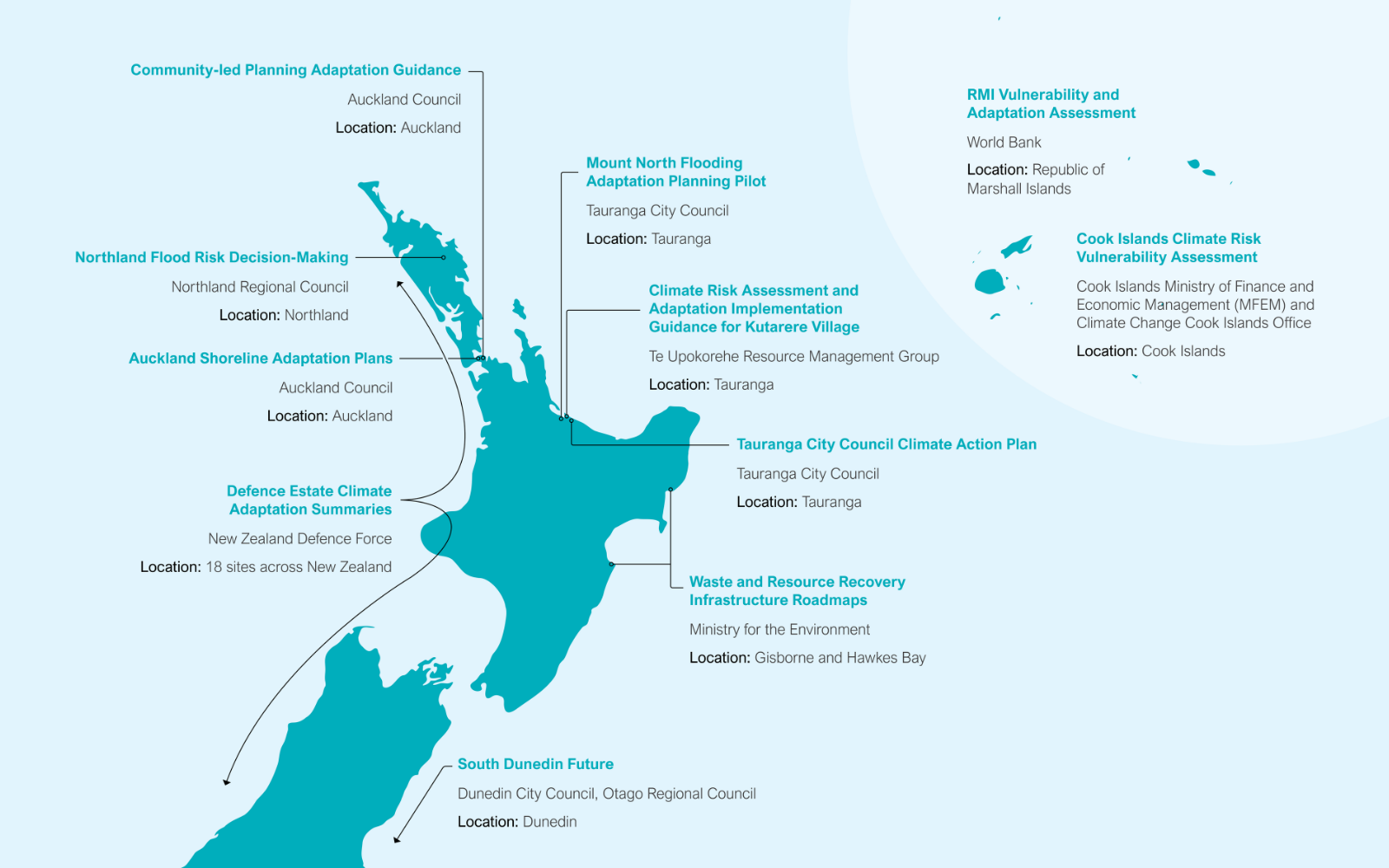
For example, when we worked with New Zealand’s Defence Estate on their Adaptation Plans, we started with Devonport Naval Base. Through that process we developed a booklet of factsheets about different options and interventions, and catalogued them based on different hazards. We thought that would be really useful as we created plans across the 17 other major camps and bases. Sometimes that booklet was useful as a jumping off point for conversations, but each location had its own unique requirements. What works on an airfield does not work for an army base, and vice versa.
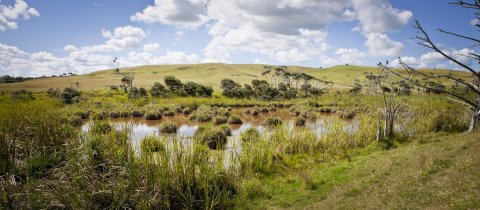
Airfields cannot have any standing water, as it attracts birds and increases the risk of birdstrike, whereas an army base will have ponds for training exercises, and these can be integrated with stormwater management. Understanding all of the nuances of each place was crucial to select the right place-based solutions to reduce climate risks.
Adaptation plans are transparent
Transparency also applies to decision-making. Be up-front: Tell people, “these are the questions we’re asking you, and this is how those questions will inform our decision-making. If we ask you to select your ‘favourite’ option, here’s what we’ll do with that information.”
For example, in South Dunedin, which is currently going through an adaptation planning process (which Beca is working on in partnership with WSP, G&T Connect and Tonkin + Taylor), we had community members put sticky dots on their favourite ‘Potential Future’ in an exercise called ‘Dotmocracy’. We made it clear that their preferences, as well as what they thought about how their lives would be different in each of the futures, would be incorporated into decision-making alongside specialist assessments. We left the dots up between sessions so that people could see how others were voting. That transparency meant people could see the range of viewpoints in their community, and how those different viewpoints will be incorporated into decision-making.

Climate Adaptation Specialist Laura Robichaux. Photo: Dunedin City Council
Adaptation plans centre on shared community values
When I talk about ‘value’, I don’t necessarily mean economic value here. With a lot of adaptation plans, you get into this paradigm of what assets, what physical places, buildings and infrastructure are at risk of climate change, and you ask yourself what to do to reduce the risk to those physical assets. Most of the time, your gut instinct is to protect them in place.
However, if you start with a values approach rather than an asset approach, you can start to understand what makes the community great, what people love about living there, and what’s necessary for that community to continue in the future.
For example, when you ask those questions, people might say, “Oh when it flooded here last time, the people from the fish and chip shop sandbagged all of the shops rather than just their own”, or, “We love that everyone says hello at the Farmers’ Market on Sunday”. Those intrinsic values can be independent of a physical place, which helps shift conversations from how we protect these assets, to how we can adapt over time and keep this community a great place to live.
In Mount Maunganui, people told us that they really like that every day feels like a holiday. They value the ability to harvest kaimoana (seafood). They like that it still has a village feel, and there are pop-up markets on the weekend. They appreciate the cultural connection to place, and that the local authority is starting to tell that story better, through wayfinding. All of those values meant that once we started talking about potential risk to property, businesses and the local economy, then we started thinking about how potential interventions affect the village feel and the holiday feel, and decentred the conversation from “I own this piece of property and I want to protect it”. It’s useful to shift things beyond getting bigger pipes and better pumps.
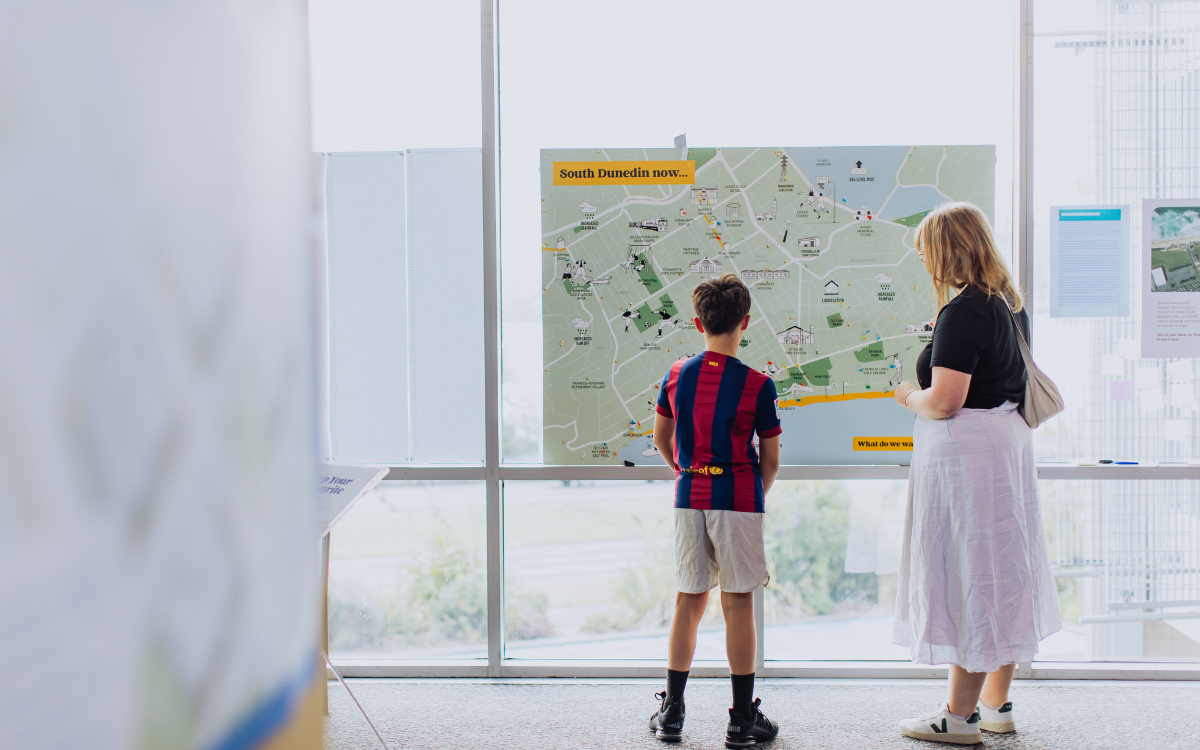
Photo: Dunedin City Council
Adaptation plans make the best use of the available information
For example in the Marshall Islands, there is a lot of data and past studies about sea level rise and the potential impacts. However, in our vulnerability assessments it was apparent through the engagement results that rising temperatures and extreme heat days could also present significant impacts. Communities in the Marshall Islands shared that an important part of their daily lives is meeting in outdoor open areas to discuss pressing issues and to work together to enhance resilience to increasing challenges.
However, these types of open-air meetings will become less possible as extreme heat forces people into shaded areas within their homes. The social cohesion traits that make remote outer atoll communities resilient to climate challenges is therefore at risk (if people can no longer spend the time in communal spaces). In this case – the most appropriate and important adaptation measure may therefore be the provision of cool, shaded community gathering places to allow social cohesion to be maintained.
These key aspects of how daily lives are changing can serve as the signals and triggers for adaptation. For example, having a signal around when numbers at communal meetings are dropping could indicate an urgent need for the cooled, community shelter.
Through these interactions, you start to identify the bits of place-based information that let us know a change is approaching and can help us develop an appropriate adaptation plan for the location.
We have also developed adaptive plans for water systems, including the Integrated Systems Plans for Dunedin City Council. Council had a robust evidence base considering how water sources, wastewater discharge and stormwater flows were likely to change over time due to climate change as well as population or behavioural changes and other factors. Working collaboratively with Dunedin City Council and other consultants, we developed an adaptive strategy for the next fifty years, stress testing it using a range of scenarios to understand if our signals would enable adaptive decision-making across a range of futures.
With either data-rich or data-sparse approaches, the key is to remain open to change, and make a plan that is based on the best available information at the time, rather than waiting for the perfect data – because we just don’t have time to waste. You then adapt your plan as you receive more data, over time.
Dr Laura Robichaux is a Climate Adaptation Specialist at Beca.

Laura Robichaux
Senior Associate - Civil Engineering