Have you ever wondered how your house or place of business receives power? Our modern life with all its amenities would be impossible without this infrastructure, though most of us seldom think about it.
So, let’s take a closer look at the main components that bring power to your home or business. These feature a grid with transmission lines and distribution networks with lines and/or cables. Along with substations, these are the infrastructure that enable our homes and industries to function.
At Beca, we’re at the forefront of the integration of renewables. We’re actively working toward zero-emission targets with our partners, aiming for a grid that’s more robust, reliable and ready for cleaner energy — for our communities now, and for generations to come.
What are transmission and distribution lines?
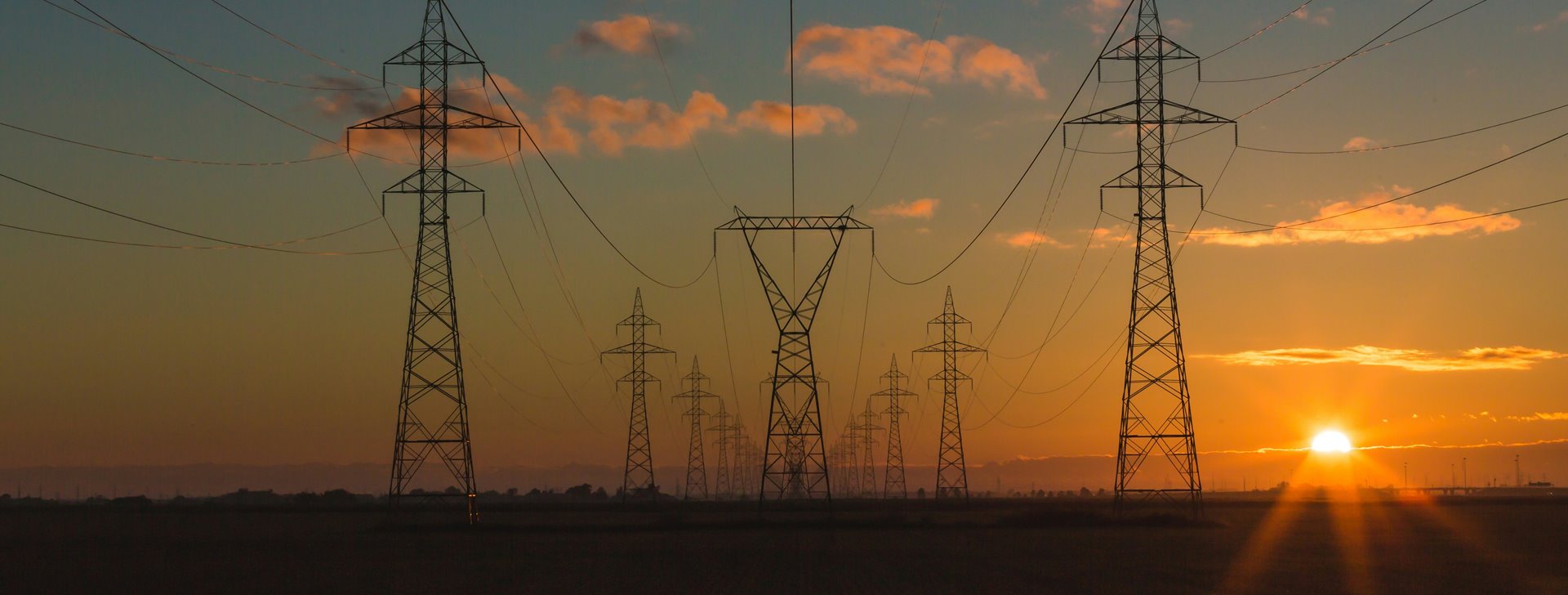
Transmission power lines are just like “the motorways” of the national electrical grid system. These high-voltage lines stretch across vast distances, delivering bulk electricity from power plants and renewable energy zones to substations. Supported by towering pylons and built for a very high voltage level — as much as 800 kV occasionally — they are indispensable to getting large amounts of electricity efficiently, safely and reliably over long distances.
Distribution power lines make up the second largest component of the electricity transport system. In this metaphor, these are the regional network's "local streets." As power pours in from the national grid’s transmission lines into the regional network’s distribution substations, distribution lines prepare to take over and deliver it to our homes, businesses and communities. Distribution lines run at a lower voltage level than transmission lines, and, together with supporting poles, underground cables and transformers, are responsible for safely and reliably delivering power to their destination.
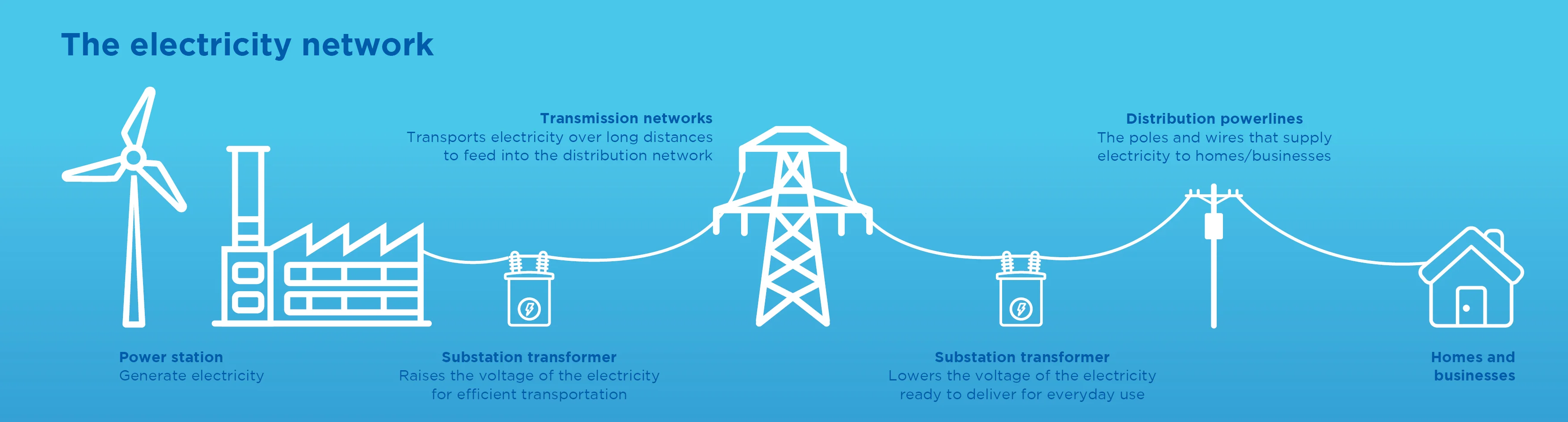 Source: Energex
Bringing balance to the grid
Modern power transmission systems also benefit from Battery Energy Storage Systems (BESS). Since the future generation of energy is expected to be intermittent energy sources like solar and wind energy, located where the renewable resource is, BESS technology can be crucial to electricity transmission systems. These devices store energy when there is excess energy and discharge it during times of high demand. They can be located where they'll be most beneficial. And, crucially, the lines need to be strong enough to balance generation and load — they act as the pivoting beam of a set of weighing scales. In essence, BESS helps in the management of supply and demand and enables the two to be in harmony at all times.
In New South Wales and Victoria, we're tackling one of today's most pressing energy issues: linking renewable energy zones to the grid. This includes addressing the issue of ageing infrastructure and constructing new transmission lines to accommodate the increasing amount of renewable energy.
However, our obligations go beyond infrastructure creation. We're also revolutionising energy distribution from power generation to consumption by modernising existing infrastructure to accommodate future needs while giving immediate advantages.
Why does all of this matter? Smarter networks and cleaner energy are what the world needs to be better prepared to confront whatever comes next. This is true whether you're turning on your lights, charging your phone or something far more important.
Our mission at Beca is to provide the energy solutions needed today while also laying the groundwork for future generations.
Why is the efficiency of distribution and transmission networks important?
Effective distribution and transmission networks not only transport power but also maintain the overall sustainability, stability and reliability of our system. To create a dependable and robust electrical system, we must overcome significant grid management challenges.

Source: Off The Grid News
The major obstacles include:
When electricity travels through conductors, it produces heat, known as ‘losses,’ as not all of the generated electricity arrives at the loads. High-voltage transmission lines can reduce energy loss over long distances to some extent, but not completely. Inductive reactance and capacitive coupling are the two most common causes of power loss in alternating current lines. These issues become more noticeable in large systems or when transferring power between distant locations.
Ageing infrastructure
The majority of today's power grid was built many years ago and was never designed to support modern energy systems. The fluctuating load and intermittent renewable energy sources are a challenge for aged transformers and substations designed to supply consistent and predictable loads. Aged components increase the risk of power system failure, resulting in more outages and higher maintenance costs.
Grid stability
Renewable energy sources like solar and wind, while vital for the energy revolution, are inherently variable. The intermittent supply these sources produce can be beyond the capacity of traditional grids. BESSs can store extra energy and release it as needed; however, to assist with any potential transmission network instability, they need to be integrated well and require modern control systems. Traditional system operation will change, and older grids may require major modifications.
Line capacity
Many existing power lines are nearing their capacity limits, especially in places with significant growth in renewable energy generation. Although upgrades to high voltage direct current (HVDC) systems increase efficiency and allow for larger loads, there are trade-offs. Overhead lines are susceptible to severe weather, but subterranean cables, while more secure, are much more expensive and technically difficult to construct. Balancing these alternatives while fulfilling expanding demand is an ongoing problem for network operators.
Driving progress with technological advancements

Source: SAAB RDS
Meeting today's electrical energy concerns requires rethinking how we develop and utilise our grids. It’s not enough to just replace obsolete infrastructure; it’s also necessary to integrate clever, creative technology that might help renewable energy grow.
Here's how we're getting it done:
- Smart grids serve as the contemporary grid's “brain”: they use digital technologies to monitor and manage power flow in real time. They react to changes in supply and demand, enhancing dependability, minimising downtime and increasing energy efficiency.
- HVDC transmission is a game-changer for delivering electricity across vast distances. It’s far more efficient than standard alternating current lines, reducing energy losses and making it easier to integrate renewable energy sources such as wind and solar into the electricity grid.
- BESS balances the grid by storing excess electricity during off-peak hours and releasing it when demand rises. This controllable energy is highly flexible in quantity and physical location, enabling it to protect grid stability while encouraging the usage of renewable energy.
- Advanced monitoring systems use sensors and IoT devices to monitor grid operation. They capture real-time data, letting operators identify problems early and arrange maintenance before they even occur. Using these technologies, we can prevent unnecessary disruptions.
- Artificial Intelligence (AI) and Machine Learning (ML) can analyse large amounts of grid data, spot patterns and predict when problems may arise. Using these methods can improve our transmission structures and the whole distribution network, resulting in fewer equipment failures and a more reliable and efficient grid.
- Underground lines provide a durable, weather-resistant alternative to overhead power lines. They stay out of sight, which improves aesthetics and they are also better suited to places prone to harsh weather.
Future directions
Smart technologies like AI and the Internet of Things (IoT) are key to the future of transmission and distribution networks. They enhance grid monitoring and management, enable problem prediction and allow for real-time adjustments.
These are some of the most prominent trends of our present and near future:
- IoT and AI integration: This will help us to better oversee and control grid operations.
- Predictive maintenance: Using AI to spot and fix problems before they cause disruptions.
- Real-time adjustments: IoT devices enable quick responses when electricity demand levels change.
- Renewable energy integration: Creating smart grid solutions to handle solar, wind and other renewable sources.
- Advanced grid solutions: Innovations that support efficient and reliable electrical power delivery as we move toward a greener future.
Powering the future together with Beca
At Beca, we’re transforming electric power networks through innovative projects and sustainable practices. With a focus on creative thinking and deep collaboration, we don’t just consult — we partner with you to deliver real-world solutions.
From solar farms and battery storage systems to wind projects, bioenergy facilities, green hydrogen initiatives and geothermal plants — we’re with you at every step as transmission and distribution lines are enhanced.
We see energy challenges as opportunities to build a greener, more resilient future. Let’s work together to achieve your net-zero goals and turn the energy transition into reality.
Contact us to learn how we can help make a lasting impact. Ignite your thinking with Beca.
Authors