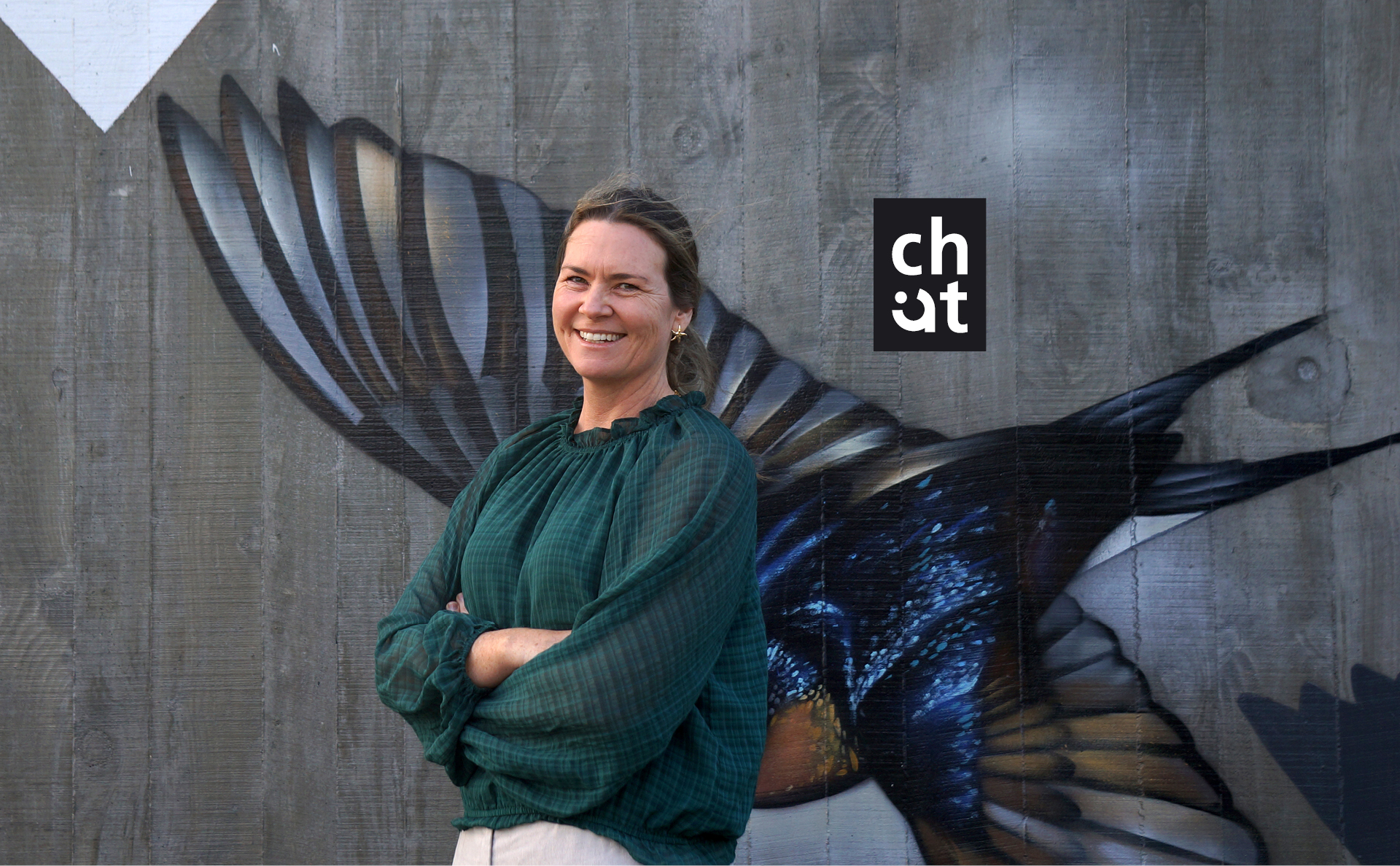
As part of a series of stories profiling people of influence from around Beca, we asked Business Director – Climate Resilience Cushla Loomb to tell us a bit about her career journey and life outside of work.
How did you decide what to study at university?
That was easy for me. I’ve known since I was about 12 years old that I would do something to do with the ocean. As a result of that, I went to Waikato University and did a combination of earth science and marine biology. I wanted a job that took me to the beach and enabled me to influence how our coasts are managed. I was always a water baby. I grew up spending all of my summers at Piha beach. Mum would literally have to drag me in from the surf just to make sure I was fed!
So it was easy for me – I just followed my passion and I’ve never regretted it.
Tell us about your career journey so far - how did you end up working in the climate resilience space?
Very early in my career as an environmental scientist/planner at Beca, I was fortunate enough to travel for project work to the Marshall Islands. I have a distinct memory of the moment the plane landed on this very narrow strip of low-lying atoll with the lagoon on one side and open ocean on the other, and hopping out of the plane and feeling very vulnerable. There was so much water and not much land!
Through our engagements with the community there and hearing the challenges they face on a daily basis and what they’d overcome, it ignited my passion for working in the climate resilience space. It was the defining moment in my career – I knew I wanted to work with communities on this big gnarly climate challenge that we are facing. And while the part I play may be quite small, I am very proud of how I have been able to use my skills and knowledge to connect people and organisations, communicate complex technical information and encourage long-term thinking in decision-making.
What are your hobbies these days?
Up until recently all of my free time was focused on my two daughters (who are now 16 and 15). But now they are getting more self-sufficient I’ve taken up a new hobby. I’ve gone back to marine biology and I now have a marine aquarium. It is a massive 500 litre tank that requires careful curation of the water chemistry to maintain my mini coral reef ecosystem. I have clownfish, tropical tangs (aka Dory), a coral banded shrimp and all sorts of coral. It’s a fascinating ecosystem - I would rather watch my reef than watch television!
When you work in the Pacific, you hear constantly that the coral reefs are changing due to changing water temperature and ocean acidification. I get a first-hand appreciation of those impacts as it plays out in my home aquarium too. You really get a sense of how delicate this ecosystem is and how even small changes in water chemistry can have significant impacts. If something goes wrong, you can see immediately how it affects the health of your reef. It’s a window to the changes we are seeing in our natural ecosystems. For me those impacts are limited to my reef - but for the Pacific Island communities I work with – any impacts to coral reef systems affect their livelihoods, food security and cultural identity/sense of place.
What’s the most rewarding thing about your job?
I used to joke that whenever I did presentations I felt like the harbinger of doom. It can be quite depressing, when you talk about climate projections. We’re definitely not tracking for the 1.5 degree goal in the Paris Agreement, and latest reports have us tracking dangerously close to 3 degrees by the end of the century. That’s a really confronting scenario. The impacts and potential damage to our way of life from warming of that level are going to be catastrophic. We already see that – every time we turn on the news there is another significant weather event making headlines. In this industry – it would be very easy to slip into a feeling of hopelessness.
However – the really rewarding part of the work I do is uncovering the social fabric and practices that make us naturally resilient. For instance, some may view Pacific Island communities that are exposed daily, to impacts of a warming climate as very vulnerable. However, our work has actually shown that these communities exhibit really high resilience through practices developed over many years, such as community water sharing arrangements, local materials stockpiling (to assist in recovery activities) and changing agricultural practices to more resilient crops. Learning from these naturally resilient people gives me hope and enables me to share practical examples of what we can do to amplify natural resilience.
Seeing these ideas turned into reality on the ground – from small scale changes such as shared community water resource plans through to larger scale adaptation measures such as nature based solutions to stabilise an eroding shoreline - that’s the most rewarding side of my role.
What’s great about doing this kind of work at Beca?
The beauty of Beca is we have so many brilliant people. When I brought together our climate resilience team, they came from all different parts of Beca. We have water specialists doing flood modelling and drought modelling; communication and engagement specialists who educate communities; social outcomes people who do vulnerability assessments; and amazing climate adaptation specialists developing flexible and workable plans alongside of our clients. I love working in an organisation where we have all of those great specialists to work with.
Climate change is a gnarly challenge, and I truly believe we can only address it by pulling together all of our collective knowledge; our diversity of cultures, backgrounds, perspective and experience, to figure out practical solutions - and turn them into real outcomes.
What do you enjoy most about living and working in Tauranga?
I live at Matua, right by the harbour, but not close enough that I’m in a flood zone (because I know too much!)
I’ve worked in three different Beca offices (Auckland, Hamilton and Tauranga). The great thing about being in a regional office rather than head office is you get to know the breadth and depth of what Beca does, because you’re part of a smaller team and you tend to socialise more across the different disciplines. Its also a bit more casual in the regions (closer to Xmas we have boardshorts Fridays).
I love working in our Tauranga office as a lot of our Pacific specialists are based here, so we have a strong workshare focus across the Pacific which I really love.
I’m lucky to live by the coast and get to ride my bike to work along the harbour foreshore, every day. My 15-minute bike ride to work provides me the opportunity to switch ‘on’ or switch ‘off’ depending which direction I am going.