As part of a series of stories on people of influence from around Beca, we asked Beca Australia’s Principal Cultural Advisor Phil Duncan to tell us about himself, his career and life outside of work.
Tell us a bit about yourself and where you grew up
I’m a proud Gomeroi man. I live in Sydney on the foreshore of Gamay, Botany Bay with my wife and family. I married the first indigenous woman to play netball for Australia, Marcia-Ella Duncan. At home, I have four daughters, 12 grandchildren, two beautiful daschunds and a cat.
For the first six years of my life, I wasn’t recognised as a human being in the country that I belong to. It was only in 1967 when wider Australia said, we’ve got to rectify this.
My homeland’s Moree in Northern New South Wales, particularly Terry Hie Hie. I grew up in a tin humpy with a dirt floor, and my classroom was Terry Hie Hie State Forest, Tycannah Creek and Berrigal Creek, which are connected to the Mehi and the Gwydir River Systems which are my home.
The tree that my grandfather was born under still stands. When he was born, he was the last born on Terry Hie Hie Aboriginal Reserve, and his placenta was buried beside that tree. I’m the oldest of 127 grandkids. When I was born, my placenta was buried next to my grandfather’s placenta, underneath that tree. It’s the place where I go to replenish my cultural self, to heal, and to reinvigorate my passion and commitment to indigenous Australia to be better.
What aspirations did you have as a young person?
I wanted to be the greatest NRL player in the world. Sport took me out of Moree, to Sydney. I had a train-on contract for six months with Balmain Tigers, long before they became West Tigers. That was a wonderful opportunity and I embraced it, because in Moree if you weren’t a rural worker, a shearer, the opportunities for meaningful employment were very limited. So I went to Sydney. It was hard. To cut a long story short, that night when I signed my first-ever contract, I went out and met my wife. Fourteen days later we moved in together and on the 15th day I resigned from my contract, and my life has been blessed ever since.
I am who I am because of my wife, my daughters, my mother and my grandmother. I come from a matrilineal society, so following that women’s lineage is important to me. It’s important that I honour them, the way they have nurtured me and my growth.
What is an early memory that has shaped your life and work?
On the 3rd of January 1979, when I left school, I went to a shearing shed with my Dad for the first time. It was out on the watercourse, at a time when cotton was being introduced to Australia. I saw the demise of grazing sheep and cattle, and ever since then I’ve seen the growth of the cotton industry and I’ve seen the negative impacts on our waterways, our wetlands, the changing flow regimes. I talk about our rivers and creeks as our veins and arteries and country as a living breathing entity, and water’s centrality to that.
Our rivers were our playground, not just hunting and gathering, it’s where we went to swim and picnic. I have had instilled in me the cultural responsibility to care for country and its resources that sustain us, and community. In fact, there are three core principles that have been instilled in me by my father and grandfather, which are quality of life, longevity of life and a quality cultural way of life.
Tell us more about what shaped your career
I’ve had a wide range of roles. I worked on the block with the Aboriginal Legal Service. I worked in Federal and State Public Sector, but these roles weren’t really me. When I was looking at a career outside of rugby league, my grandfather said, “Have you ever thought about your culture?” And that hit home. My grandfather had foresight, he said, “The environment’s going to be the new industry in a few years’ time.”
There is an opportunity to bring two knowledge systems together and explain to people that indigenous science or cultural science and Western science are not combative. We have the opportunity to interweave them together to create options to think about how we manage country for our future generations.
We should always think about the future through the eyes of the next generation. That is not an indigenous principle – that should be a whole of community principle that unites us.
You’ve had many significant roles with universities and other institutions. How did you become someone in a position of influence?
To be thought of in such terms that key decision makers invite you to be a member of boards that help guide key government agencies to be better together, and to look at strategic plans that look after country – that is quite humbling. And I suffer with imposter syndrome like you won’t believe. So I had to question myself a lot, but I turned to people around me, who said, you can do this. Those are the people I still call on for advice.
It’s a wonderful opportunity that has been presented to me, but it’s not about me. I’m only as good as the outcomes that I influence. The minute I’m in it for me, I fail indigenous people and I fail the opportunity to sit in those chairs.
Can you explain the name of the Gunimaa & Gali Group and how it came about?
Gunimaa means sacred mother earth and Gali is water. It is Gamilaroi language from my country. The Guinmaa & Gali Group is an indigenous-led team within Beca HunterH2O, which incorporates indigenous perspectives and ways of working into the scientific and engineering disciplines practiced by Beca HunterH2O and its clients.
It’s not just for indigenous people, it’s an inviting space where we can build teams around projects that we win to not just be successful for the project but to also look at what we can do that’s out-of-scope, by investing in the capability of community. That’s the real value of Gunimaa & Gali. We get to walk, talk together, share the load and share the journey and be reciprocal, give back, to the projects that we win. That’s reconciliation in action.
Tell us about your role at Beca and how it come about
Of all the opportunities I’ve had, I believe this will be the one I value most. It was formed around having a discussion – a yarn, a friendship that turned into a relationship. I call Peter Dennis [Market Director – Water for Beca in Australia] my dhagaan, my brother. We’ve spent a lot of time walking and talking about that vision together.
I see this as a wonderful opportunity to give back in a meaningful way, to help communities become a source of decision making and be empowered and resilient and sustainable – because they don’t want to leave their homelands. I see this as a key opportunity not just for me personally but to influence and be inviting of others to share the load, share the journey and share the opportunity.
What observations do you have about the value of indigenous knowledge to our industry?
I believe our knowledge is the missing piece, particularly around climate challenges as we move forward, and the long-term sustainability and management of water security.
My people have survived on the driest inhabited continent on this planet since time immemorial. In 1134 there was a 30-year drought in this country called Australia – yet we’re still here. So our knowledge can be equally weighted and valued and woven into business as usual, not as an afterthought; in creating options for us to think about nature-based solutions, based on cultural values, principles and methodologies.
Again, I think about those three principles (quality of life, longevity of life and a quality cultural way of life), and I think about that through a whole-of-community perspective, not just from an indigenous perspective. That role that we play in managing those projects can be a relationship manager, for the whole of community together, so no-one is operating in isolation.
What is one important thing for organisations to understand about meaningful indigenous engagement?
Don’t fly in and fly out. Take the time to have the relationship. Reverse the question. Don’t come and say ‘We’ve got this project’. Ask. How can we make sure that your involvement is interwoven into the lifespan of the project and beyond? How do you want us to work with you? We must empower them to be self-maintaining and sustainable communities in the future.
We are a people with a spirit of generosity. We want you to understand more and truly value what we have to offer. It’s cultural science.
What qualities have you seen in the people that you’ve met at Beca, that made you want to take this opportunity?
The people that I’ve met are not afraid to be vulnerable, to challenge themselves. Some people have never had an interaction with indigenous people, but they’re willing to sit and listen, to be patient. I believe that’s the core values that will hold us strong and move forward with the opportunities that come through Beca and Gunimaa & Gali.
Can you describe what cultural stewardship means to you?
My cultural values are fundamentally who I am. It’s in my DNA. My stewardship is not just about supporting indigenous communities, it’s also investing in non-Aboriginal people - encouraging them to build their cultural confidence to be the ally that they aspire to be. I want them to be confident that they know they can walk softly on country with us. We can sit and listen to those knowledge holders on country together. I want people to know that the door is open. Just come and have a yarn.
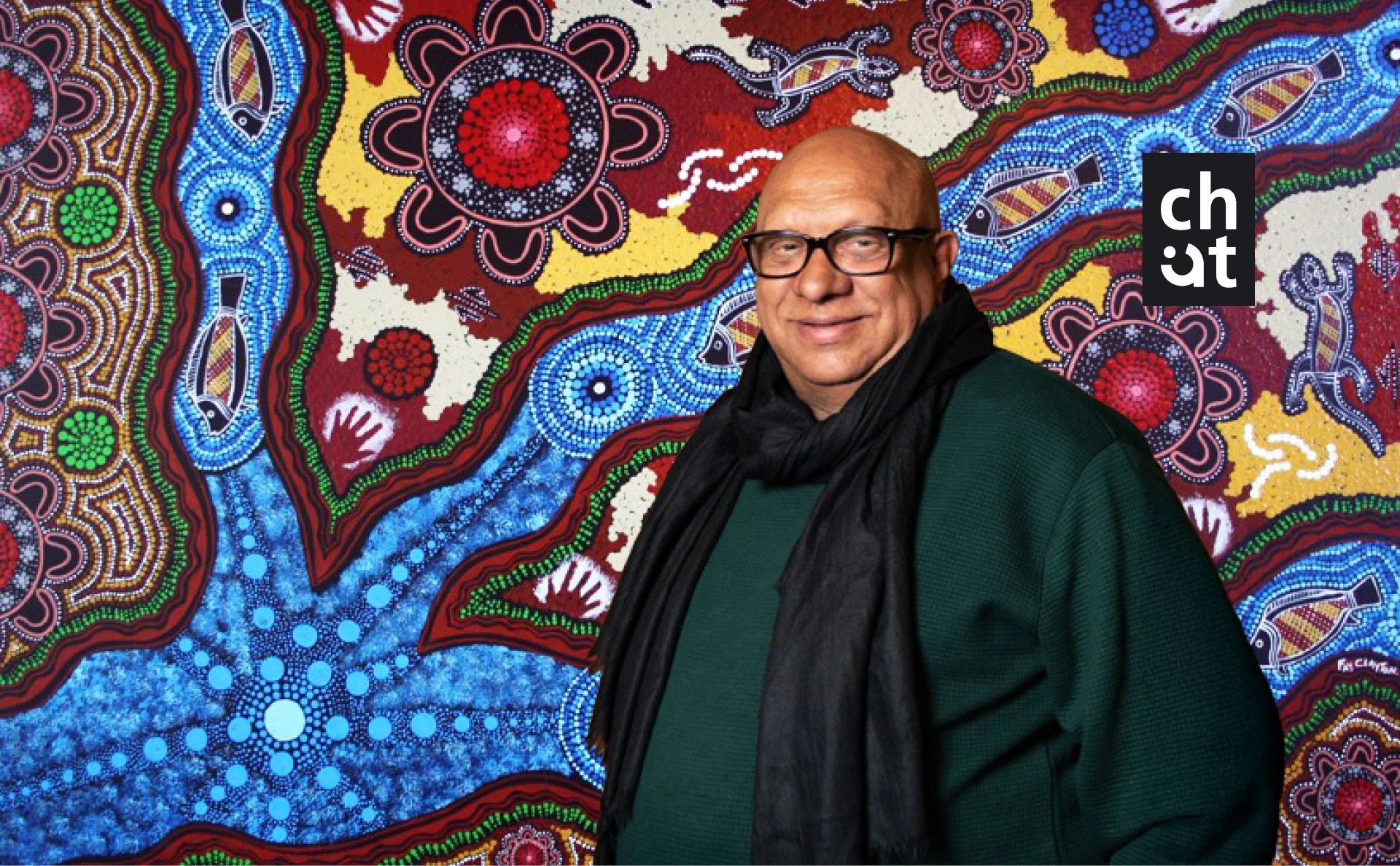
The artwork featured behind Phil is by Fay Moseley - Wiradjuri - Three Rivers