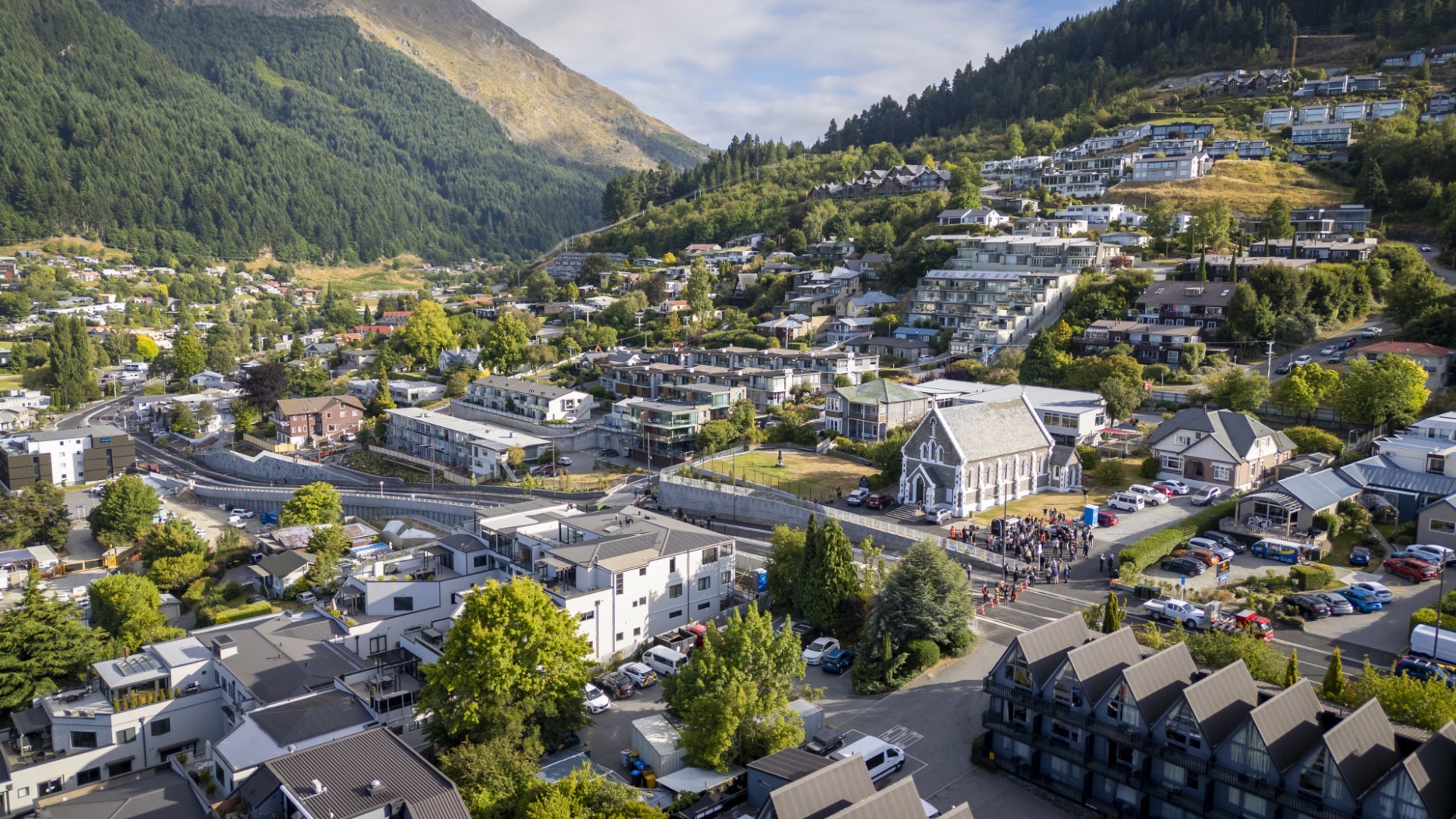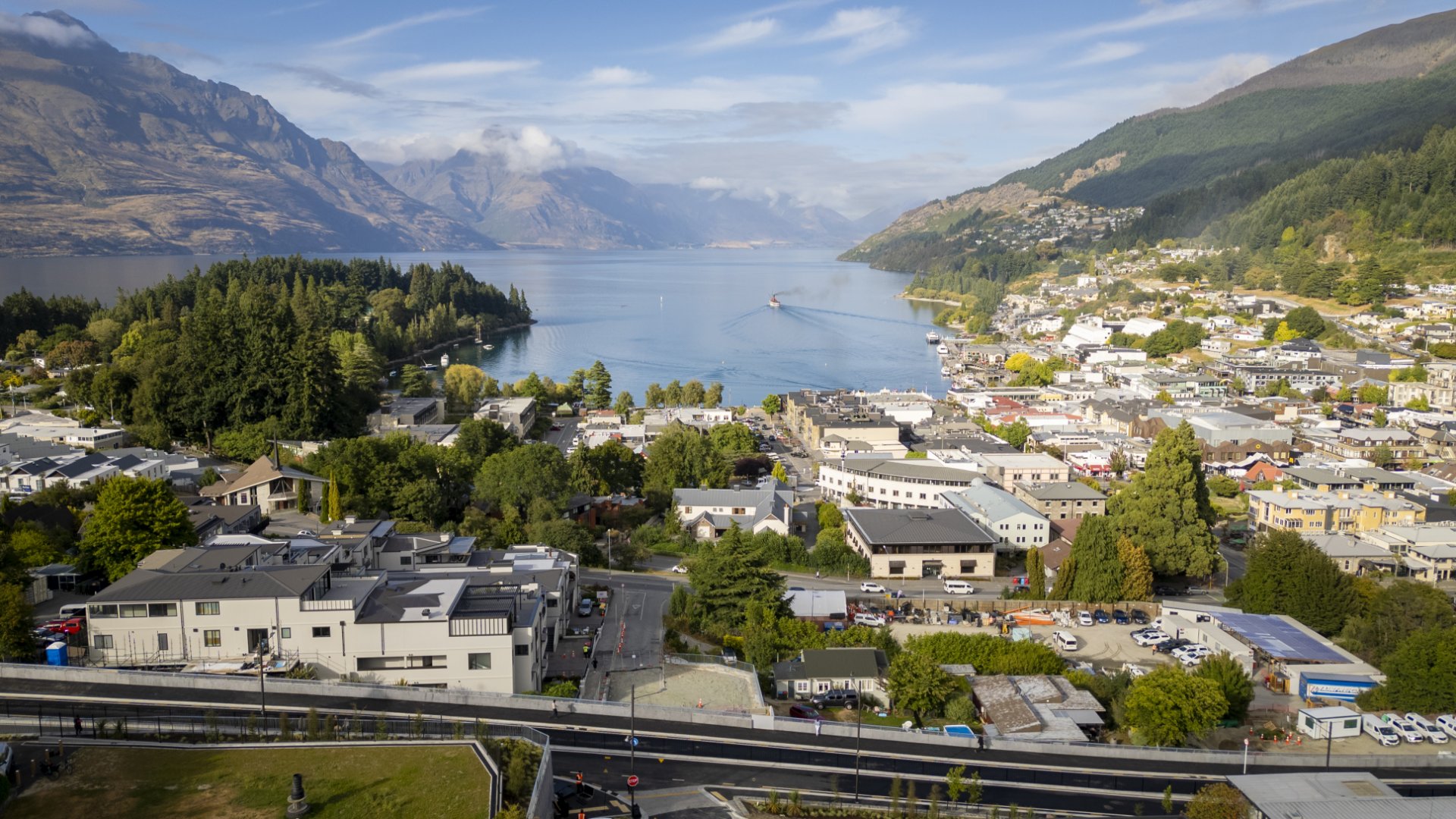
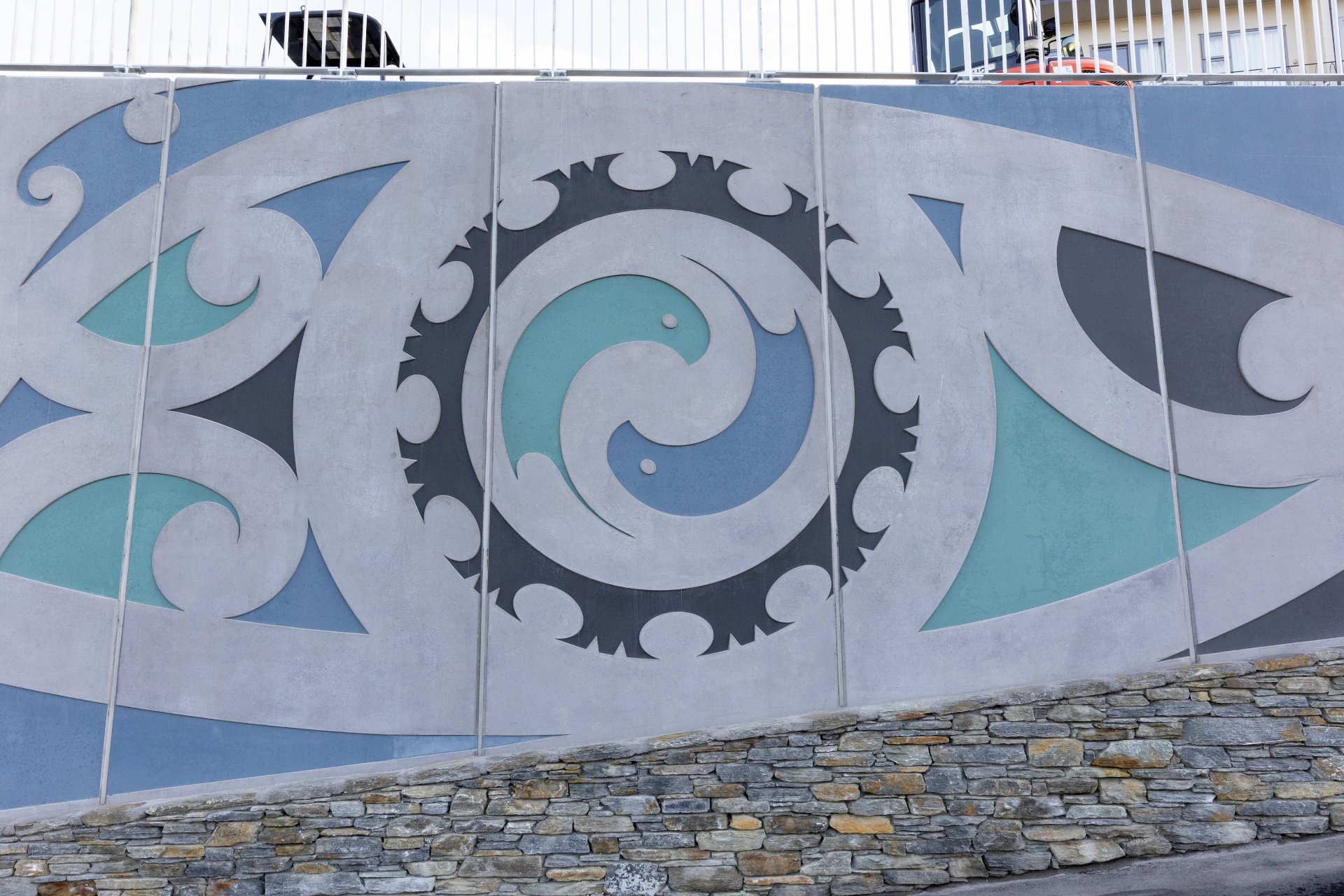
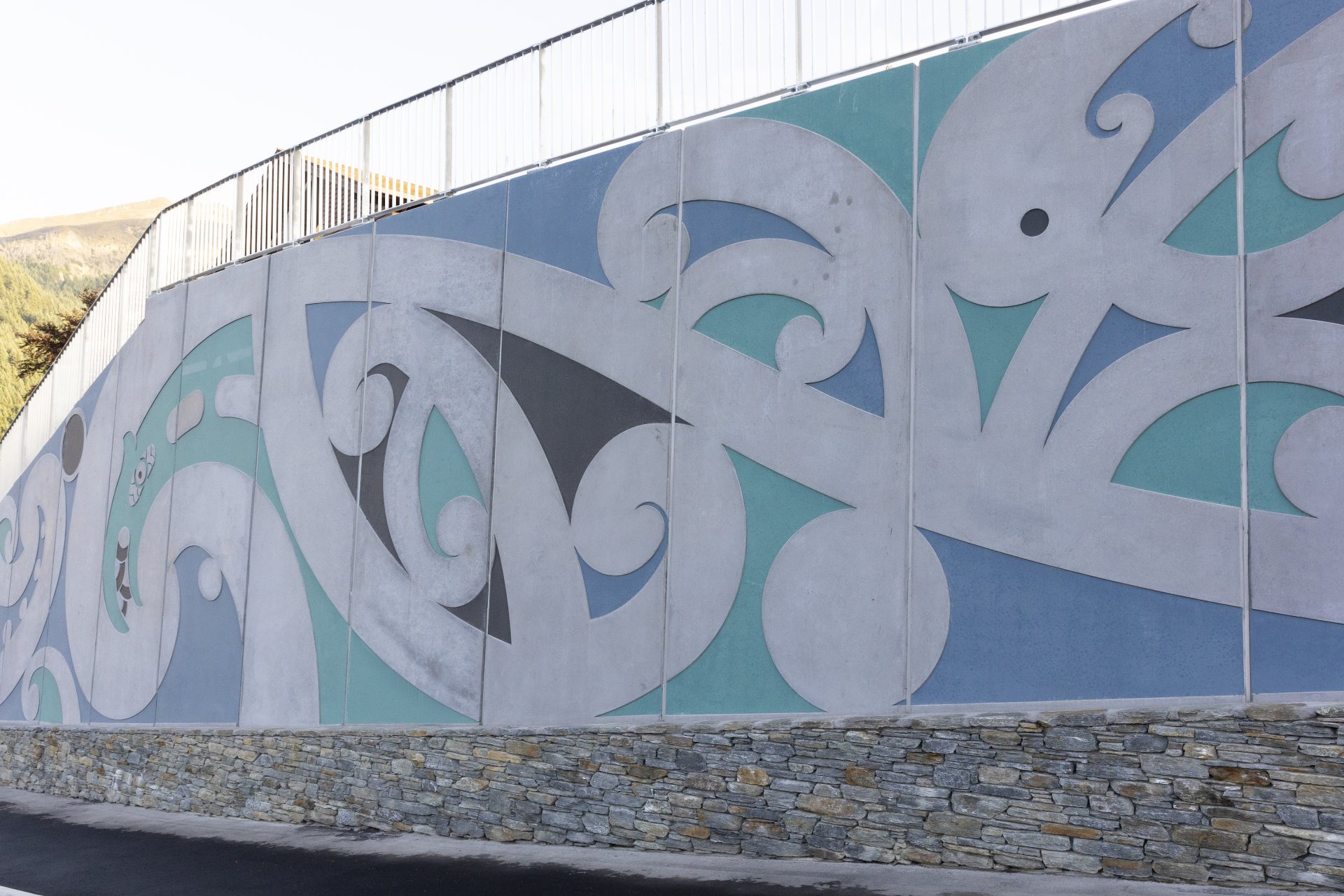
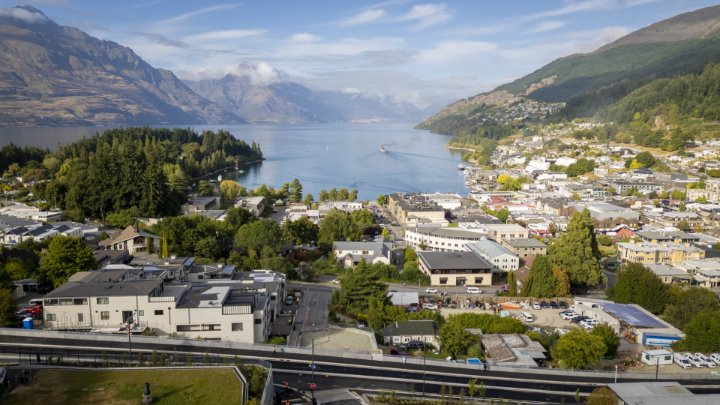
The Queenstown arterial road project includes mahi toi and public artwork that highlights stories that are important to Ngāi Tahu.
Kā Huanui a Tāhuna (the pathways of Queenstown) is the name of the roading Alliance between the NZ Transport Agency Waka Kotahi and Queenstown Lakes District Council, along with Beca, WSP, Downer New Zealand and Fulton Hogan, which is delivering a programme of projects in Queenstown and across the Whakatipu basin. The Alliance is governed by a board made up of representatives of each of the organistions involved along with representation from mana whenua.
The name, Kā Huanui a Tāhuna, was gifted by the seven Kāi Tahu hapū of the region. Huanui in this case means road, highway or path with Tāhuna being the original name of the shoaling beach near the town. Huanui also leans into other meanings such as uplifting, an abundance and rising up. It has become a phrase used as a source of motivation by the project team to support excellent outcomes for Tāhuna.
The programme is made up of five projects:
- Queenstown Town Centre Street Upgrades, which has transformed the central streets into high quality public spaces.
- Queenstown Town Centre Arterial Stage 1, which provides a bypass around the town centre, as well as essential utility upgrades.
- Lakeview Infrastructure, which has provided utility, public realm and roading infrastructure to enable development of the Lakeview site.
- The Queenstown Package of State Highway upgrades on SH6 and SH6A, which support improved public transport routes and services hubs.
- The final project, Wakatipu Active Travel Network, provides a vital link in the network of trails safely connecting the community to commuter and school facilities, via the Alliance-designed Pūāhuru bridge.
One of Beca’s roles in the Alliance is to lead the mana whenua liaison group that works alongside Aukaha and Te Ao Mārama Inc., which are mana whenua-owned organisations that deliver services including environmental outcomes and cultural design integration for the seven mana whenua hapū of Ngāi Tahu in Tāhuna. Beca’s Principal – Māori Advisory, John Blyth, is the current chair of the liaison group.
“Kāi Tahu people can now put their hands on something that reflects their history, they can see their stories reflected in Tāhuna. That’s so important.”
John Blyth
Principal – Māori Advisory
John notes that projects in Aotearoa will naturally span the rohe (regions) of multiple iwi and hapū (tribes and subtribes). Each iwi or hapū has different whakapapa (genealogy) and different views on the world around us. While Ngāi Tahu (or Kāi Tahu) spans more or less the whole of Te Waipounamu (South Island), there are seven mana whenua bodies in Queenstown, or seven hapū of Kāi Tahu, all of which are autonomous and hold diverse views of our world.
“While all have common ancestry and common relative histories, the mana of each hapū is important to learn, consider and bring into the project lens. It’s important not to underestimate how complex that is,” John says.
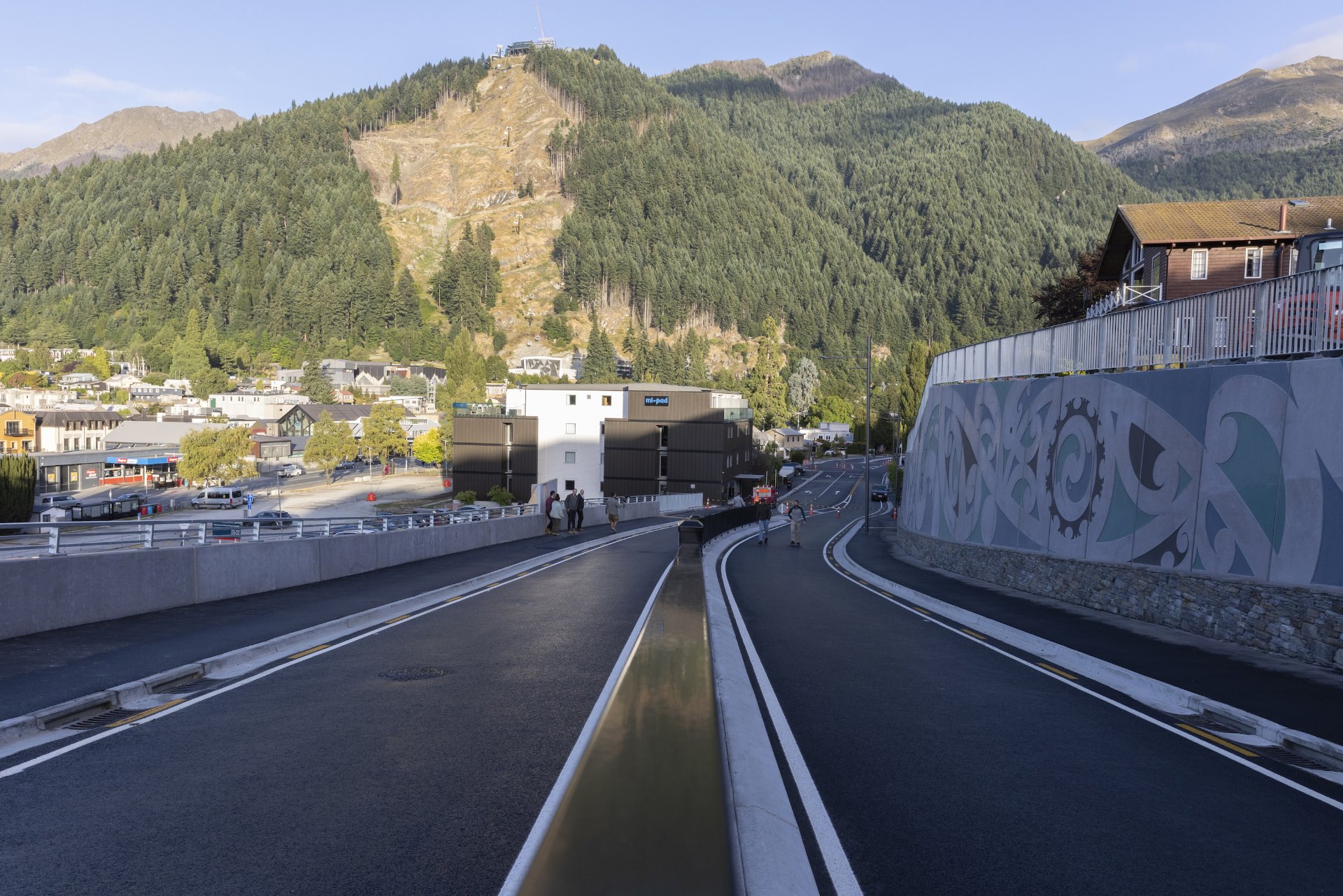
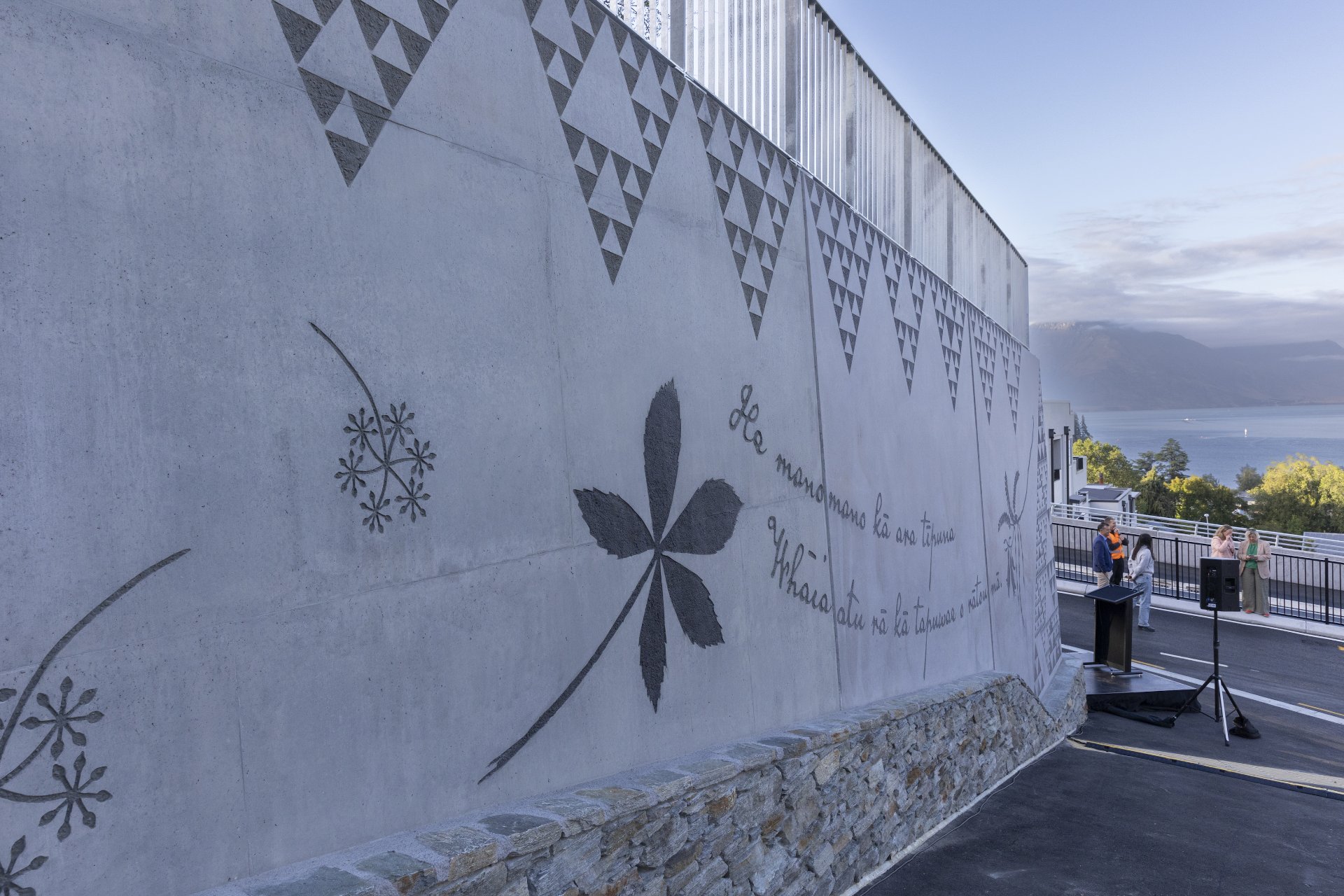
He observes that these projects show the power of mahi toi and public infrastructure artwork in bringing local history and culture to life. An example is the retaining wall that forms part of the arterial road project, on the corner of Beetham and Melbourne Streets, which became a canvas on which to share Ngāi Tahu stories.
John recalls being at the opening for the arterial road and speaking to one of the Kāi Tahu artists involved in He Pae Mauka – the initiative to weave mana whenua narratives into the project.
“The artist pointed to two people who had pulled over at the side of the road to take photos of themselves next to the retaining wall and asked, ‘Since when does public works infrastructure become something tourists take photos of?’ That’s the thing – this is community shaping. This is why infrastructure needs to be imbued with te ao Māori. It stuck with me because it was an unintended consequence but a powerful one, that this wall has become an attraction. Who knows who will see that photo and come to visit?
“It’s the first time that Māoridom has been front and centre – part of the infrastructure of Queenstown. Prior to this, Queenstown had a beautiful history with Kāi Tahu that was hidden – it didn’t have a physical presence in the town. It is now visible side by side with more recent rich histories. I’m really pleased that the Alliance managed to get these outcomes and it shows how mahi toi and public works art can be a really powerful part of infrastructure projects.
“There is more to the artwork than meets the eye. The waiata on the wall was composed by Marlon Wiliams. He spent a lot of time with the students at Hato Hōhepa a Tāhuna (St Joseph’s School) that’s located at the top of the wall there, and that waiata is now part of the cultural fabric of that school – it’s their official school waiata – so that’s a really longstanding legacy.”
The mahi toi and public artwork created for the arterial road reflects intergenerational connections to the inland area, with a focus on Kai Tāhu whakapapa (genealogical connections) to Hākitekura, the Kāti Māmoe ancestor who famously swam across Lake Whakatipu.
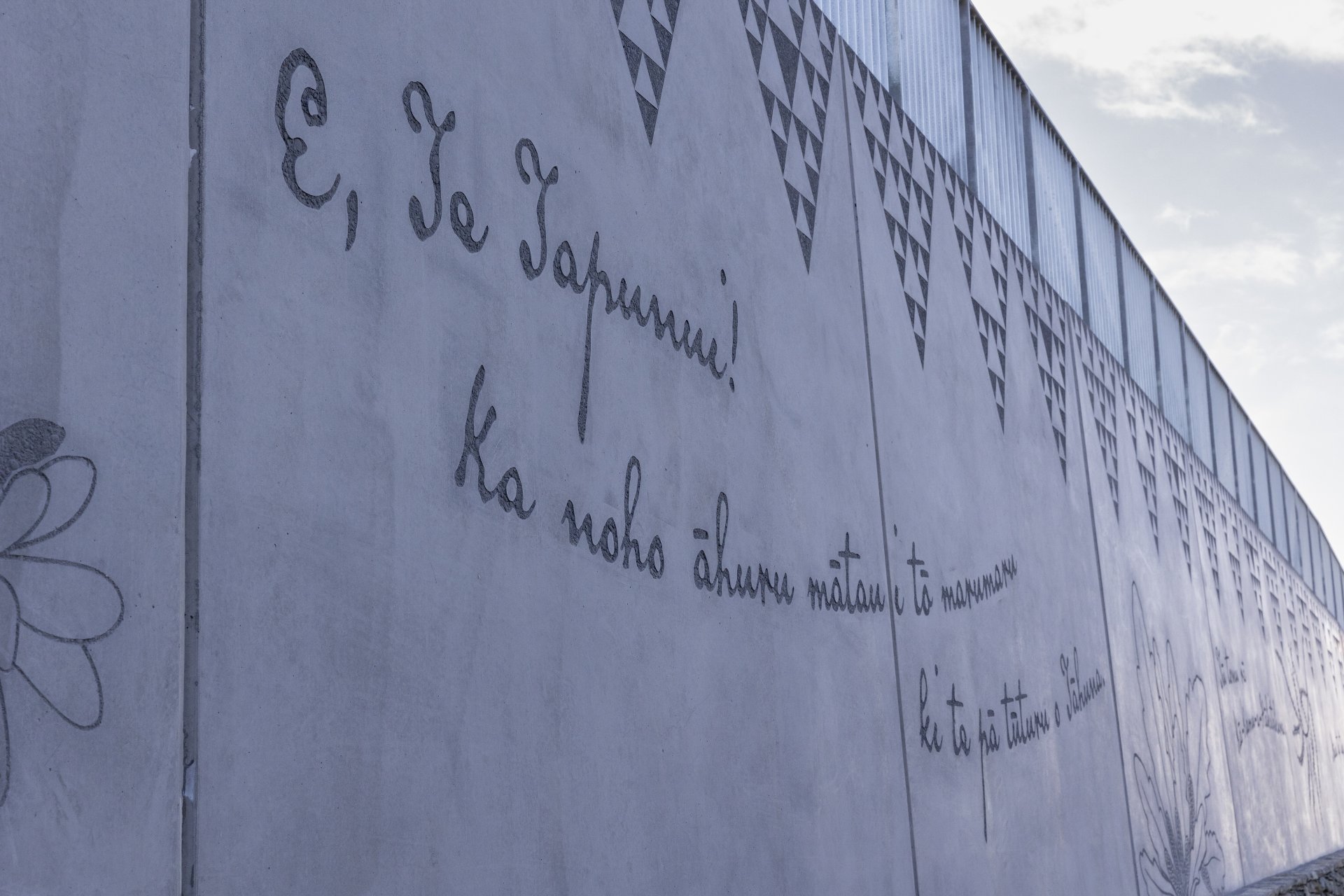
Kupu (words) have been inscribed on the retaining wall to describe Hākitekura’s determination and strength, as well as her descendants’ long-standing occupation of the central inland area:
Nāia te toa o Hākitekura! (Here is the victorious Hākitekura!)
He ahikāroa, he ahitūroa, Te Ahi-a-Hākitekura (The continuous occupation, the permanent occupation, the enduring fire of Hākitekura)
E, Te Tapunui! Kā noho āhuru mātau i tō marumaru ki te pa tūturu o Tāhuna (Oh Tapunui, we dwell in the traditional pā of Tāhuna under your protection)
Tu tonu rā kā-kamu-a-Hākitekura. (The peaks of Hākitekura remain steadfast throughout time)
He manomano kā ara tīpuna. Whāia atu rā kā tapuwae o rātou mā. (There are many ancestral pathways. We follow in their footsteps.)
“The pūrākau (legend) of Hākitekura will grow and resonate through the town as the years go by and helps re-establish and cement Kāi Tahu in the central and visible story of Tāhuna alongside the gold rush era of history here. Tourism as the modern day activity here is enriched with both histories woven in to the streetscape. Its a source of Kāi Tahu wellbeing and mana and a momentous outcome in the journey of Māoridom at a national scale too,” John says.
“The other part of the story sits in the Street Upgrades project, as part of the first project in the Alliance. It talks about the coming together of two worldviews through the seeking of pounamu and the seeking of gold. Those two stories are intertwined in the streetscapes of the town. There are pounamu tiles woven into the footpath, which brings to life the coming together of two cultures and the recognition of equal importance of these two minerals in the foundation stories of the region,” John says.
“This is something I’m really chuffed to have been part of. Kāi Tahu people can now put their hands on something that reflects their history, they can see their stories reflected in Tāhuna. That’s so important. It has really shifted the dial for Kāi Tahu,” John says.
Watch Aukaha’s video about the opening of the arterial road here