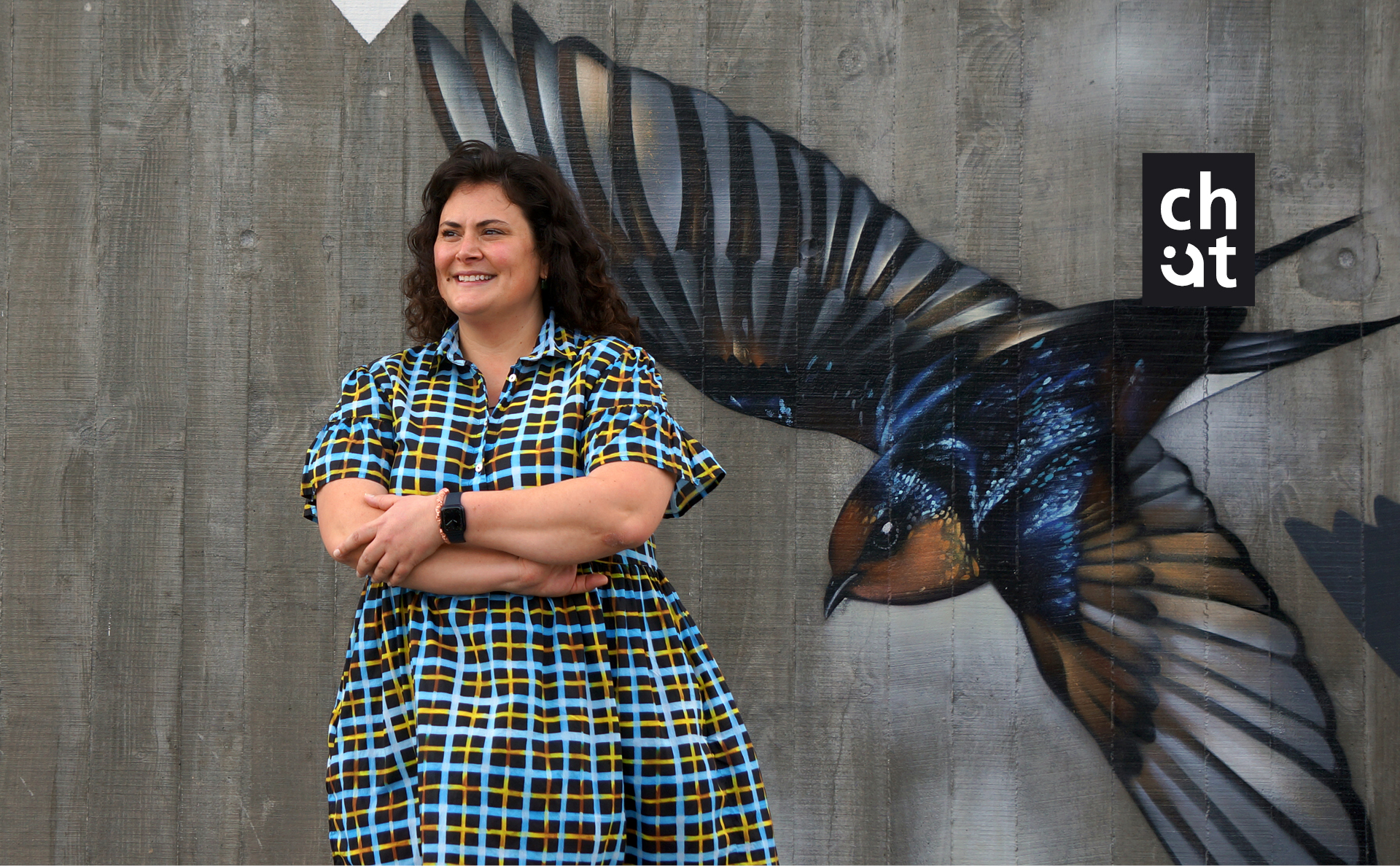
As part of a series of stories profiling people of influence from around Beca, we asked Coastal Engineer and Climate Adaptation Specialist Laura Robichaux to tell us about her career journey and life outside of work.
Where did you grow up?I grew up in a town called Houma, in Louisiana. I am Cajun. It’s not just a seasoning – it’s a culture too. My parents still live there. They are both one of nine siblings from big Catholic families.
My sisters both live in Los Angeles. We are the three Doctors Robichaux. One is a math professor at UCLA. The other is an obstetrics and gynaecology doctor. I’m the oldest, and part of the reason why I did my PhD was my sisters both wanted to be doctors, and if I didn’t, I would be ‘just the engineer’.
My Mom is someone who collects everything – every scrap of paper we ever scribbled on. When I was home, I was looking through one of my boxes and in second grade I wrote that I wanted to be the host of a travel show on TV. I don’t remember thinking that, but it does speak to wanting to have new experiences and see different things. So maybe living in five different countries is no surprise. Most of the people that live in Houma were born in Houma. People generally don’t leave. So it’s unusual.
How did you decide what to study at university?
I had wanted to be a marine biologist from the age of about 13. We have a camp – Kiwis would call it a bach – down in Grand Isle, south of New Orleans. It’s like the Hamptons of South Louisiana. It’s not pretty, but it’s a very beloved place. We’d spend summers there.
My physical science teacher said no to marine biology – he said you need to be an engineer. As it turned out I hated biology but thought ocean engineering sounded cool. I went to a summer camp for maritime engineering and that was it from there.
Houma is the jumping off point for the Gulf of Mexico, so I thought I’d work in oil and gas. There are huge career opportunities and money. You get to design some genuinely cool engineering.
While I was at university I went to see a film called Beasts of the Southern Wild. It was inspired by my hometown and was filmed there. The movie is fantastic. It shows the richness of the culture and what’s at stake. I broke down and realised - I can’t do oil and gas! I need to actually try and save communities that are at risk of flooding. I changed my electives to be coastal focused and found a masters programme that would send me to Europe. It was the best decision I’ve ever made.
Where did you go in Europe?
I was in Trondheim, Norway, which is 100 miles south of the Arctic Circle. Then a semester in Barcelona. Then a year in London. When I finished my Masters I got a job in Florida with Karyn Erickson. She learned from the guys who wrote my textbooks, so she was a big draw. I moved to Sarasota, Florida to work as a coastal engineer there. They also had an office in Turks and Caicos, which is in the Bahamian island chain and is very beautiful. I got to do some cool engineering stuff in both places, but I was feeling unfulfilled. There were lots of amenity projects rather than risk management stuff. Building a beach for a fancy hotel is fine, but it wasn’t filling my cup.
Then, it was the 2016 election cycle, and the part of Florida that I was in had a huge right swing. I remember seeing a kid at the empanada stand at my local market yelling at the lady to go back to her own country. That was it. I was ready to get out – I wanted to go abroad again.
There was a position at the University of Auckland (which I thought was in Australia – that’s how little I knew) and I moved here in 2017. I was still working part-time (and eventually full time, post-PhD) for the company in Florida and splitting my time between the two. I was working silly hours and spending a lot of time away.
I met my partner James, who works in Building Services for Beca, in 2018. Eventually I’d had enough of the hours and travel, and decided to reach out to a friend who worked for Beca in the coastal team.
I knew that the scale of projects Beca works on and the clout Beca brings would mean I’d get to work on some cool things. And I would get to split my time between coastal engineering and climate adaptation.
People at Beca tell me that there’s no-one who has the same skills as you – that what you do is world leading. Is that true?
Well yes, kind of. In New Zealand there is maybe one other with similar qualifications on paper. Globally, probably fewer than 30. Coastal engineering is a relatively small discipline. And the climate overlay is rare because it didn’t exist in a university context until recently.
My PhD was atypical – I looked at the social, economic and political factors that push projects closer to getting implemented - or mean they die in design. I wanted to understand why things don’t happen.
I grew up in a very flood-prone area. Hurricane Katrina was a thing. After Katrina, we helped in shelters because our house was fine. We had three weeks off school because my school was an emergency shelter. We washed dishes and clothes and helped entertain kids at the shelter. We would go to community engagement events about the future of our coastline with our parents. I have been going to those meetings, listening and participating, for as long as I remember.
Our camp on Grand Isle has been destroyed five times in my lifetime. I’ve been down there with my Dad to pick through the rubble after Katrina, before Rita came and whacked it again. We measure our lives in the passing of these storms. The culture is centred around either we rebuild or we learn how to live with it.
In New Zealand, a 1-in-100-year storm surge is about a metre. At home, it’s closer to 9 or 10 metres. That’s a huge amount of water – it is not survivable. So the understanding of that risk is very different.
The rate of global sea level rise is 2.5mm a year. At home, it’s 25mm a year. When we would drive from Houma to Grand Isle, it looked different every year. We could see the land disappearing in front of our eyes.
With all of that, I was constantly exposed to the conversations about what can we do to fix this, to stay, to make it safer. And I was constantly let down. You would get all of this hope, and then the projects wouldn’t happen.
After Katrina, there was a $50 billion coastal masterplan developed and refreshed every seven years since then. But Louisiana doesn’t have $50 billion to spend on the coast. Even with that investment, my hometown will not be on the map. It will be underwater within my lifetime.
So I bring that technical knowledge from my studies and working as a coastal engineer, plus the lived experience from being immersed in this world. I have sat on the other side of the conversations that I have now. When I front up to communities, I bring the technical lens but also the human experience. I know what they’re feeling. I say to them, your children might not be here in a hundred years if we don’t make good choices. Maybe, sometimes, the best choice is to move away from this area.
That conversation about whether staying is really viable wasn’t being had at home until recently. In order to preserve the culture in places where the risk is too difficult to manage, you won’t be able to stay.
What’s your home-life like now?
I live in Tauranga with my partner. We recently bought a house – mostly so that we could get a dog. She’s a Border Collie named Sylvie. We don’t have kids - she is the centre of our universe.
When I was working remotely in the US, I would get up and go straight to my computer. I still do that sometimes. But with Sylvie, I can’t do that most of the time. I wake up and we go for a walk. Sometimes she needs another walk in the evening if she hasn’t been to daycare, which is a great way to wind down.
We’re very lucky that our house overlooks a beautiful estuary. So we wade through the tidal channels. There’s a river not far from us with an off-lead dog area where Sylvie goes nuts.
Why did you choose to join Beca?
I knew the culture at Beca before I joined. I’d been on the periphery - I’d been to the Beca Ball. I think it’s the alignment of personal and company values – everyone is here for the same reason. They genuinely want to help communities. I knew I’d get the opportunity to ask questions – is a seawall the best option here, or is there something else we should be talking about? Those are the kinds of conversations I wanted to be having.
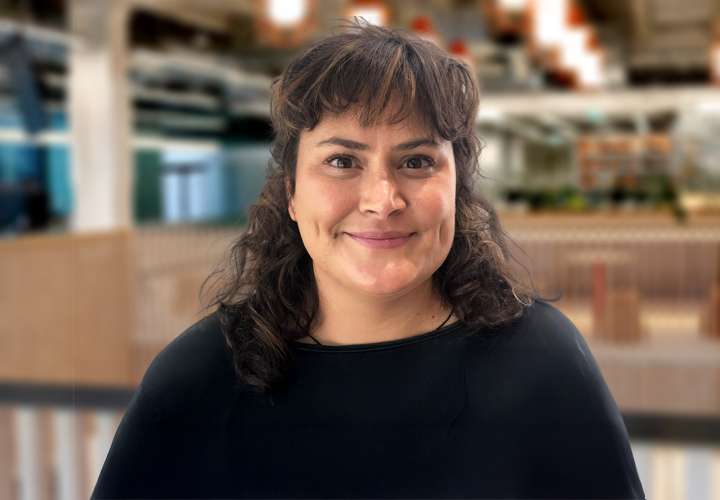
About the Author
View on LinkedIn
Email Laura Robichaux
Laura Robichaux
Senior Associate - Civil Engineering