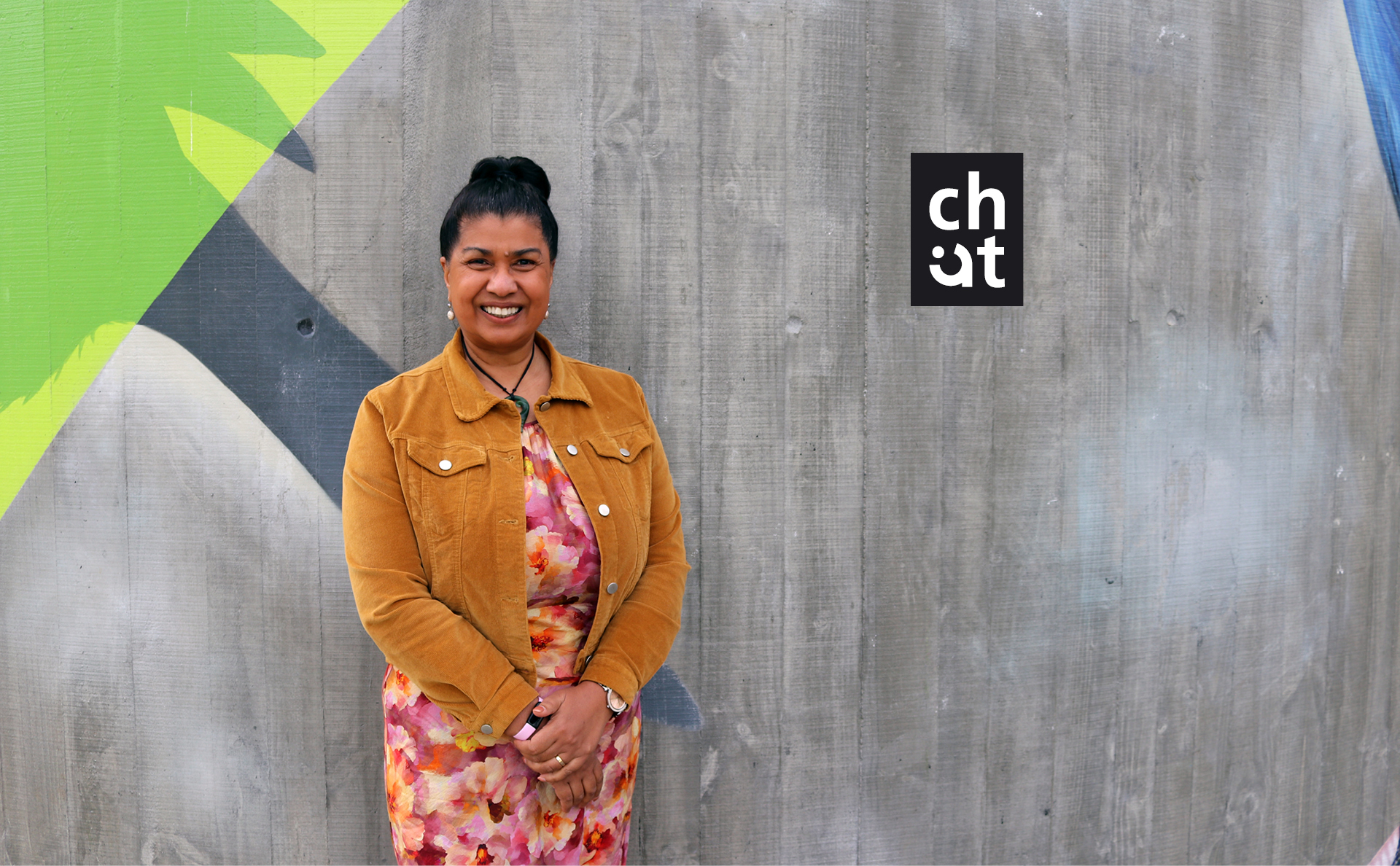
As part of a series of stories profiling people of influence from around Beca, we asked Technical Fellow – Strategic Asset Management Priyani de Silva-Currie to tell us about her career journey and life outside of work.
You recently became the world’s first Certified Fellow in Asset Management. Tell me more about what that means, and why it’s important.
I’ve been deeply involved in Āpōpō, the industry association for asset management professionals in New Zealand, for many years.
Āpōpō had an opportunity to become the accredited provider for this World Partners in Asset Management global qualification and we needed a crash test dummy to be first – so that is me! I’m now helping assess people from around the world to become certified.
People appreciate what New Zealand is doing in asset management. We invented the International Industry Management Manual (IIMM) guidebook on asset management and now we’re reinventing that with our Āpōpō Guide.
We are seen as the international pinnacle of our profession because we have good guidance, good practitioners and a non-corrupt democratic society. The more people who are professionalised, the more we lift standards internationally – so it’s win-win.
Tell me about your career journey – how did you end up in asset management?
It happened by chance. I was working at Nelson City Council when they stood up their first asset management team due to legislative change. I had started at the council as an HR clerk and then became a business and community assets officer. I found I enjoyed looking after community infrastructure and planning for the future. And look where it has taken me – it’s been an amazing journey to be part of.
While at Council, I had the great fortune of meeting some people who worked in our building, for Opus (WSP). They were consultant support on many of the portfolios I managed. I literally got shoulder tapped to work for them. I started as a Property Services Consultant and over the next 12 years I worked my way up to becoming a Partner.
I’ve had other roles in local government, central government agencies and consulting, across many sectors. I joined Beca nearly five years ago.
What other career paths might you have followed?
If you’d said to me as a teenager that I would manage infrastructure, I would have laughed at you! I wanted to be a wedding planner and my parents wanted me to study medicine.
I’ve been heavily involved in netball since I first picked up a ball at school at age 5. So if there could have been a career back in those days where I coached professional netball, that would have been it.
I still love netball – I played for many years and I still enjoy coaching. I use many sports coaching philosophies at work. It’s often the same skillset – getting the best out of people and coaching them to grow and succeed in a competitive environment.
I know you enjoy mentoring. How many people are you mentoring right now?
I think I have nine or 10 at the moment. Some are at Beca, some are outside of Beca. They’re all in different careers, connected to our industry in some way. It brings so much joy to me, to be able to bring these people up and give them a nudge in the right direction.
I learn so much from my mentees. We are all evolving all the time and I value new approaches. I would like to think my perspective is balanced, reasoned and trans-generational with an eye to our future.
What advice do you offer them?
Life is not linear in any way and there are endless choices in your own timeframes. The door’s not always open – sometimes you have to beat it down, and sometimes it’s not your door to enter. Don’t shy away from change.
Make sure your personal and professional values are congruent. If they’re not, then perhaps where you are is not the best place for you to be. Listen and act on things causing you disharmony.
You’re involved in so many things, but if there was just one that could be your legacy, what would you want it to be?
Being a positive influence in empowering women. I’m involved with NAWIC and Global Women. Probably my strongest personal driver is being able to support all women to have their birthright to an equal standing in life. Unfortunately we still live with structural, systemic and cultural barriers to achieving those things. That sucks, and if I can do something about it, I will.
One of the main motivators for that was my mother. She was a phenomenal woman in her own right and her ethos has shaped mine.
Are you willing to share a little of your mother’s story?
My mother’s story is really tough to hear. I speak about her at conferences and people are often in tears. She was the most inspirational person of my life, though sadly we weren’t on the best of terms. She had very high expectations for me and she didn’t want anybody to stand in the way of me being successful. I am a lot like her in personality.
Born in 1928, Shireen Pakeer (Binky to her family) was one of 11 children, as a female she was mutilated at birth as was the localised Muslim custom of the day. Gifted academically, she was sent to a boys’ school to get an education. She was then paired in an arranged marriage which was not a good match, and as she shared with me, soul destroying. She decided she wanted more for her life and so she left her husband, which was unheard of in that time. She had to leave her sons behind in order to escape that situation.
Mum remarried a Christian man, Jerry de Silva, which was also unheard of for a Muslim woman. So she was completely chastised and alienated by her own family for that decision.
Mum found her calling in nursing, was the principal of a nursing college in India, and while there pioneered palliative care for the sick and dying.
My parents escaped Sri Lanka to come to New Zealand during a time of immense Civil War. They had no posessions, just the clothes on their backs and me, their 3-year-old daughter. They arrived in Greymouth, straight from Colombo, on 24 December 1974.
Mum and Dad were very matter of fact, very practical people. There was literally no going back, and so they just got on and made the most of life in New Zealand, integrating into this close-knit community within this small West Coast town.
My mother appealed to have her sons returned to her and after many years of fighting for them, she was successful. The boys came to New Zealand in their late teens, studied at Canterbury University and ended up living in Wellington for a number of years.
At some stage I intend to write a book about my family. I take a creative writing class and I have the bones of an outline for our story. It’s a journey of overcoming adversity, finding a new home, and creating a better life for our family – and trying to create a better society too. I think Mum, Dad, my brothers and I are all strongly community minded.
You mentioned that as a young person you were headed for medical school?
All of the Sri Lankans that came in our group of migrants were doctors, radiologists, engineers, accountants and nurses – and to a small town that needed those skills. There was an expectation that we first-generation migrant New Zealanders would follow in our parents’ footsteps.
I diligently followed the path and achieved entry into first-year medical, but just before finishing secondary school I told my parents it wasn’t what I wanted anymore. I wanted to live life, meet more people – I wanted what people today call a gap year. My parents were horrified! Mum disowned me for a couple of years and wouldn’t speak to me. Dad was more circumspect, but sent me to live with my older brother in Wellington to sort me out.
Then I met my first husband David. He proposed very quickly and we got married, and university became a distant dream. We had good jobs and we were wanting to start a family. About 10 years into our marriage I went back to tertiary study and got my degree in commerce part-time, studying two papers a year over 12 years while we raised our two sons Yohann and Dilhan. Unfortunately our marriage didn’t quite make it to the finish line together, but we remain good friends and share parenting for our boys.
How do you like to spend your free time?
My husband Rob (Ngāti Tūwharetoa) and I love fishing. We spend a lot of time on the boat and we just purchased a two-person sea kayak, so that we can get the most out of the coastlines around Tasman and Golden Bay. We live in a beautiful part of the world.
Rob is a military veteran and we recently joined the Nelson RSA. We also love classic cars. We each have a V8. I’m on the committee for the National Ford Thunderbird Association and we’re part of the Holden club too – it’s a standing joke that our Holden and Ford share a garage. Classic cars are a great way to connect with people. I think the more connected you are to others, the happier you and the longer you live.
Tell me about your children and grandchildren
We have three grown-up daughters from Rob’s first marriage. We have seven mokopuna (grandchildren) and my two sons in our blended family. My sons know that respecting women is the biggest thing they can do in their life. Rob’s daughters are all strong, independent wāhine.
My sons will both be at Victoria University in Wellington this year, and our two eldest moko are at the University of Waikato. The youngest moko is just 5, so there is the full spectrum of ages and stages in our family.
How would your friends describe you?
I hope they would describe me as someone who is kind-hearted and generous. It's never my intent to be inspirational but I hear that a lot from those who have heard my story or worked with me.
Our Eastern philosophy - the way I grew up - is that in order to be a leader you must be a servant to others.
Receiving the MNZM (Member of the New Zealand Order of Merit) for three decades of service to netball, multicultural communities and civil engineering was truly humbling and is reflective of the continuing service I want to provide for others. Through servant leadership many people benefit and communities prosper.
Recognising and uplifting others is so important. I hope that I can do that small thing for others in all the roles I hold.