Amelia Linzey, Group CEO of Asia Pacific engineering consultancy Beca and New Zealand Co-convenor of the inaugural Singapore–New Zealand Leadership Forum, has described the Forum as a landmark moment in the bilateral relationship – and a call to action for both governments and business.
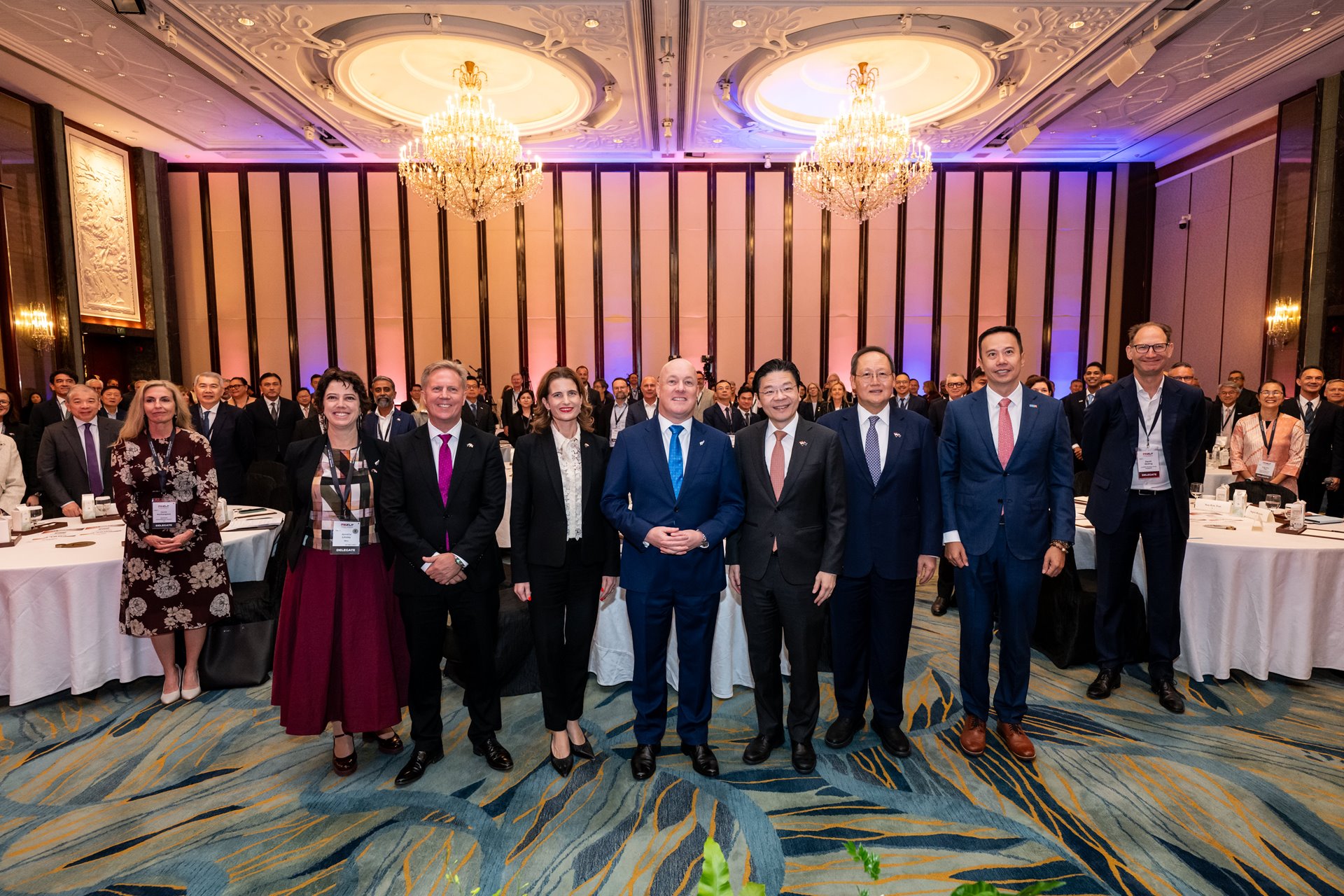
Photo Credit: SNZLF (L-R: Amelia Linzey, NZ Co-Convenor SNZLF and Group CEO Beca, Hon. Todd McLay Minister of Trade, Hon. Nicola Willis Minister of Finance, Rt Hon Christopher Luxon Prime Minister of New Zealand, Lawrence Wong Prime Minister of Singapore, Dr Tan See Leng Minister for Manpower, and Mark Lee Singapore Co-Convenor SNZLF and Vice Chairman, Singapore Business Federation)
Speaking at the Forum's closing reception at the Shangri-La Hotel in Singapore, Ms Linzey said the Forum had been marked by practical, frank conversation rather than diplomatic formality.
"It has been a serious, practical conversation about what more we can do together and what we should do next,” Ms Linzey said. "The principles of cooperation between Singapore and New Zealand are fully confirmed and the movement is now towards planning and implementation."
The Forum – the first to be held under the Comprehensive Strategic Partnership signed by Prime Ministers Luxon and Wong in October 2025 – brought together senior business leaders from both countries across agri-food, infrastructure, technology, energy, financial services and connectivity sectors, alongside senior government officials.
Ms Linzey said the onus on New Zealand was to work in a nimble, agile way to address the issues and opportunities that the fuel crisis has presented.
“This moment is a clarity shock. It has clarified, with brutal speed, three shared priorities the cooperation arrangement must achieve for New Zealand,” said Ms Linzey.
On resilient supply chains and critical goods, delegates focused on practical steps to reduce friction, improve supply chain visibility and strengthen coordination, with particular focus on fuel security in the wake of the current Middle East crisis. Singapore's role as a regional hub for innovative food trade into the wider Indo-Pacific is an area of significant mutual opportunity.
On the digital economy, the conversation centred on artificial intelligence, digital trade and fintech – not as abstract future opportunities but as areas where the right bilateral settings and partnerships can help businesses grow now. The Digital Economy Partnership Agreement, which Singapore and New Zealand co-founded in 2020 and which has since expanded to include Korea and attracted interest from nine further economies, was identified as a live instrument for deepening cooperation.
On the green transition, delegates focused on actionable steps in clean energy, carbon markets and decarbonisation – with strong interest in accelerating alignment between New Zealand's Emissions Trading Scheme and Singapore's carbon pricing framework.
Ms Linzey noted that business leaders had not simply described challenges – they had issued a direct challenge to governments and investors.
"There was a clear message that there are practical, achievable steps that could make a real difference if governments and private capital are prepared to act on them.“
About Beca:
Beca is one of Asia Pacific's largest independent advisory, design and engineering consultancies. A century after its founding in New Zealand, it has grown into an employee-owned firm of more than 4,000 professionals across 24 offices in Asia Pacific, with projects delivered in over 70 countries.
Beca has been working across Southeast Asia for more than 50 years. In Singapore, the firm has helped shape some of the city-state's most iconic built environments across commercial buildings, universities, hospitals, hotels and resorts, digital infrastructure and new mixed-use neighbourhoods. Beca is known in Singapore for creating smarter, more liveable and energy-efficient urban spaces that serve as models worldwide.
Across the wider region, Beca is delivering transformational work in Indonesia, Thailand, Malaysia, and Vietnam – including leading a geothermal development project in Indonesia, a country that holds nearly 40% of the world's known geothermal resources but has developed less than 10% of that potential.