Reader’s note: This case study has been written in partnership with Manukorihi Hapū, with our sincere thanks and appreciation.
Te Whakaora o Tangaroa
Manukorihi Hapū, in Taranaki, has plans and aspirations to develop a more resilient and world-class marae, which are well underway. The restoration of a section of the Tangaroa awa (stream) and its wairua (spirit) that nourishes this community, has been a seed that has catalysed and fed into this holistic development.
In 2019 New Plymouth District Council (NPDC) established the Waitara Stormwater upgrades programme, including the Tangaroa Restoration Project - which has been co-designed and delivered in partnership between NPDC, Te Kotahitanga o Te Atiawa, Manukorihi Hapū, Otaraua Hapū, Beca and Morphum Environmental. The project is co-funded by NPDC and the Ministry for the Environment (MfE) Freshwater Improvement Fund.
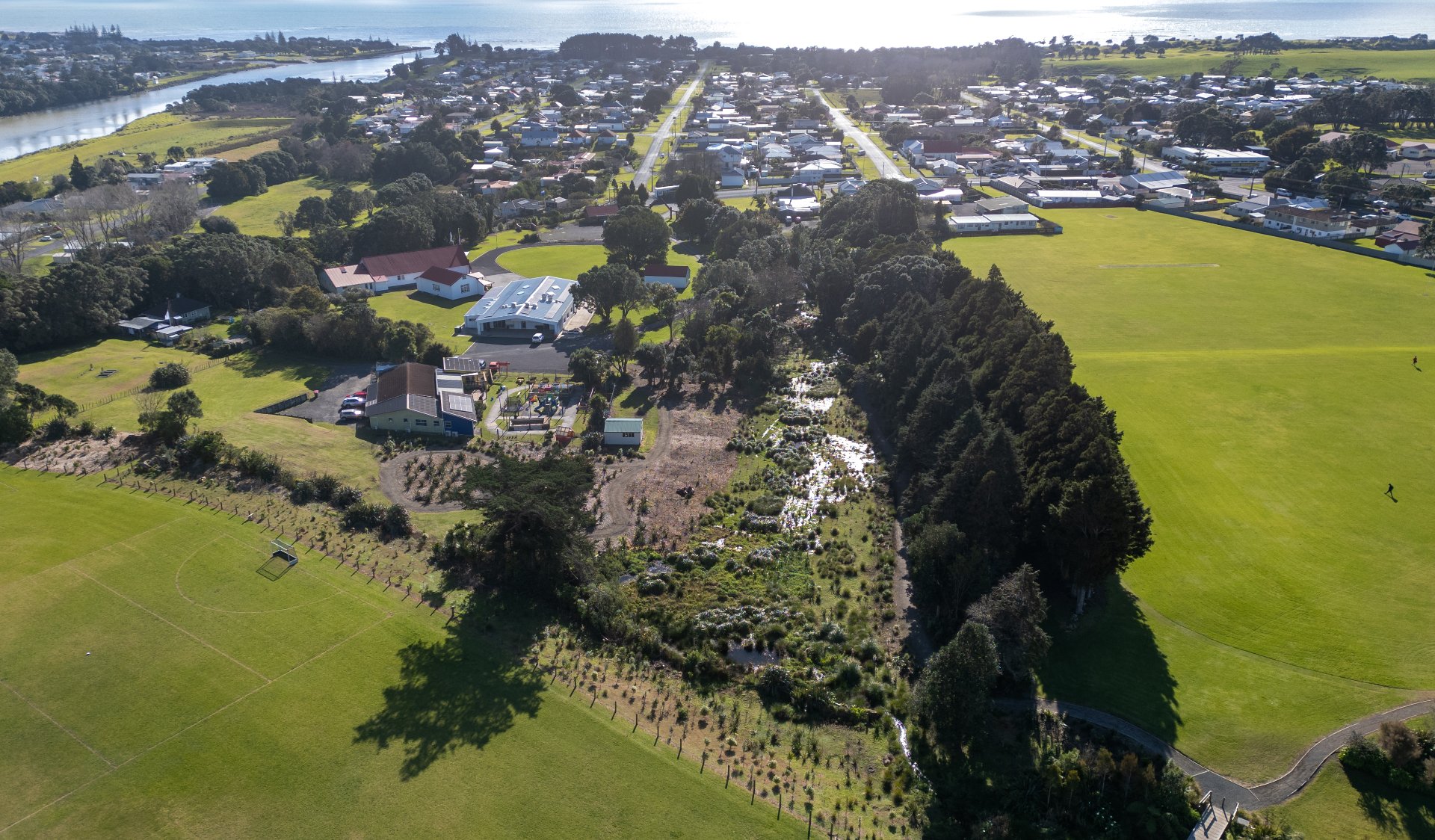
Owae Marae sits at the heart of this wider work and is one of eight sections of the Tangaroa Restoration Project to have been delivered by NPDC in partnership with Manukorihi Hapū. Works were completed in June 2025 and successfully weathered their first wet season.
Serving as a natural boundary for Manukorihi Pā - the site of Owae Marae - Tangaroa Stream was once an essential food source that supported the success of mana whenua for generations. However, over the past decade, upstream development resulted in silt and weeds choking the stream, diminishing its flow and leading to flooding during periods of heavy rain.
Traversing part of Owae Marae, a 164-metre section of Tangaroa Stream was piped underground between the 1960s to the early 80s. As part of the Tangaroa Restoration Project, this pipe was planned for ‘daylighting’.
Te Moemoeā o Manukorihi (The vision of Manukorihi)
When Manukorihi (Hapū) began discussing the restoration of their awa with New Plymouth District Council (NPDC), their moemoeā (vision) was Te Whakaora o Tangaroa (to revive or resuscitate the Tangaroa) with the objectives of wātea (clear), pai (naturally good) and rere (flow), which speak to clear, clean and running wai (water). However, Manukorihi describe that in the early stages, although they knew what they wanted, they didn’t know exactly how to get there.
Early concept designs for the stream daylighting focussed on a more traditional engineering approach, involving a relatively geometric channel, with steep battered banks to tie in to surrounding ground levels, and an engineered cascade; requiring pipe removal, extensive earthworks and significant tree removal. While consideration was given to the naturalisation of the stream, with rock riffles and some gentle meanders, this early design direction and approach didn’t fully reflect the wider values of Hapū, particularly regarding concerns about potential disruption to taonga (treasured artefacts).
Early mahi (work) by Manukorihi involved getting out on the whenua (land) to start clearing the former stream channel and wetland of invasive weed species and exotic trees that had been flushed down the catchment and taken hold. As this mahi unfolded and space was reclaimed, the intuition of Manukorihi, regarding a more sustainable approach, began to take shape.
An awa finds its path
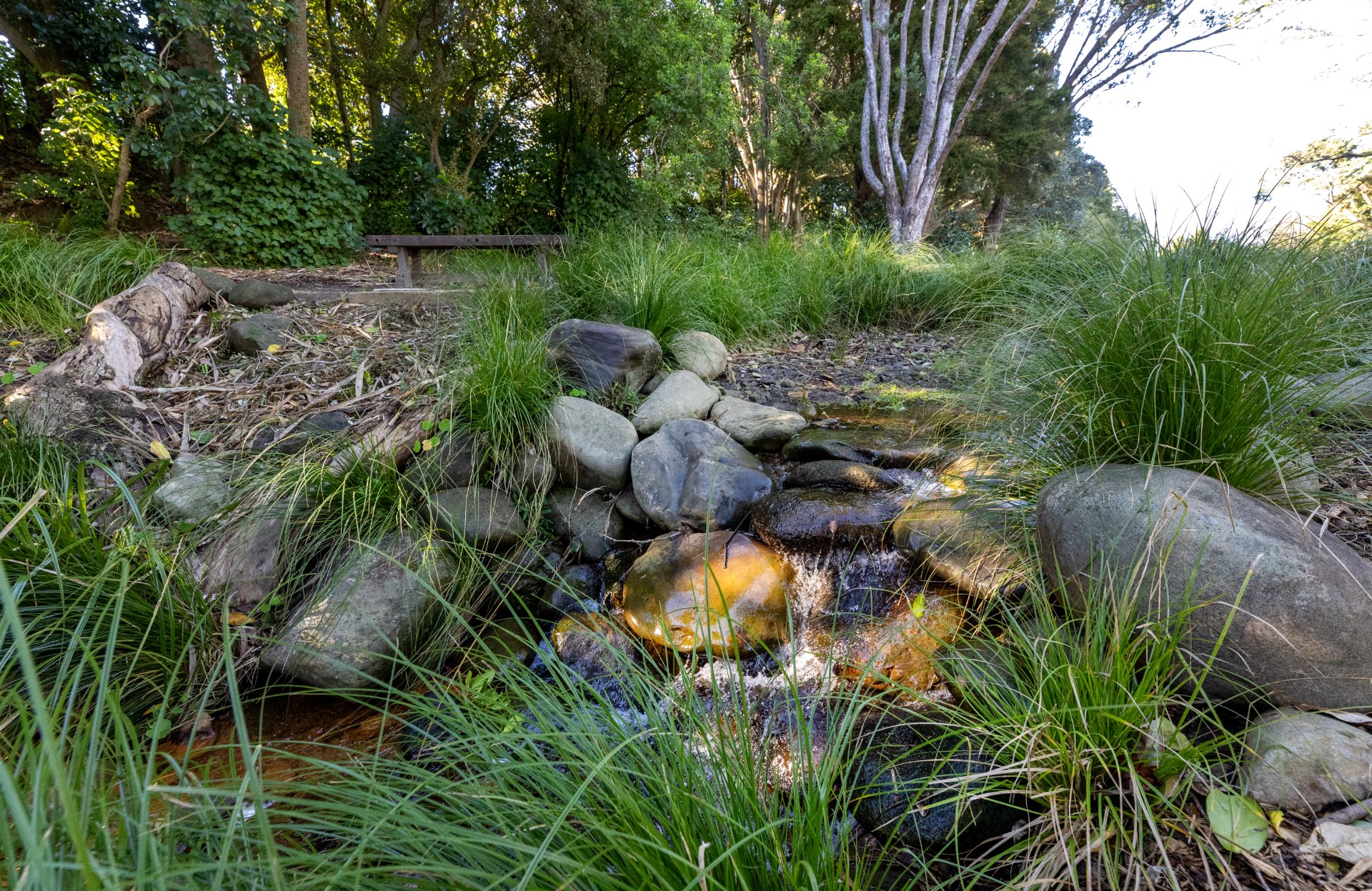
Manukorihi have a deep relationship with the whenua and awa (wairua), and this connection and understanding between people and whenua was enriched once they could “see the land without the weeds”.
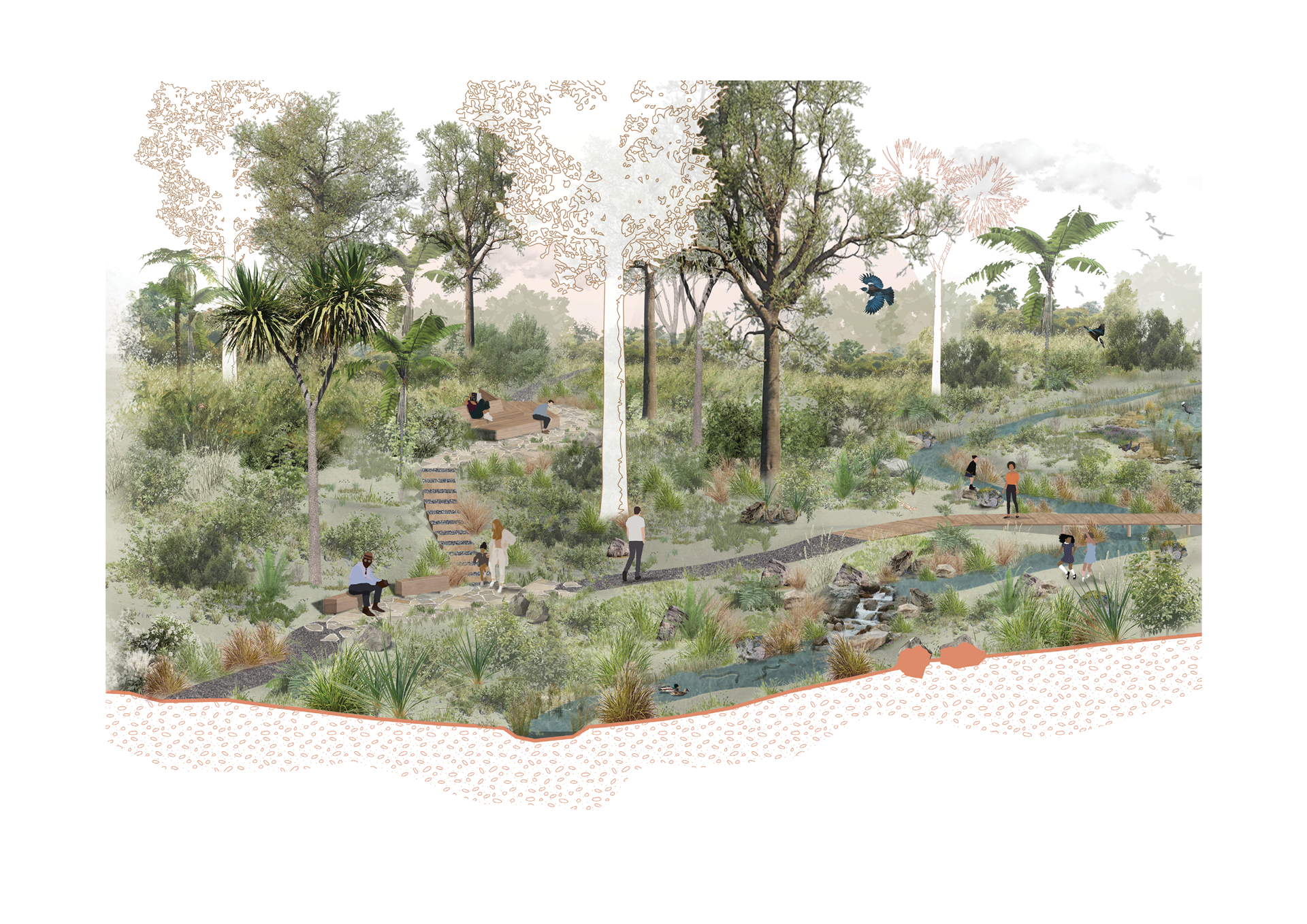
This perspective enabled Hapū to see the broader stormwater strategic objectives through a Te Ao Māori lens, alongside their vision for a world-class Marae. Watching the awa find its own way across the newly cleared land inspired a more sensitive, less invasive, nature-based approach to the daylighting - working with the natural flow of the awa to minimise disruption to the whenua.
Hapū said, ‘Let it tell us, where it wants to go’, which became the core design approach for the project of ‘Letting the awa speak’. This interpretation of the strategic objectives - driven by Hapū aspirations and mātauranga (wisdom and understanding) - facilitated a change in direction.
To help realise this vision, NPDC engaged Beca to work with Manukorihi, and Morphum Environmental, to co-design a stream restoration concept for the Tangaroa, and to develop some visualisations for engagement back to Hapū.
Developing an approach
Key aspects of the design process for Manukorihi included guidance by wairua, from kaumatua (elders) and mātauranga.
Previous infrastructure projects in the area had uncovered significant taonga from the whenua which raise challenges for Hapū with their preservation. So, after discussion with kaumatua, it was decided these should remain undisturbed wherever possible.
Through wānanga (open discussion and learning) and hīkoi (walking the land), the co-design team developed design principles focused on an approach of ‘letting the awa speak’, ecological enrichment, and tau (providing a place for peace and reflection). This approach centred on restoring the mana of the waterway, by minimising soil disturbance and impact to significant tree species, while enhancing natural character and delivering positive cultural, social and ecological outcomes.
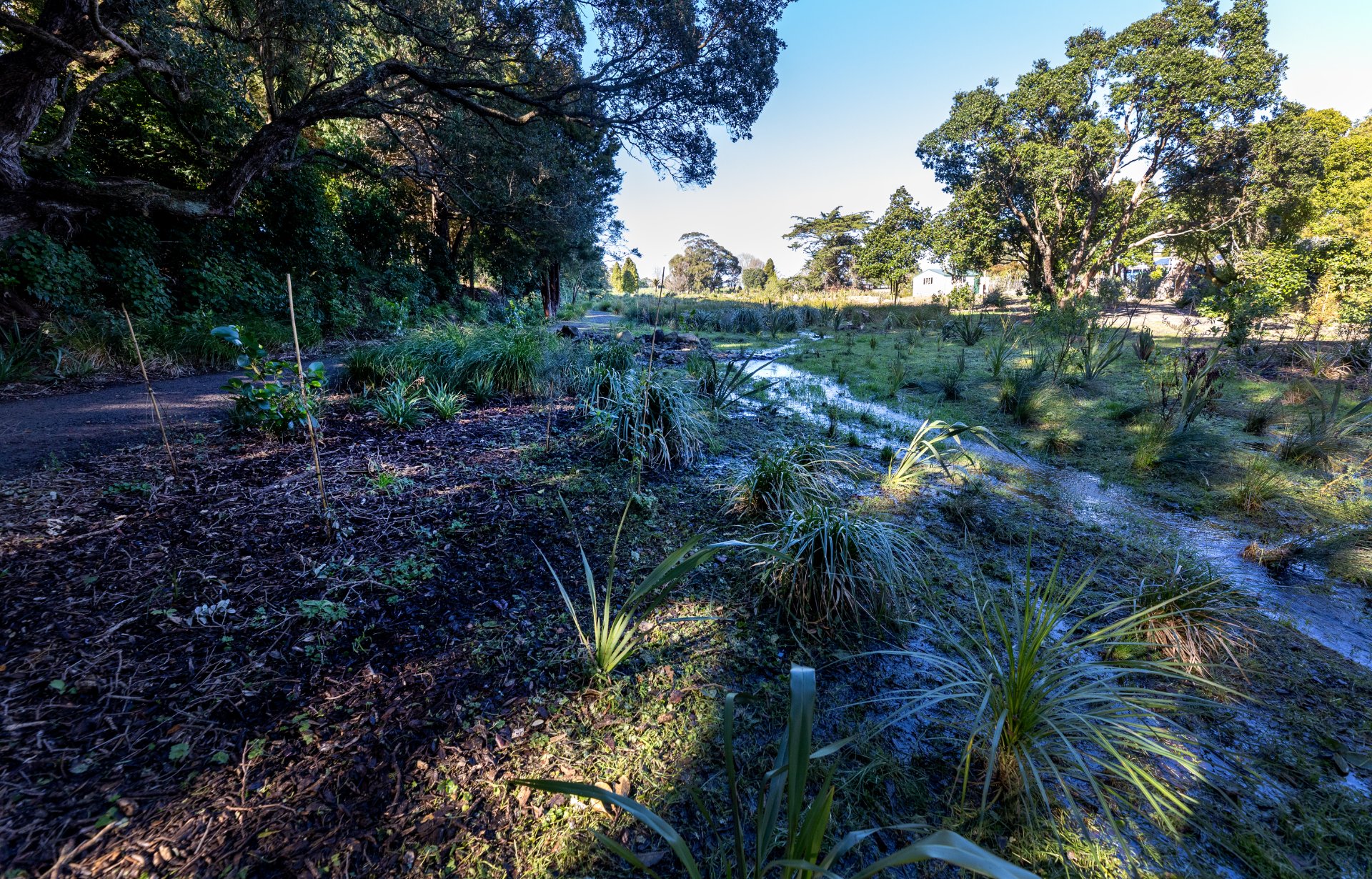
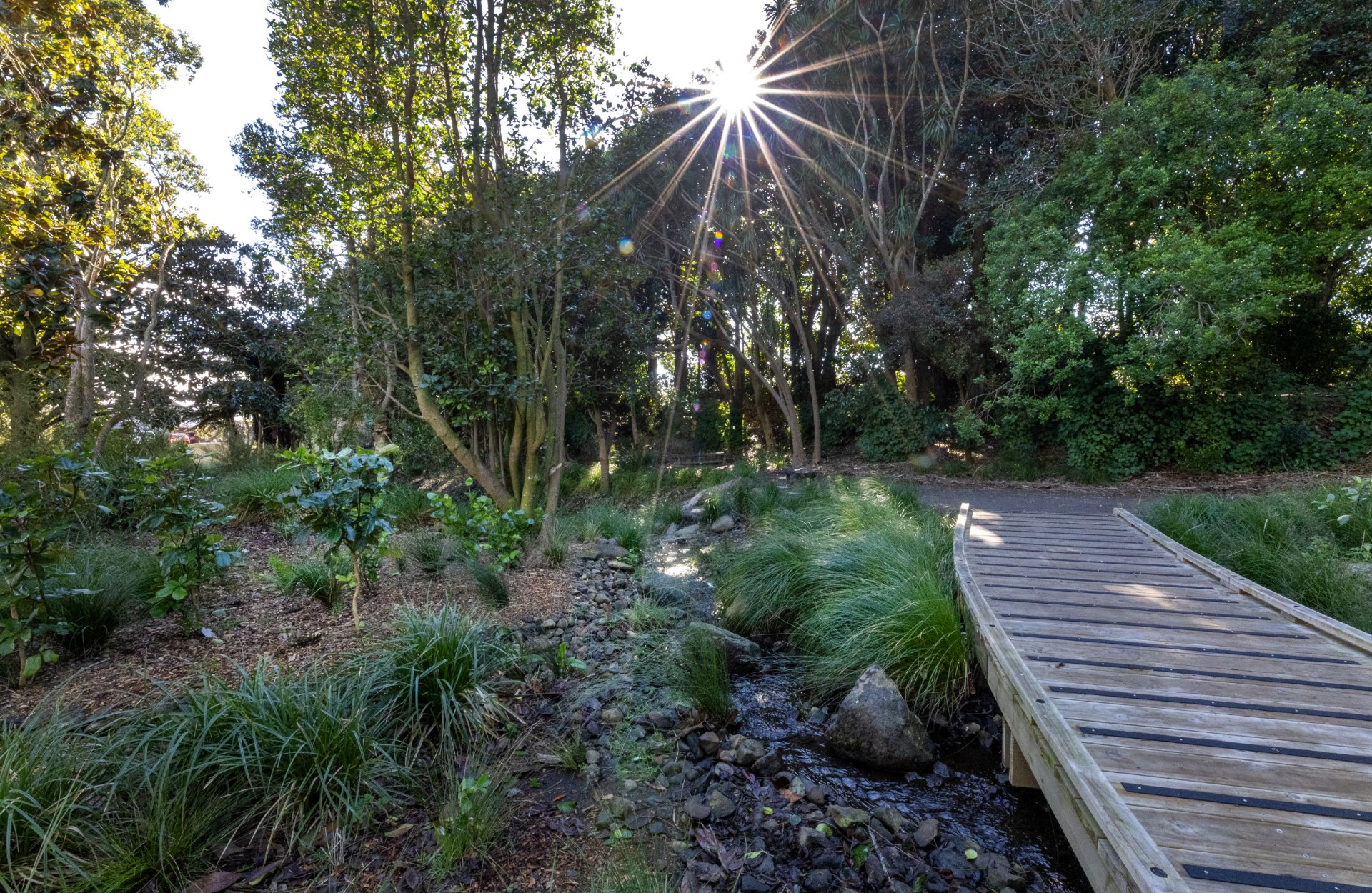
In keeping with the new approach, the silt-blocked pipe was left in place but permanently plugged. Where necessary, targeted, subtle shaping of the banks and streambed encouraged natural channel formation. In suitable areas, shallow scrapes created temporary storage pools, which would fill during periods of heavier rainfall and help to increase resilience in the wider network.
Material selection focused on local provenance, including the whakapapa of the rocks used in the rock cascade. As an example, the rocks used within the Tangaroa for the cascade came from the Manganui Awa – the Manganui is fed by Taranaki Maunga, and after travelling many kilometres, the Manganui flows into the Waitara, the two becoming one. The Tangaroa flows into the Waitara hence the rocks have moved but are no strangers, reinforcing whakapapa connections.
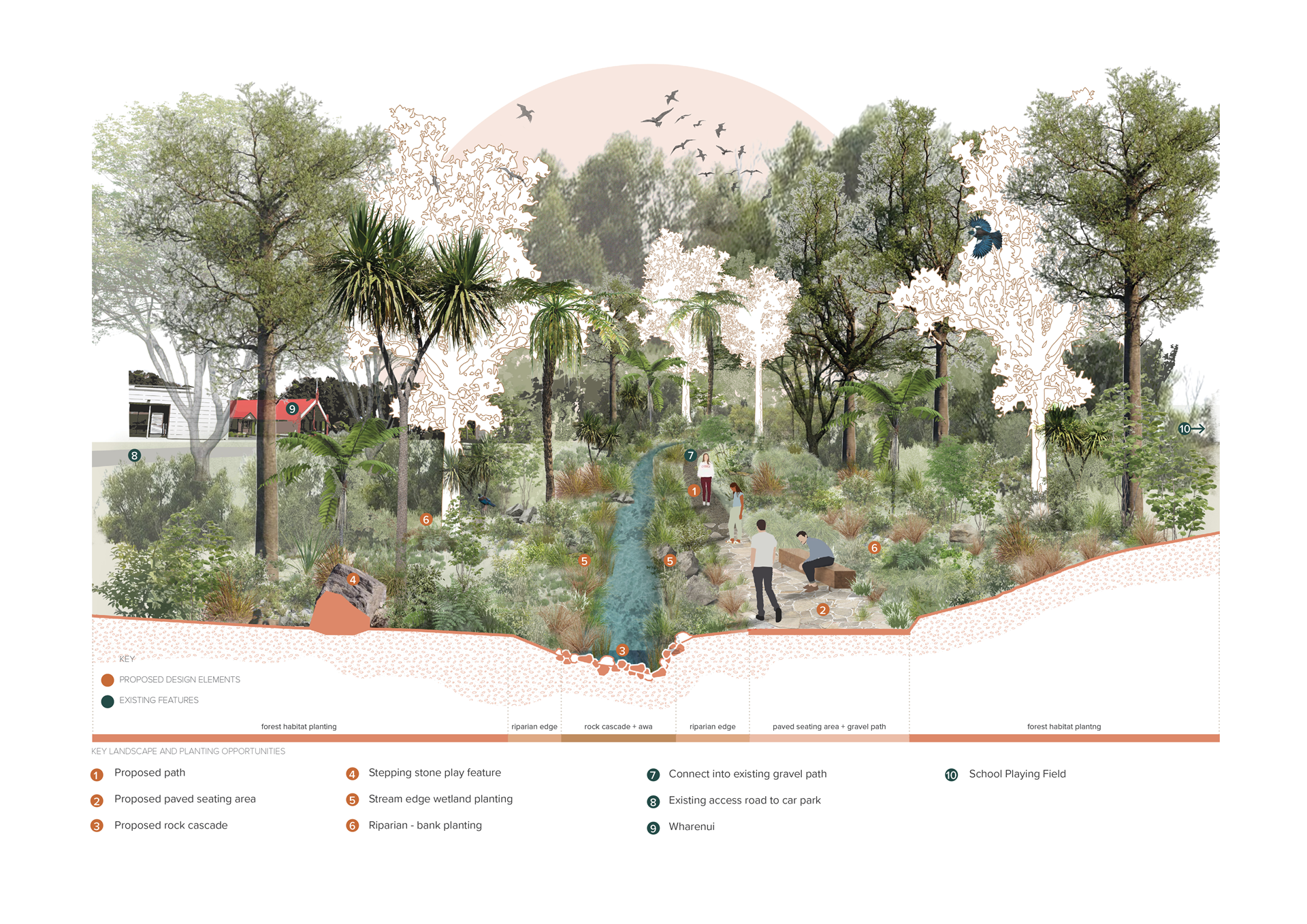
Artist's impression showing key landscape and planting opportunities
Strategic outcomes
Both the early design and the final built solutions would have met the project’s original strategic objective to increase flood resilience for the Waitara community. However, the nature-based/mātauranga approach initiated by Hapū not only achieved this aim but also facilitated greater cultural, social and ecological outcomes – with less risk of disturbance to taonga, reduced impact on soil quality and tree cover, and afforded a lower overall cost.
Emotional and functional success
In June 2025 the built scheme through Owae Marae was completed and the Tangaroa once again flowed proudly over Te Puku o Tangaroa (the belly of Tangaroa - a wetland area at the Marae).
Soon after construction finished came a true test; July 2025 brought double the expected amount of normal rainfall. Hapū monitored the awa every few hours from early morning until late and saw the awa was able to swell and expand laterally into the flood plain/storage areas created, rather than carving out and incising the channel. Even in these early stages, with small newly planted plants and much exposed soil, the scheme held up and was a testament to the integrity of the vision and intuition of the approach.
Social and ecological success
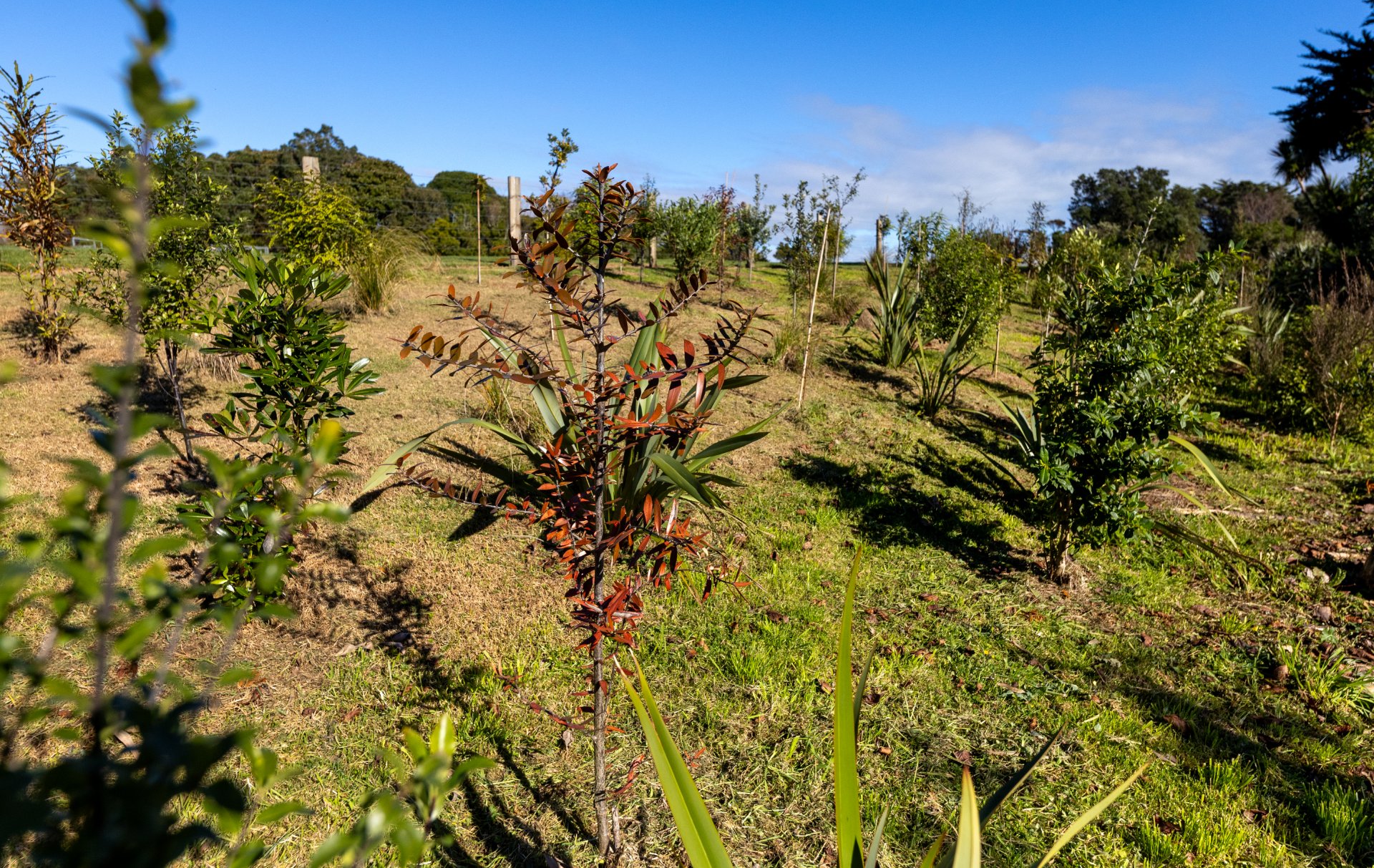
The design provides for nature, by allowing the stream to re-establish its connection with the whenua, soil, rākau (flora) and flow through an ecologically enriched landscape. Ecological areas including forest wetland and stream edge wetland incorporate regional plant and tree species that have been grown in a local nursery. Local rocks and woody debris sourced from site has been used to create habitats for taonga fauna throughout the area.
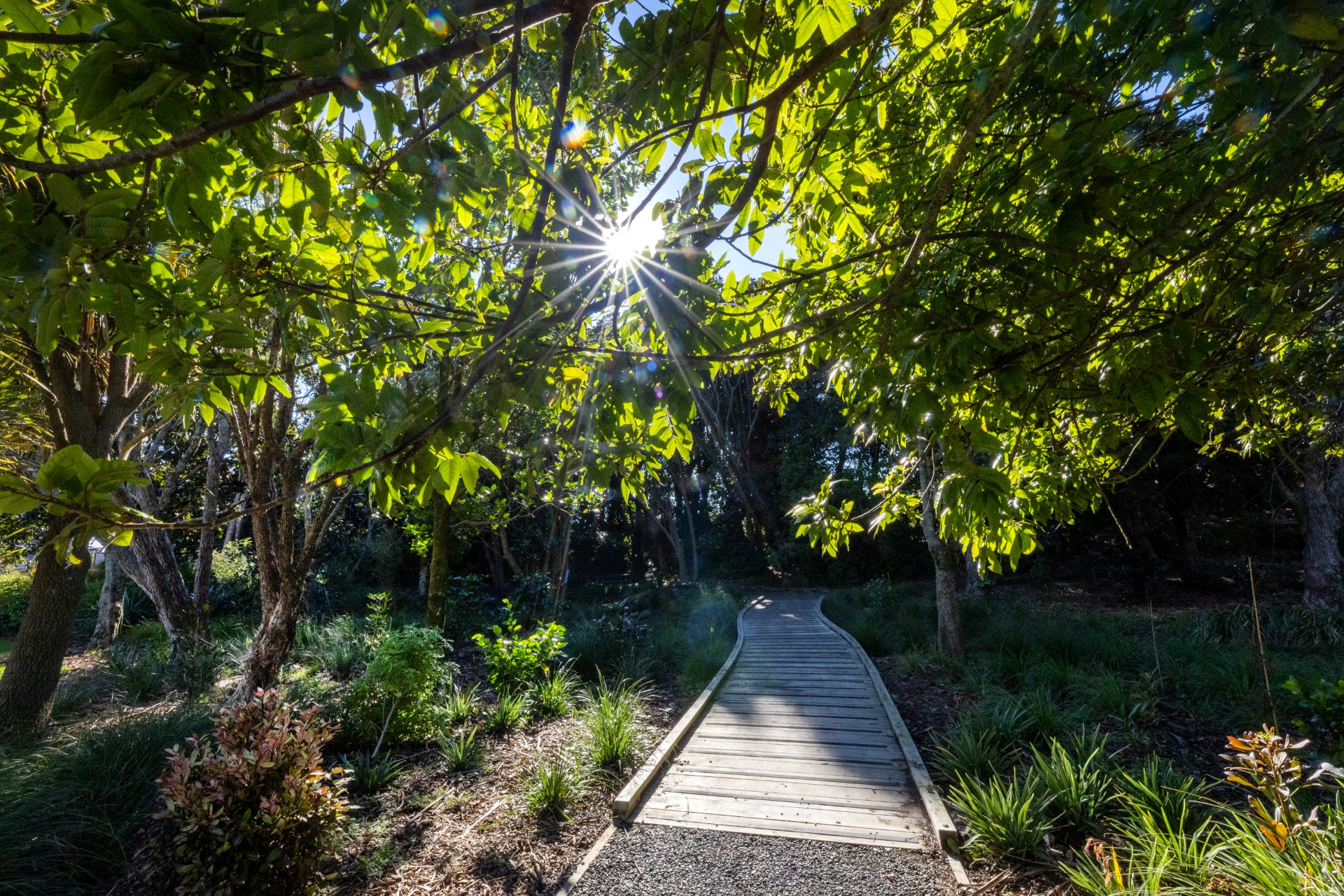
The design provides for people; Hapū and manuhiri, to sit near the awa and listen to it speaking; hearing the sound of the water as it cascades over the rocks and echoes among the trees near the seating area.
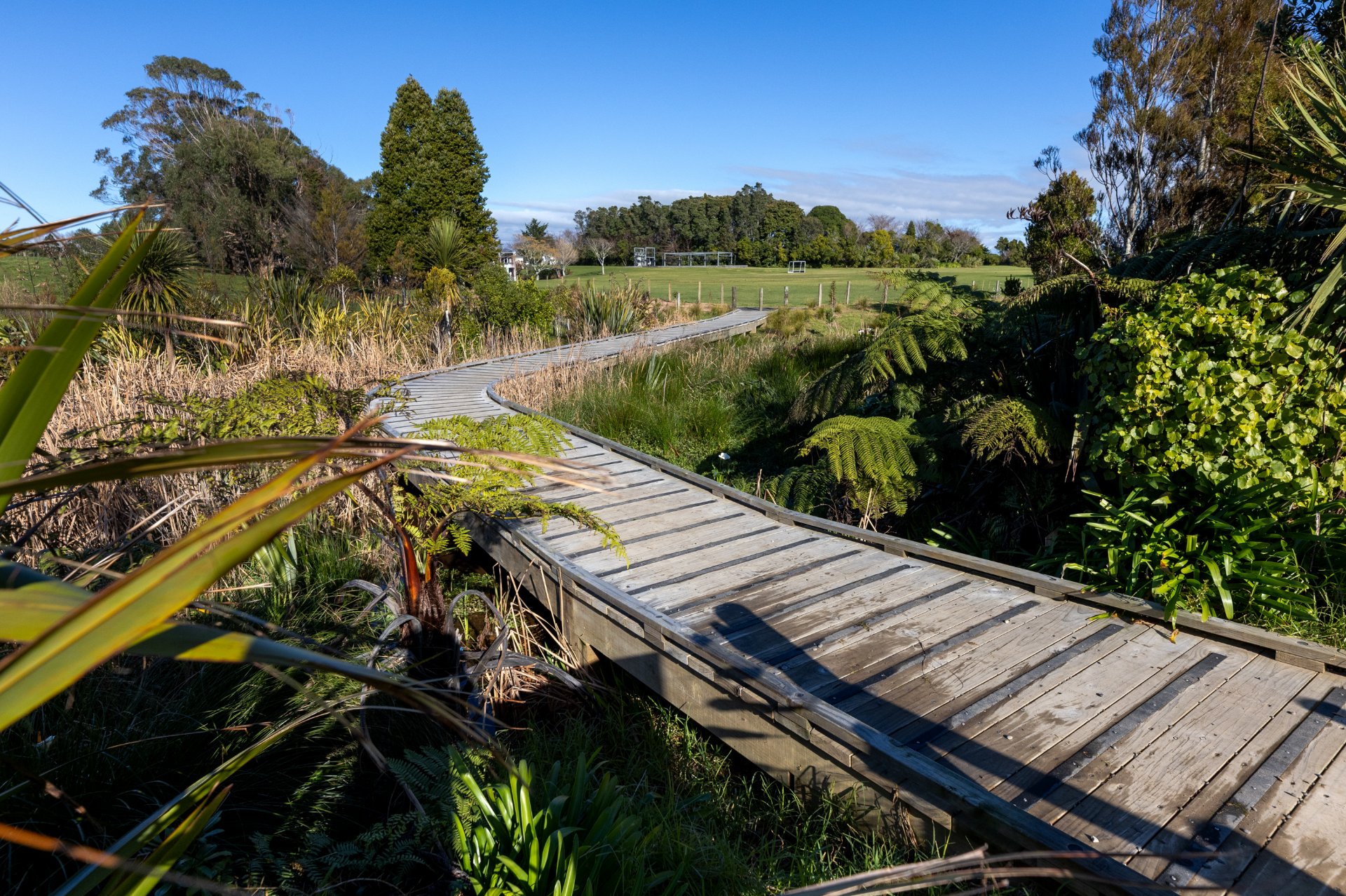
Hapū wanted to encourage access through the site, along the awa for the public and for tamariki from the two adjacent schools and kohanga reo to provide opportunities for nature connection and education. Although the marae is not a public space, it is a space for people to gather and share and Hapū are happy to incorporate signage to educate members of the public that pass through in understanding the meaning of spaces to ensure tikanga is upheld.
Learning
Building strong relationships, and listening to Hapū, was key to successful co-design and to establishing clear design principles that reflected the connection between Hapū and awa and enabled a more cost-effective and nature-based approach to stream daylighting.
Partnership with NPDC and Hapū enabled development of holistic approaches and communication with Council, outlining the process and risks to support project progression and achieve consent.
The early stages were a process of learning to listen to each other, to ourselves and to the awa itself. Although the direction was not always clear or straightforward, the passion and commitment of all parties was constant, to achieve what was best for the awa. Once a clear and common vision was articulated and shared across the partnership team and a clear approach to ‘daylighting’ was agreed, the design, consenting and build process went relatively quickly.
Consenting
A key milestone on the journey was securing Resource Management Act approvals for the in-stream works. The co-design foundation and early communication with the regulators – Taranaki Regional Council and NPDC – helped the necessary approvals to be progressed efficiently and effectively.
Key to this was agreeing technical information requirements and environmental management frameworks required to support the applications, as well as focusing pre-application hui and kōrero around the intended cultural, environmental and social outcomes of the project.
In summary
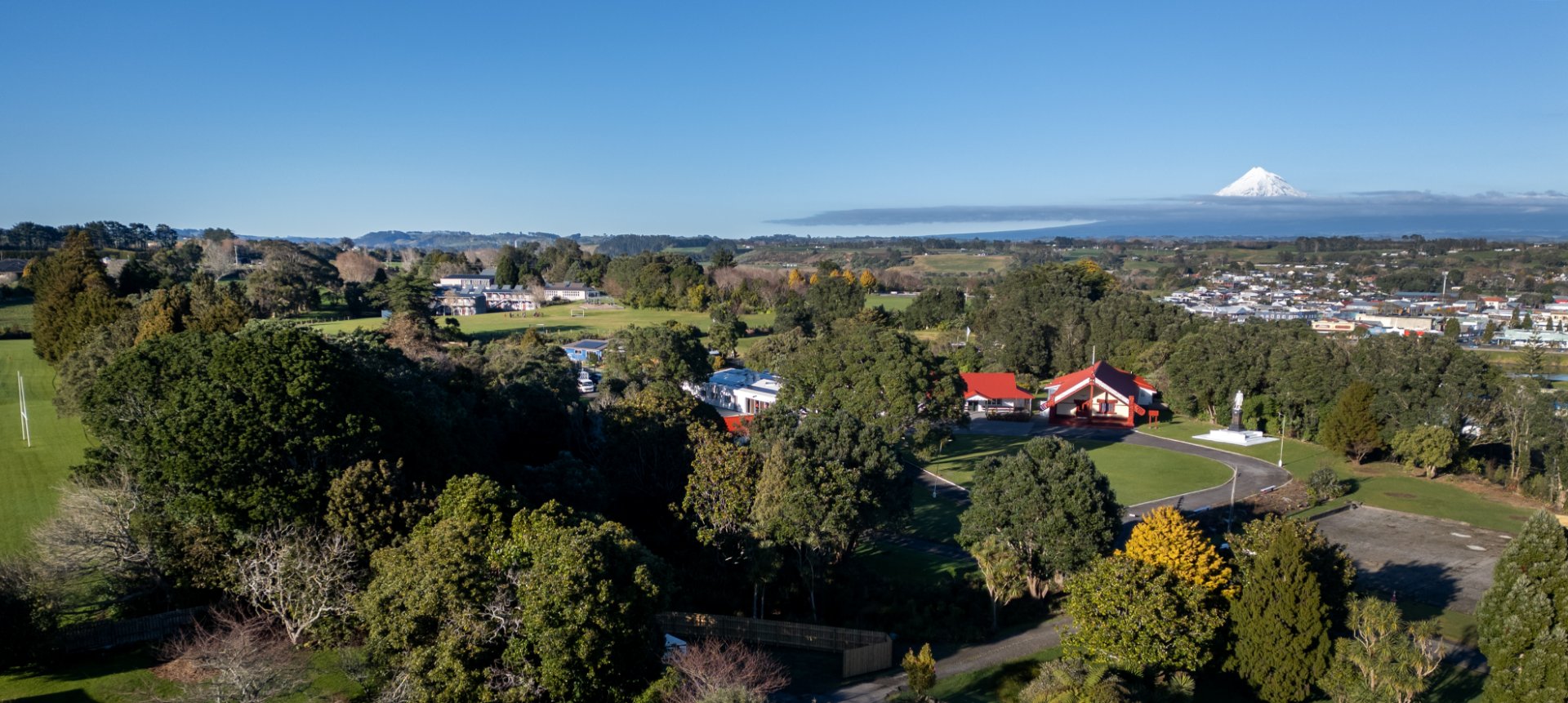
Manukorihi have described how proud they are to see their vision for the Tangaroa implemented, and how it has contributed to the evolution of Owae as a world-class Marae.
Delivered in partnership, Hapū-led, and centred on Te Mana o te Wai and embedding Te Tiriti principles, the Tangaroa Restoration Project demonstrates the power of collaboration, robust relationships, and place-based storytelling.
Together, these elements enabled the co-design of an outcome that supports resilient futures - with nature at its heart - for the next generation.
Client feedback
“It’s been such a rewarding journey working alongside Manukorihi, Beca and Morphum to bring the awa back to life in a way that enhances both the environment and the community. It’s been a long time coming! It’s amazing to see how natural the stream looks already, and agree once the planting matures, it’ll be hard to imagine it was ever piped. Great vision by the project team and thank you for your contribution.”
- Kelly Armfield, Infrastructure Project Manager at New Plymouth District Council.
Karakia o Manukorihi
Mauria mai te Manawanui o Manukorihi
Nau mai te mauri tau
te mauri tū
te mauri ora
Kia hiki te mānuka
Kōkiritia
Haumi e, Hui e, Taiki e !!!
Bring amongst us the resilient and determined spirit of Manukorihi
have composure
have strength
have vitality
Accept the challenge and pursue it
There is strength in unity
The Team
Tangaroa Restoration Project – Section 5 (Owae Marae) Project Team
Kelly Armfield – NPDC Project Manager
Geoff White – Manukorihi Charitable Trust Project Manager
Olympia Merito-Hoben - Manukorihi Charitable Trust Operation Manager
Design Team
Greg Lord – Project Manager (Beca)
Ben Melvin – Stormwater Design Lead (Beca)
Hywel Edwards - Planning Lead (Beca)
George Woolford - Principal Landscape Architect / Project Director (Beca)
Emma Content - Senior Landscape Architect (Beca)
Stu Farrant - Water Sensitive Design (Morphum Environmental Ltd)