Key points:
• AI can dramatically compress the time to plan, design, consent and build projects
• The shortage of engineers threatens Australia’s $242 billion infrastructure pipeline
• Australia is competing for engineering talent across Asia Pacific nations
Australia is short by an estimated 150,000 engineers over the next decade to fulfill planned infrastructure projects in water, energy, defence and commercial construction.
“AI has a critical role in bridging the gap,” says Andrew Mailer, Managing Director for the Australia operations of Beca, a 4,500-person engineering, planning and design firm operating across Asia Pacific.
Speaking at Microsoft’s Cloud and AI Innovation Summit in Brisbane today, Mailer says that AI is helping to dramatically compress lengthy and cumbersome human processes in getting work planned, designed, consented and built.
“In our Australian water business, we’ve built AI assistants grounded in client and regional specific standards that save an average of 30 minutes per complex data query,” says Mailer. “With 160 engineers doing four complex queries a week, that’s a saving of about 15,000 hours annually – and we intended to scale this to 700 engineers with a saving of about 64,000 hours.”
It’s not just about building new, says Mailer, but also about maintenance and operations. For example, assessments of a major Australian irrigation network that involved physical inspection of more than 13,000 assets is now conducted by sensors and aerial, surface and underwater drones followed by AI analysis of high-resolution imagery.
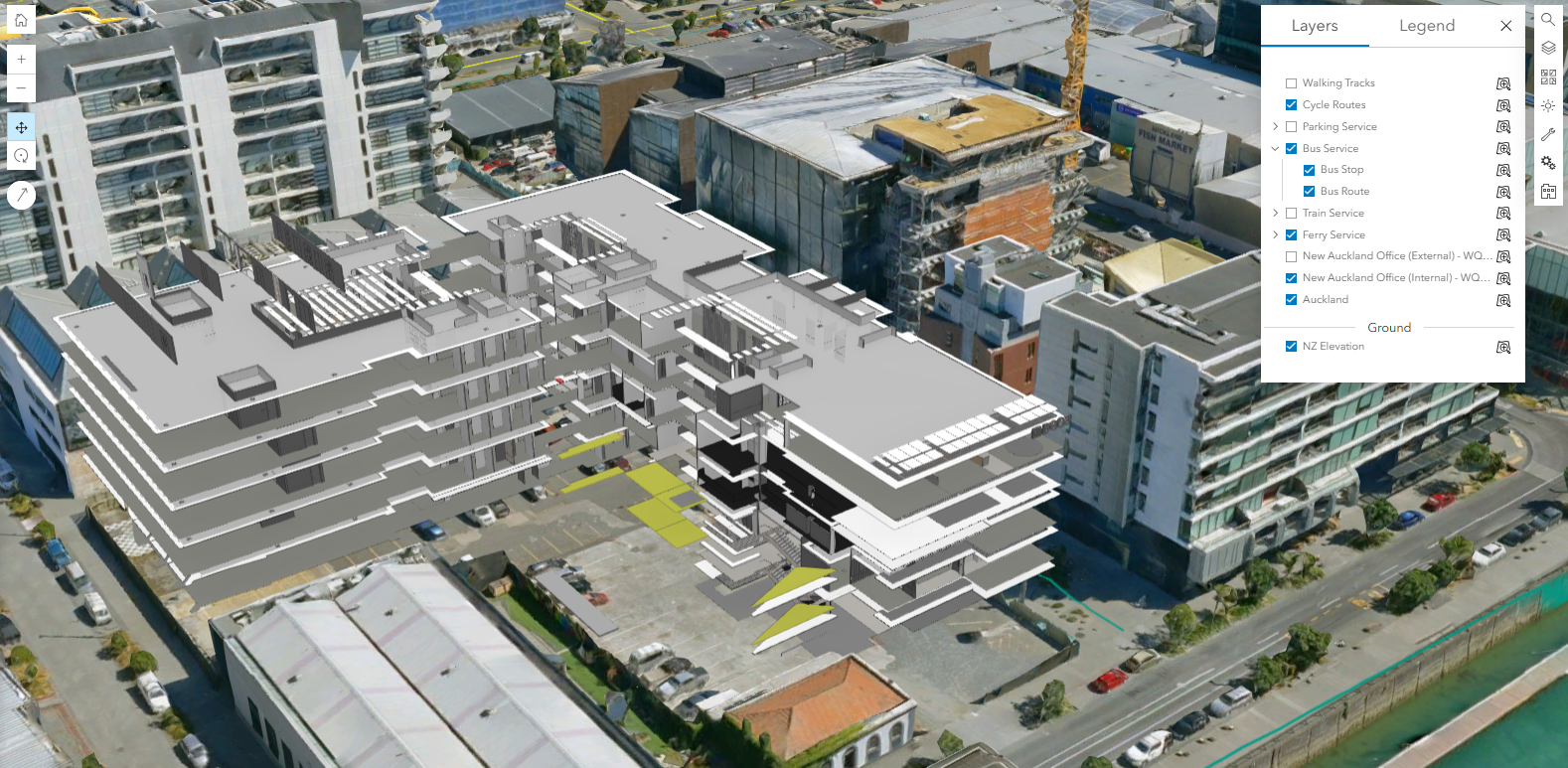
Mailer says AI modelling of urban and industrial structures and the natural landscape is already deployed extensively across its engineering, planning and design operations. Called ‘digital twins’ – this modelling includes regional council spatial plans, airports, critical assets, bridge design, air quality and carbon mitigation, as well as hazard assessment and planning of evacuation routes.
“In the hands of our skilled engineers, AI is making a material difference in the quality of information we’re gathering and the speed of delivery of client projects,” says Mailer. “AI is part of the matrix of solutions to address the acute shortage of engineers and deliver on the five-year Major Public Instructure Pipeline, currently valued at $242 billion by Infrastructure Australia.”
Mailer says that education is a long-term solution. Data from Engineers Australia indicates that 8.5% of Australian graduates hold an engineering qualification, while 2023 data from the Australian Mathematical Sciences Institute says only 8.4% of Year 12 students were studying higher-level mathematics.
While Australia has over 545,000 registered engineers, overseas-born engineers accounted for an estimated 70% growth in Australia’s engineering labour force between 2016 and 2021.
“In the short-term our visa and immigration settings need to be fit for purpose to fulfill national, state and regional infrastructure ambitions,” says Mailer. “Currently there are chokepoints in the settings that result in delays or denials of qualified specialists from other countries.”
Mailer says the shortage of engineers was common in many parts of the world, with Australia needing to compete for talent everywhere, from across the Asia Pacific to the UK, US, Europe and South Africa. “Demand is everywhere,” says Mailer.
“AI can help unlock the conundrum facing Australia,” says Mailer. “On the one hand we have a growing population and a large infrastructure pipeline intended to rapidly meet the needs of water security, the energy transition and our defence capability – and on the other hand fiscally constrained governments, a national skills and productivity gap, geopolitical tensions and confronting climate challenges.”
Mailer says the technology being deployed by firms like Beca can help deliver infrastructure faster, improve asset efficiency and drive Australia’s economic and social advancement.
While employee-owned Beca has a focus on water, energy and defence projects, it also undertakes projects in mining, aviation, carbon mitigation and industrial plants.
Beca has recently worked with Microsoft to aggregate vast, fragmented geotechnical data in a cloud-based digital twin solution, enabling experts to access accurate information instantly and make more confident decisions across sectors like mining, seismic and built infrastructure.