Peacocke is one of the largest greenfield areas on the outskirts of Hamilton and is being developed to help accommodate the city’s growing population. At least 18,000 new homes are needed across the city to house the projected 50,000 more people that are expected to be living in the region by 2035.
Bikes on Pipes
Creating the wastewater infrastructure for the new suburb was a collaborative effort between Hamilton City Council, WSP and Beca using a team of local specialists.
The first stage involved running 7.3km of twin underground wastewater pipes to the area, followed by the creation of the Peacocke Wastewater Transfer Pump Station.
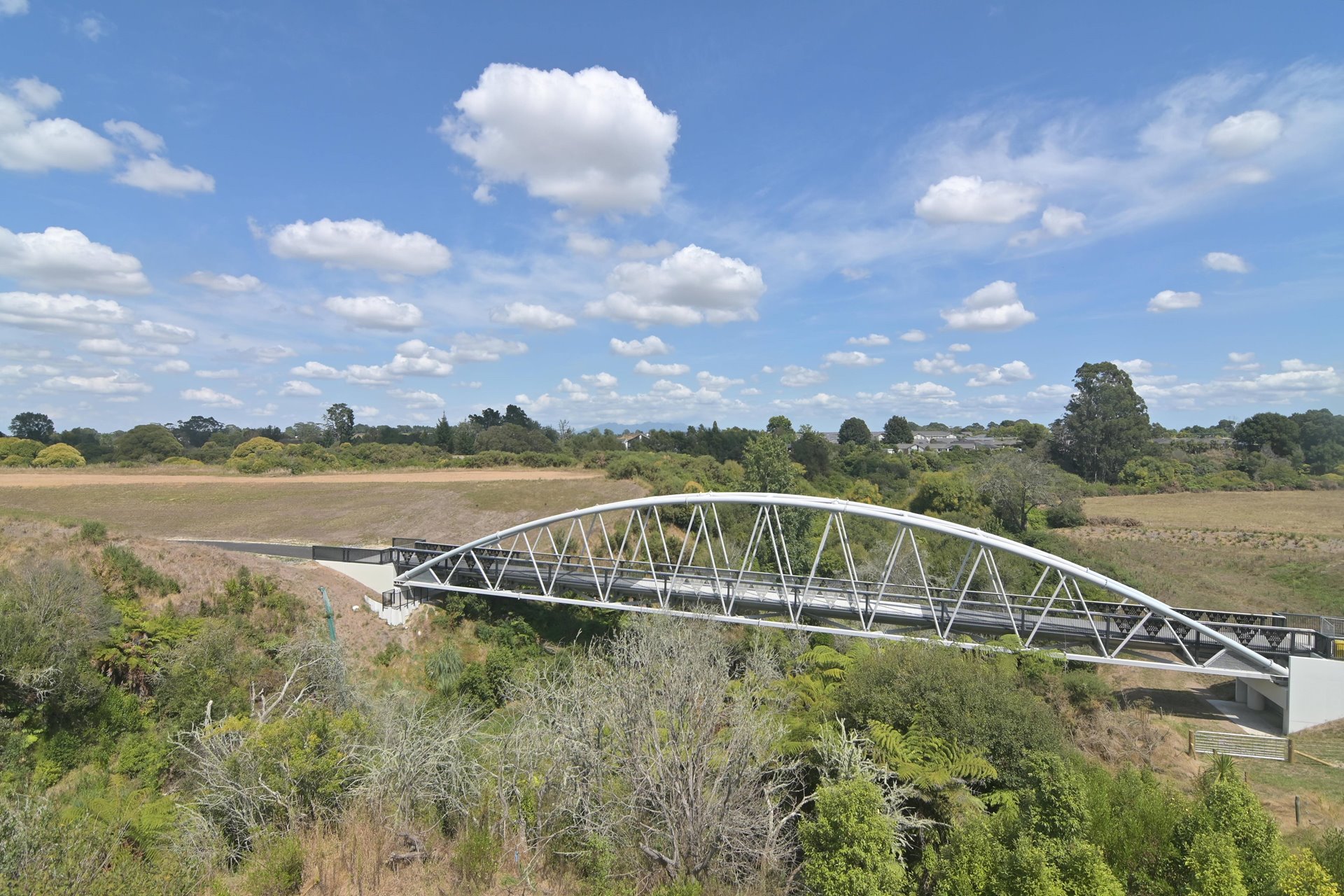
What could have been a pair of simple pipe bridges over a gully has instead become a destination for cyclers and walkers, thanks to the local council’s vision and a collaborative project team.
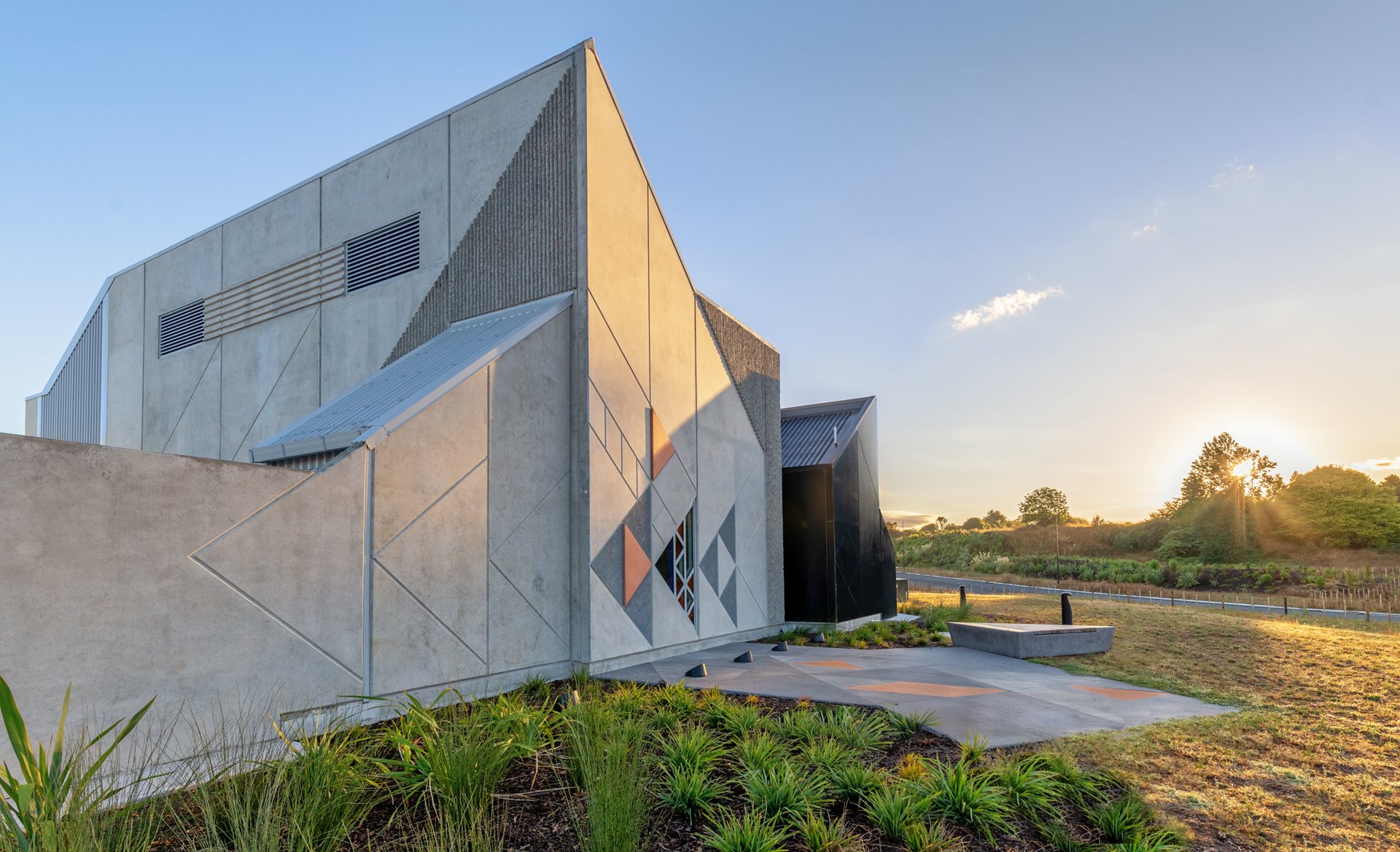
The design of Peacocke Wastewater Transfer Pump Station incorporates weaving patterns on the facade, which were chosen by mana whenua to reference the historical significance of neighbouring streams as traditional trade routes.
The Peacocke Wastewater Transfer Pump Station is a critical asset within the development and is highly visible from new arterial roads and adjacent walking and cycle paths.
Beca Architect Roger Dowling and Landscape Architect Jesse Byrne collaborated with the Tangata Whenua Working Group and Te Haa o te Whenua o Kirikiriroa to guide the project’s narrative, observing sensitivities and tikanga in Māori culture regarding wastewater. A narrative representing movement and trade was established. This is expressed through the triangular building form, façade, landscape treatment, and finishes inspired by whāriki patterns, transforming a utilitarian facility into a sculptural landmark. A viewing window on the southern wall offers a glimpse of the pump room below.
The third stage of the project involved running two wastewater pipes across the top of two gullies. Beca provided full multi-discipline engineering services including geotechnical investigations, geotechnical design, structural design, planning, urban design, and working with an iwi artist to incorporate cultural narrative into the design.
Initially the solution proposed was two simple pipe bridges, but Hamilton City Council and the project team could see an opportunity to do something different that would bring so much more benefit to the community.
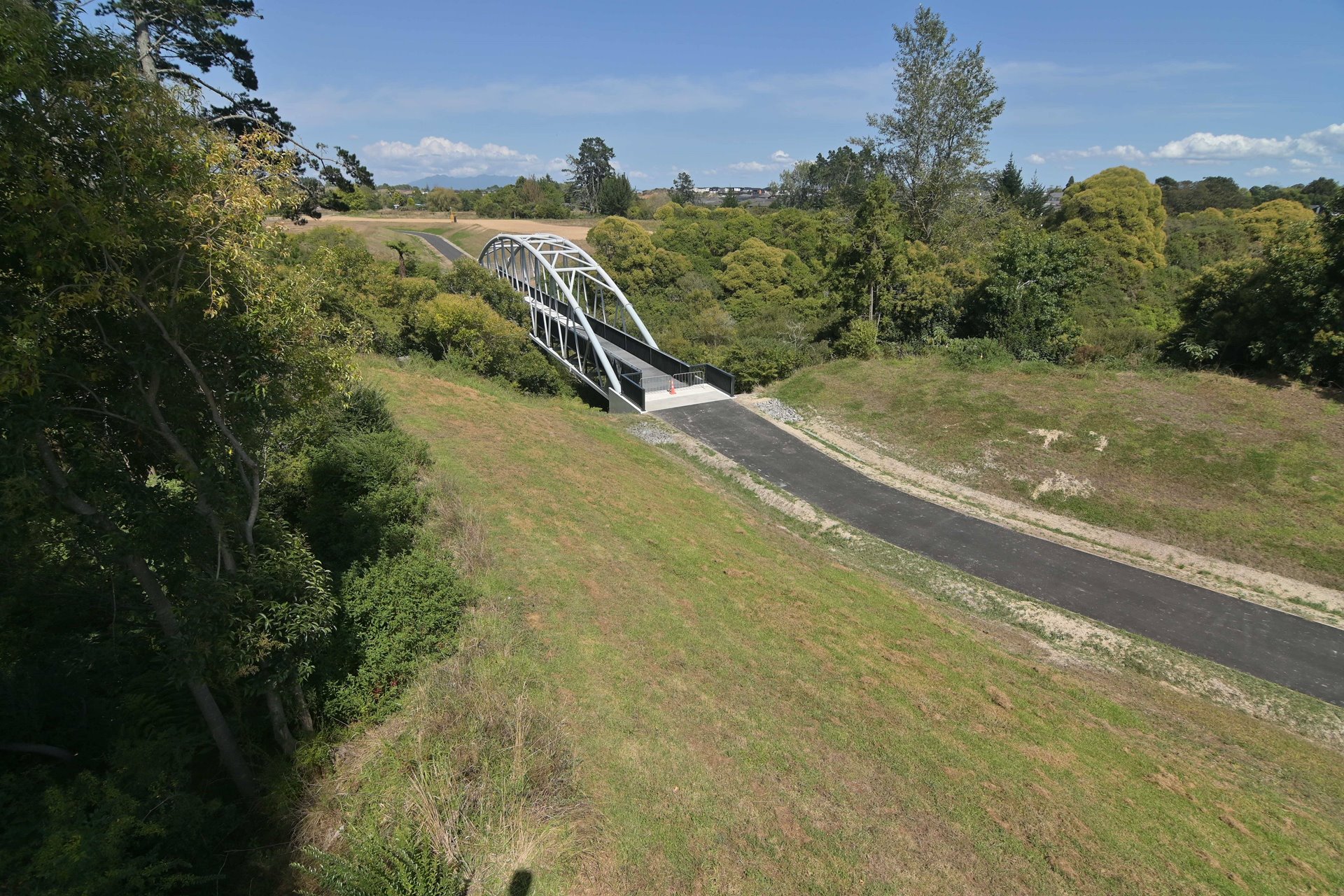
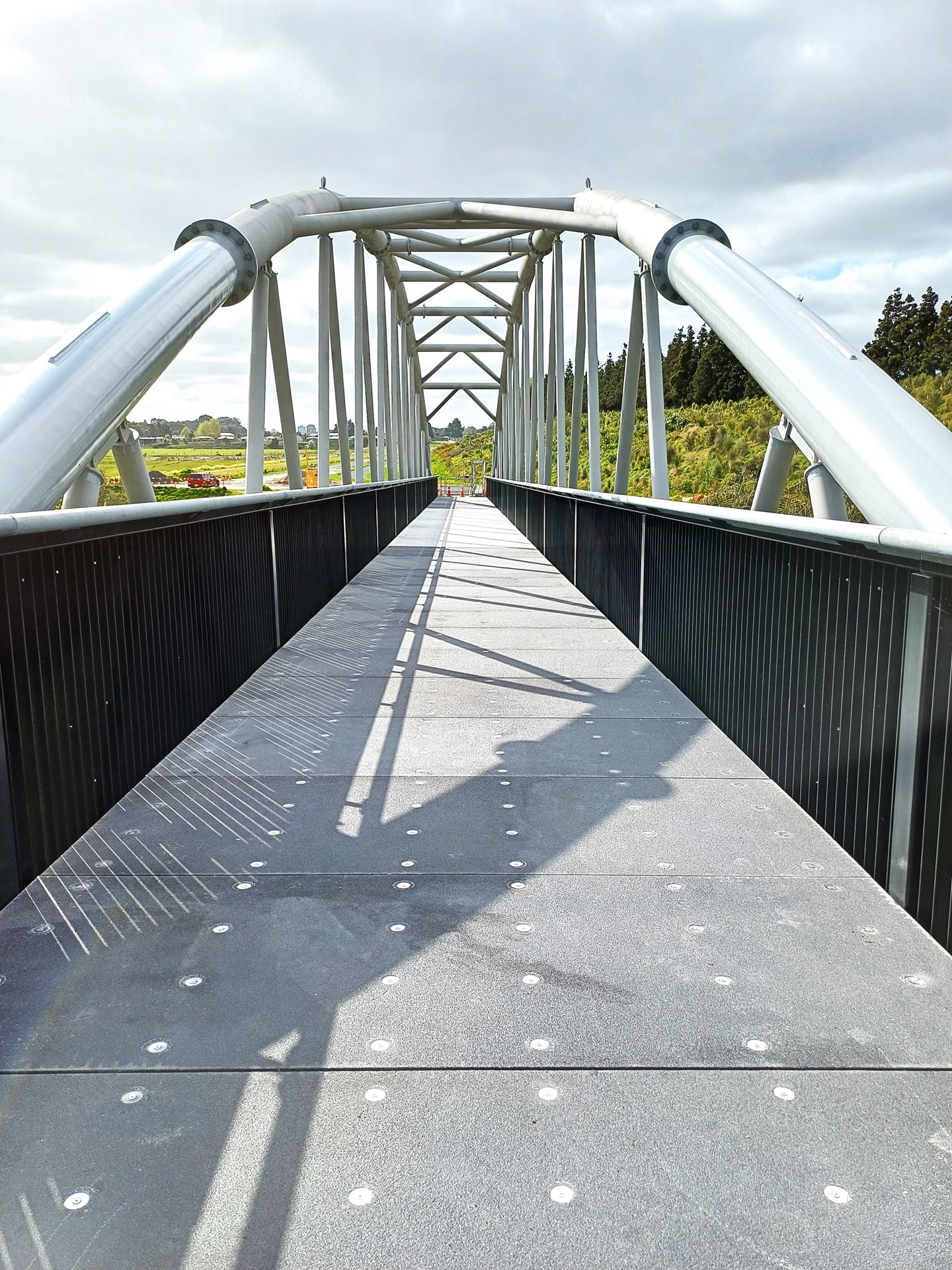
By turning the pipe bridges into pedestrian and cycle bridges, the gullies around the Mangakootukutuku Stream have become a place that people from right across the Hamilton region can enjoy exploring.
Associate – Planning Steph Dean had been involved since the first stage of the Peacocke Wastewater Project, and lead the consenting for this third stage, which became known as ‘Bikes on Pipes’.
“The client had a vision that people would be able to cycle and walk through Peacocke, long before the roads were complete and any cars were driving through. Our bridge design team were able to take that idea and turn it into something real. They were able to show that it was relatively simple to turn a basic pipe bridge into a pedestrian bridge, and that we could do it in a way that looked good within the environment,” Steph says.
“We developed a few concepts on screen to show the client,” Technical Director – Structural Engineering, Liam Edwards says. “We used parametric design tools to change the bridge form on the screen live with the client, so they could understand what it would be. It meant they had confidence that we could deliver what was needed.”
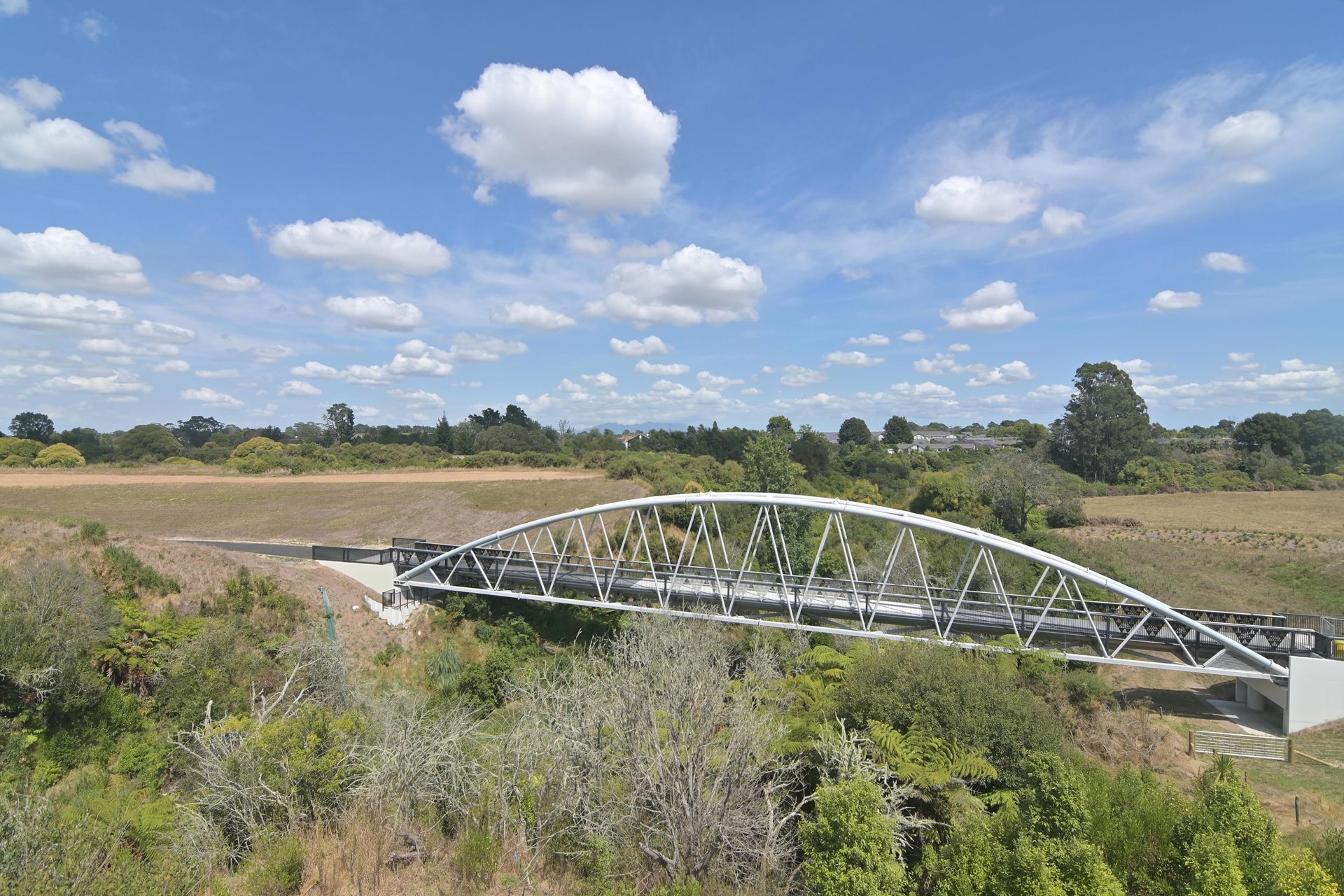
The upgrade to the bridge design was achieved for a relatively small increase in cost. The fact that the span of the two gullies was similar meant two identical 66m-long bridges could be produced, which significantly minimised the expense.
“The steel arch design is an efficient way to span such a big gap. It can be fully built off-site and then lifted into place in one go,” Liam says.
This meant that no heavy machinery needed to be used in the base of the gullies and the flora and fauna could be left undisturbed. The bridges connect to the existing local network of shared paths, allowing people to explore the new suburb.
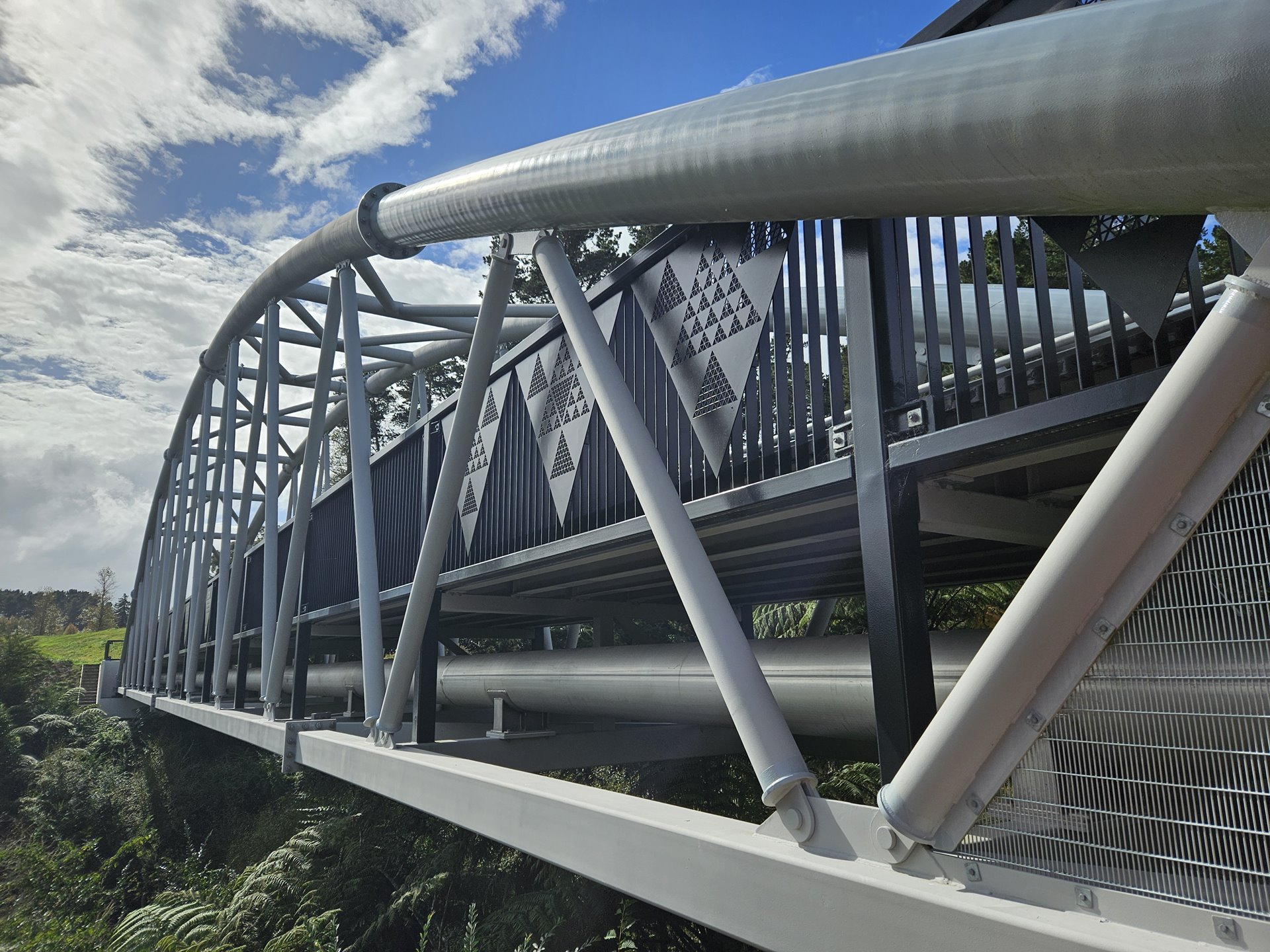
The project team were also able to ensure the design responded to what was most important to local iwi and hapū. The bridge design incorporates patterned balustrades designed by iwi artist Eugene Kara; the arrangement of the diagonals on the bridges’ arch into triangle shapes was also chosen to align with the pattern.
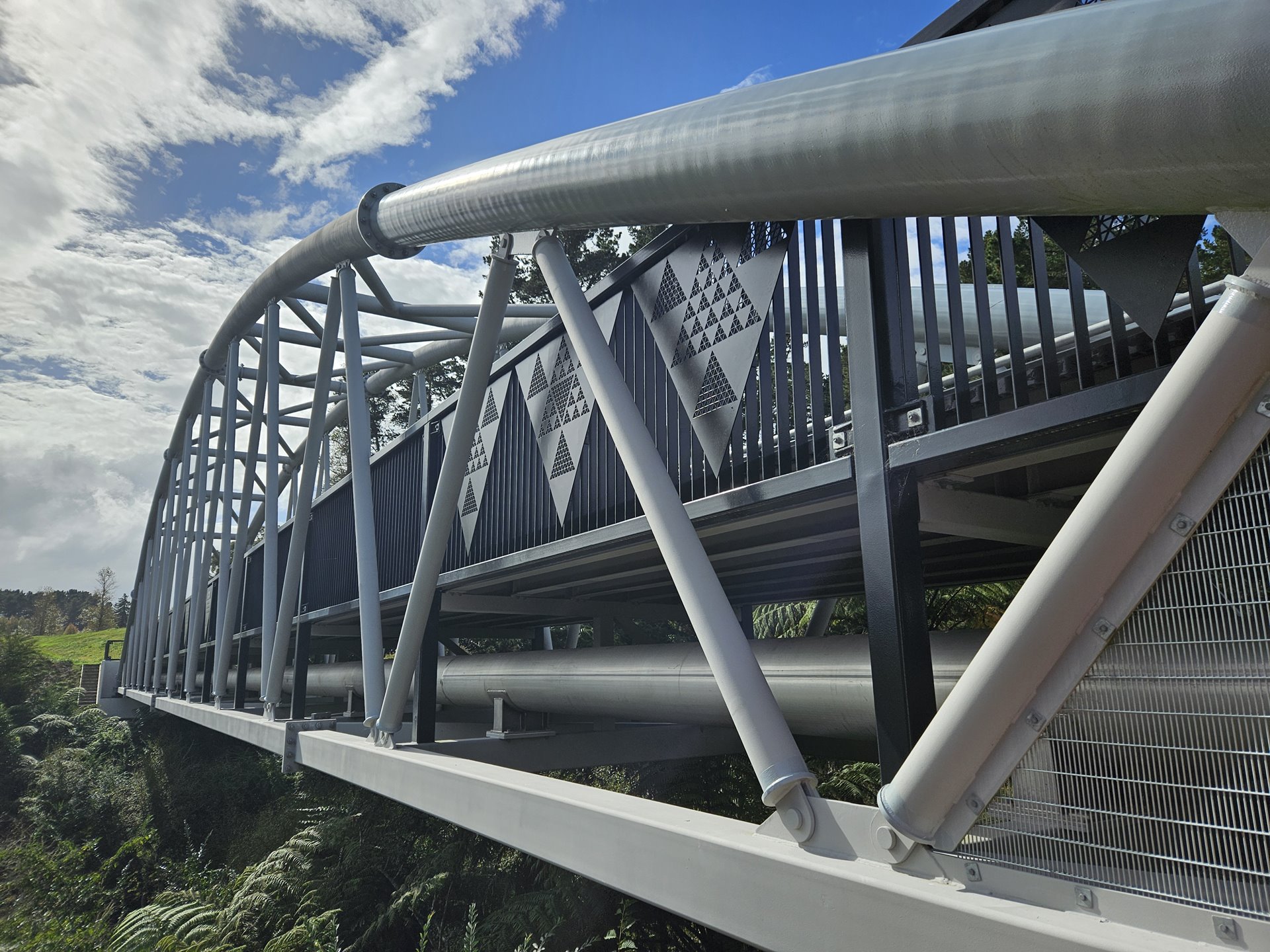
The pattern on the balustrades was designed by iwi artist Eugene Kara
“Not too far from the second bridge there is a pā site, so it was important to make sure we weren’t encroaching on that,” Stephanie says.
“The Mangakootukutuku stream connects to the Waikato River, which is of huge signficance to Waikato River iwi. It was really important to them that the gully and stream be left untouched,” Steph says.
The result is a pair of sleek bridges that skim across the top of the gullies and give pedestrians and cyclists the opportunity to pause and enjoy the natural environment.
“When you’re standing in the middle of the bridge, you feel like you’re within the gully environment and you have a view over to the pā site,” Steph says.
“It’s extremely rewarding to see something built that you played a part in making happen. Now it is something that friends and family can go and use for a cycle or a run. It’s unlocking a whole new community in Hamilton. I went for a run around there myself and to see something that started as just an idea or just a line on a plan become reality, is really cool,” Steph says.
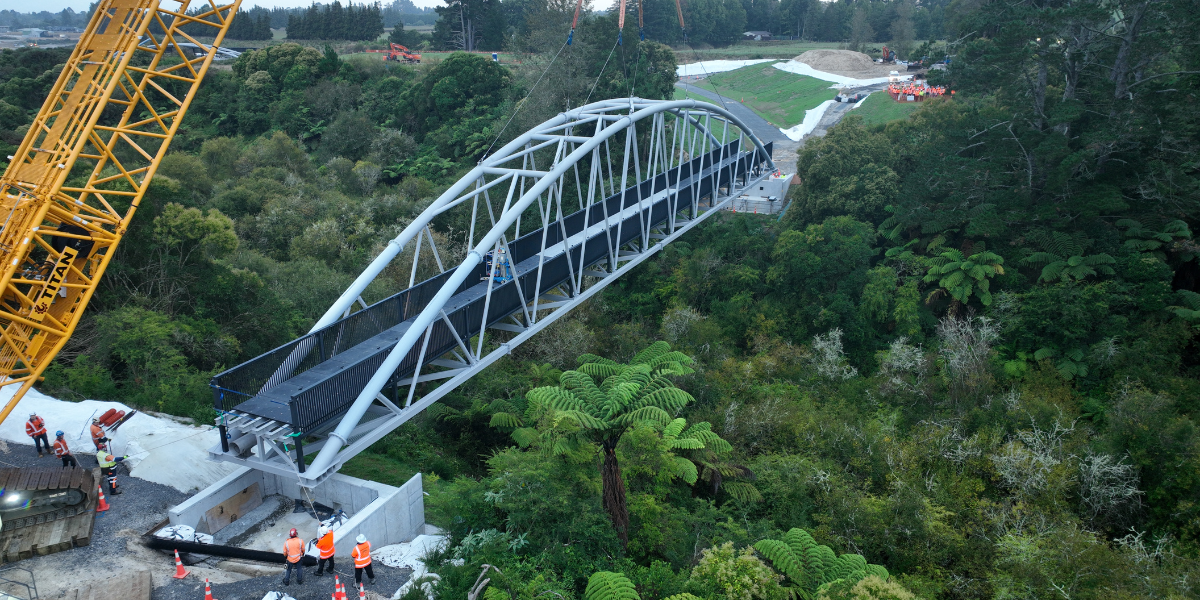
The bridges were lifted into place without heavy machinery disturbing the gully below