Long before Ponsonby Road was home to boutiques and cafes, the ridgeline was a walking route. The overarching narrative and name for this project takes references from the name Te Rimutahi, ‘the lone Rimu tree’, that stood at the intersection of Ponsonby and Karangahape Roads.
Ponsonby’s community plaza
Te Rimutahi also refers to the Ponsonby ridgeline, a walking track from Maungawhau (Mt Eden) through Te Uru Karaka (Newton Gully) to Te Okā pā (Pt Erin) and Te Tō pā (St Marys Bay). The track was an important route for trading and interactions between people and resources.
The site at 254 Ponsonby Road was home to a Catholic church for many years up until 1966, when it was demolished and replaced with a liquor store. Auckland Council purchased the site in 2006 to secure it for a future community space. A community-led design process meant the plans for the site evolved over several years with design competitions for students and then professional designers.
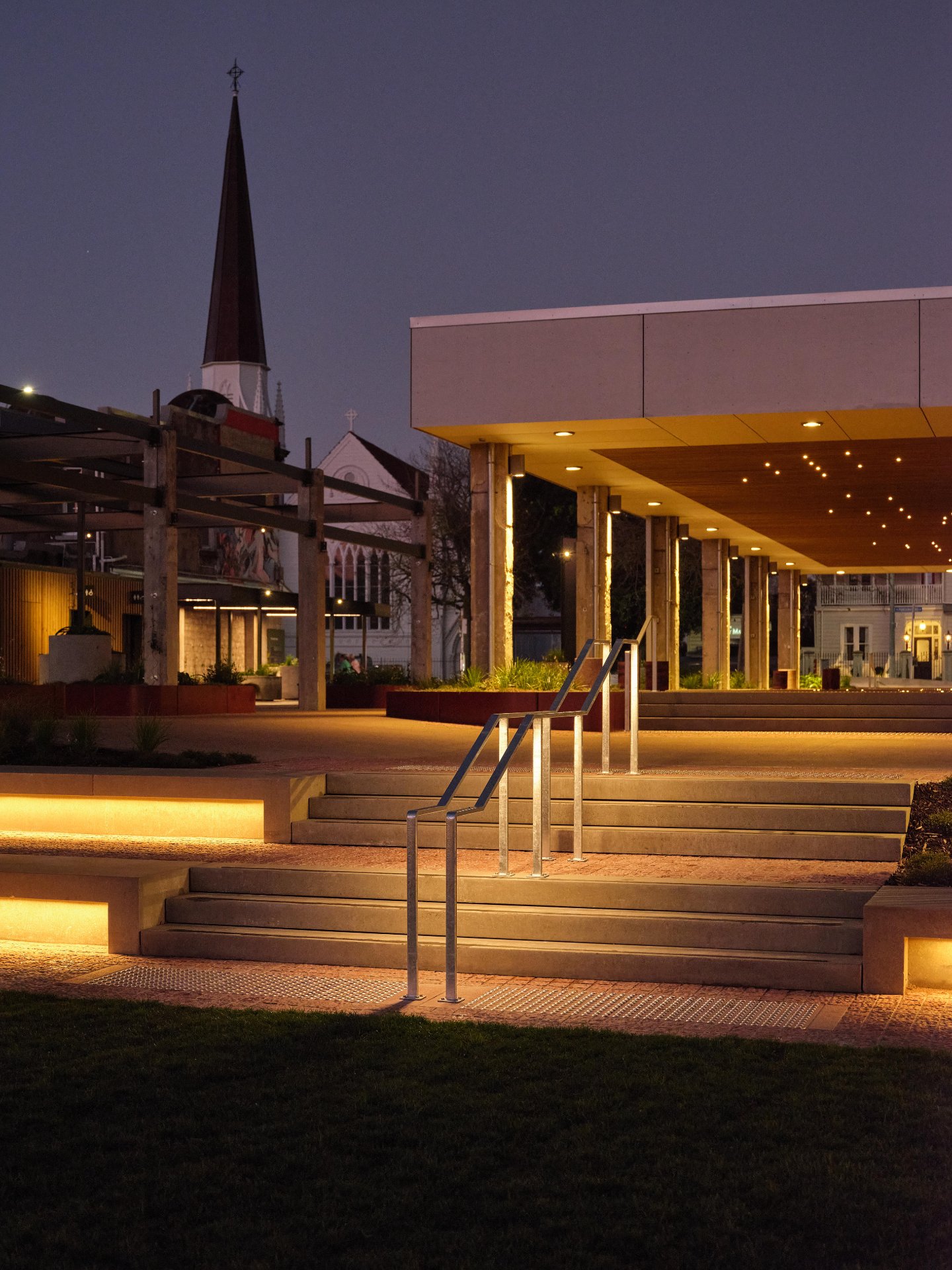
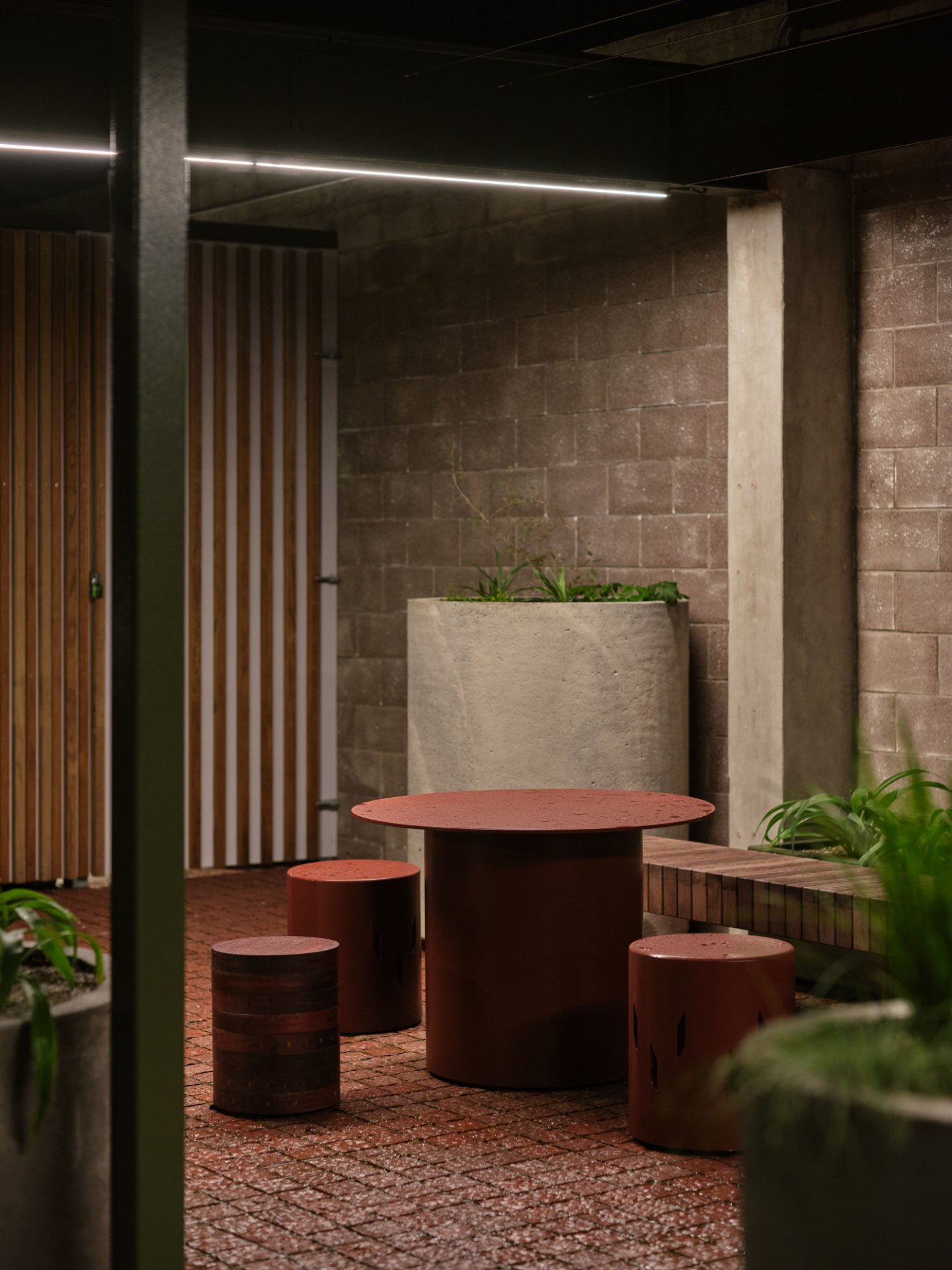
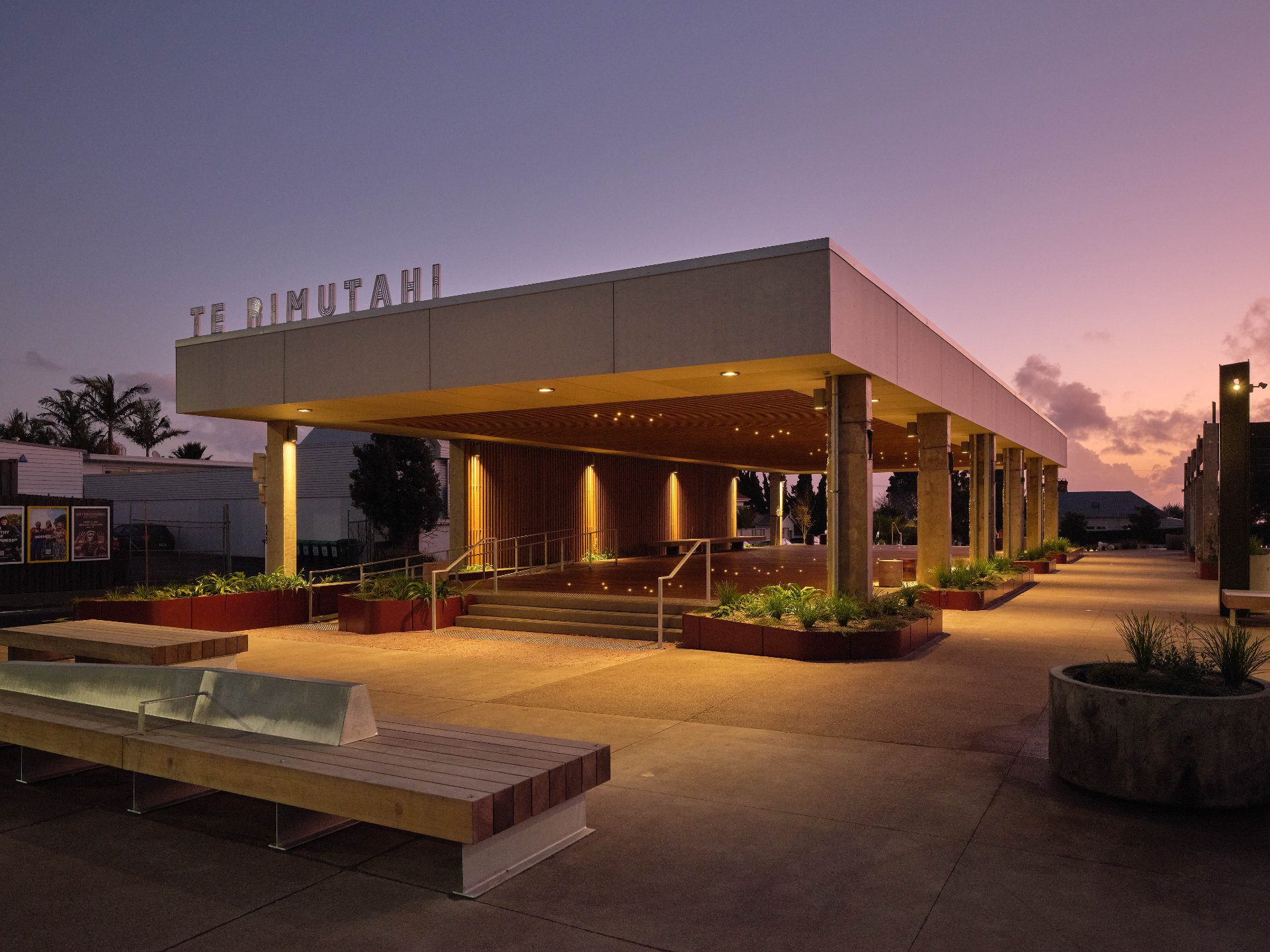
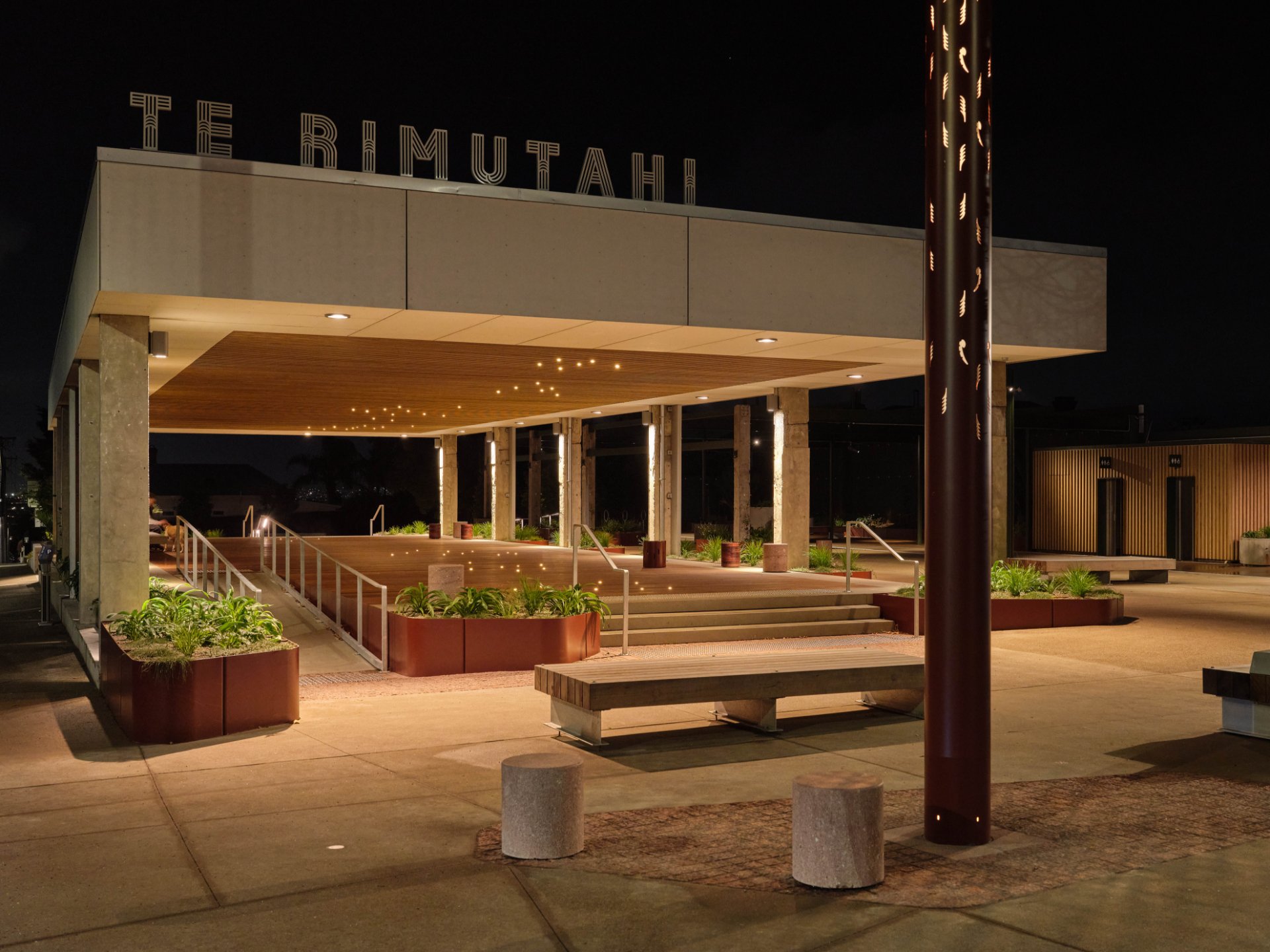
What has been created as a result is a hybrid civic space. The roof that once covered the parking area outside the retail premises has been retained and adapted into a canopy that provides a wānanga space, with ceiling lights representing whetū (stars) and Ranginui (the sky father) with the lighting on the ground representing the connection to Papatūānuku (the earth mother). The canopy provides shelter for passers by; creates a civic performance space; allows for rainwater harvesting to irrigate the planting; plus supports solar power generation for the site (with excess power fed back into the grid). A toilet block was salvaged from a council storage yard and reclad in timber to integrate it into the design scheme.
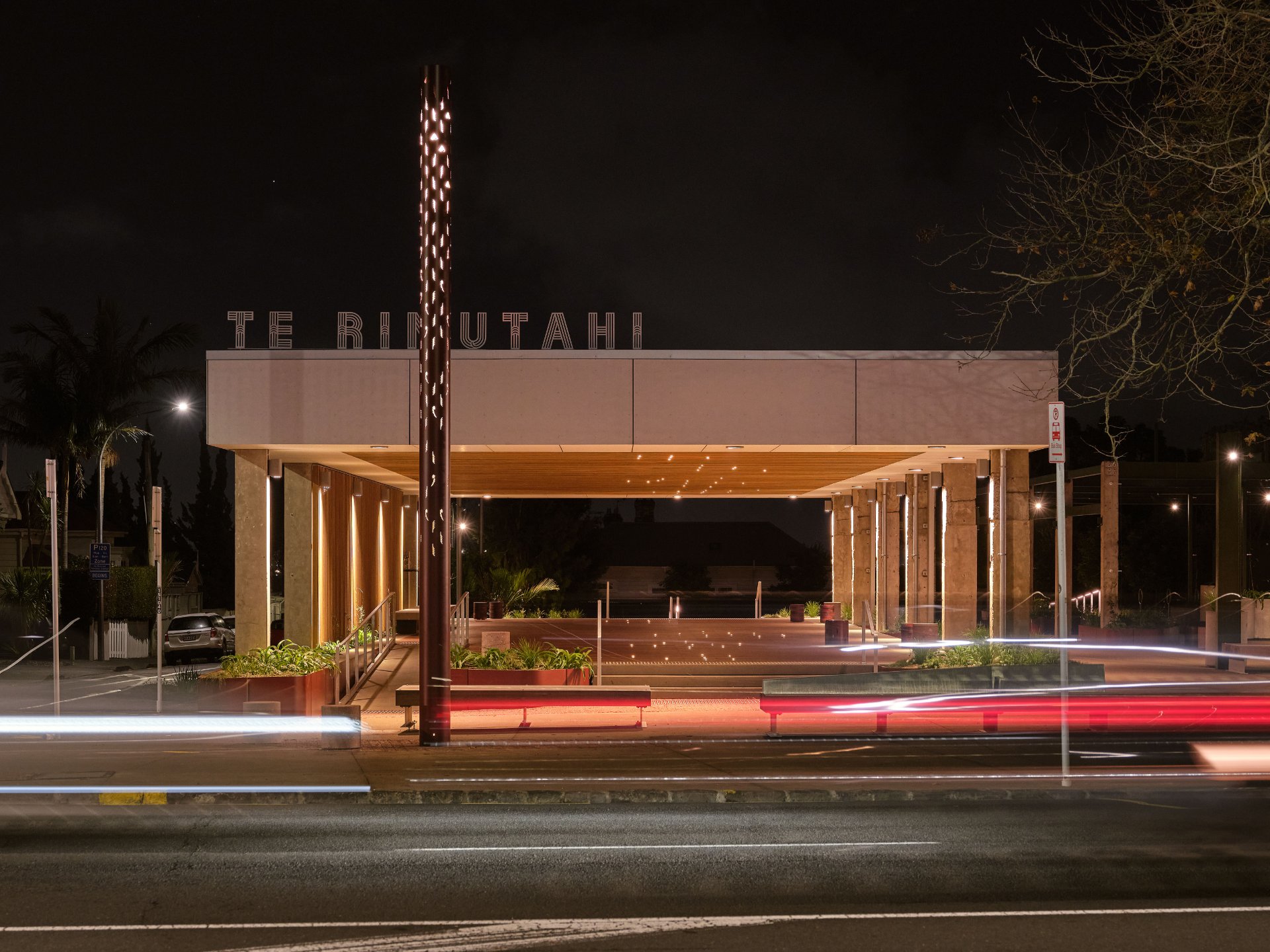
Artist Graham Tipene’s work is featured prominently in the form of a seven-metre pou at the street edge. Te Rimutahi is represented by this vertical marker element creating presence and cultural identity within the street. The Rimu tree has inspired the forms, patterning, textures, ecology and colour palette of the pou and more broadly across the site.
Beca provided civil engineering, structural engineering and lighting design services to the project, working with lead consultant LandLAB.
Alix Abanda and Johanna Späth of Beca led the lighting design.
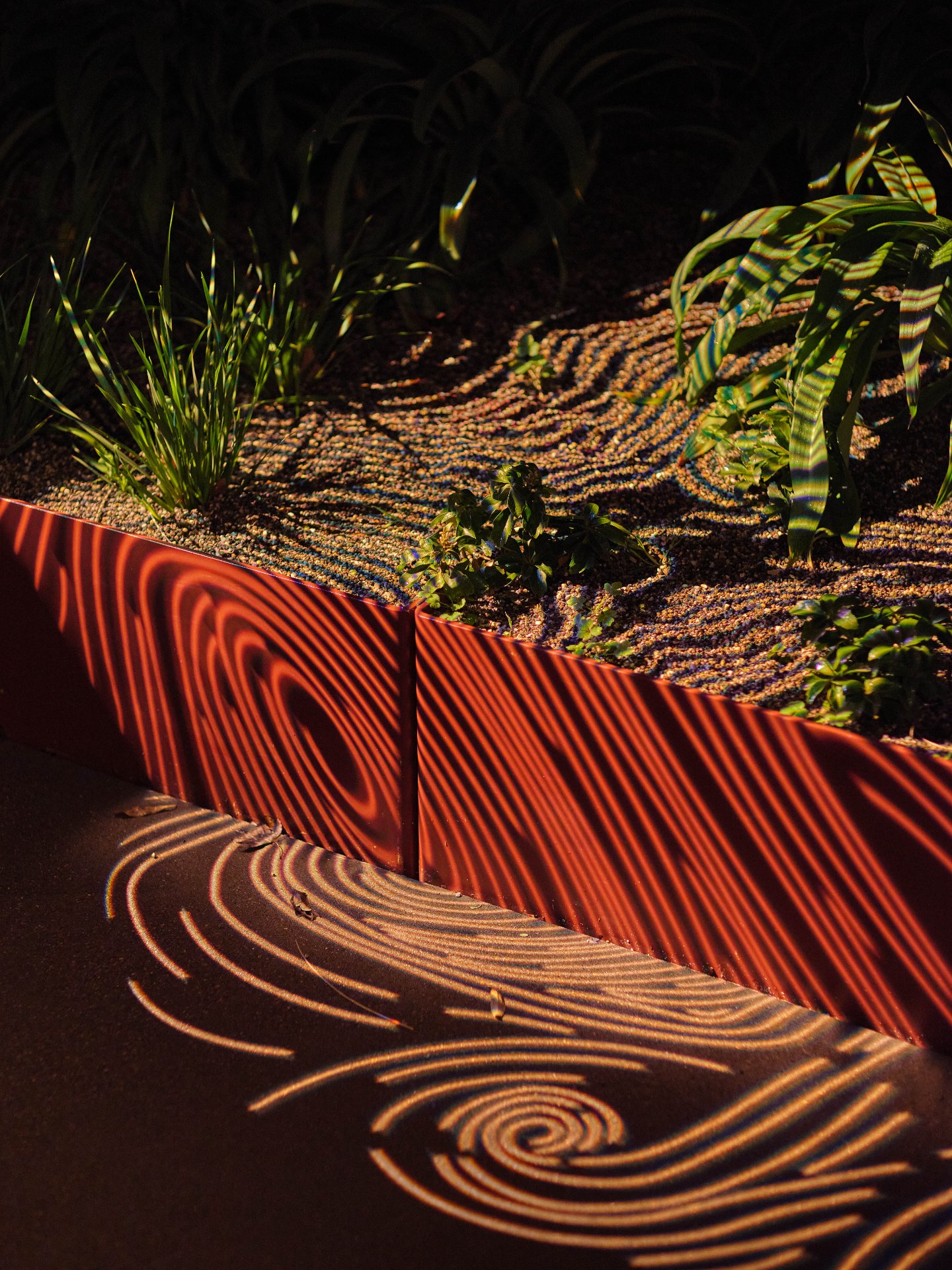
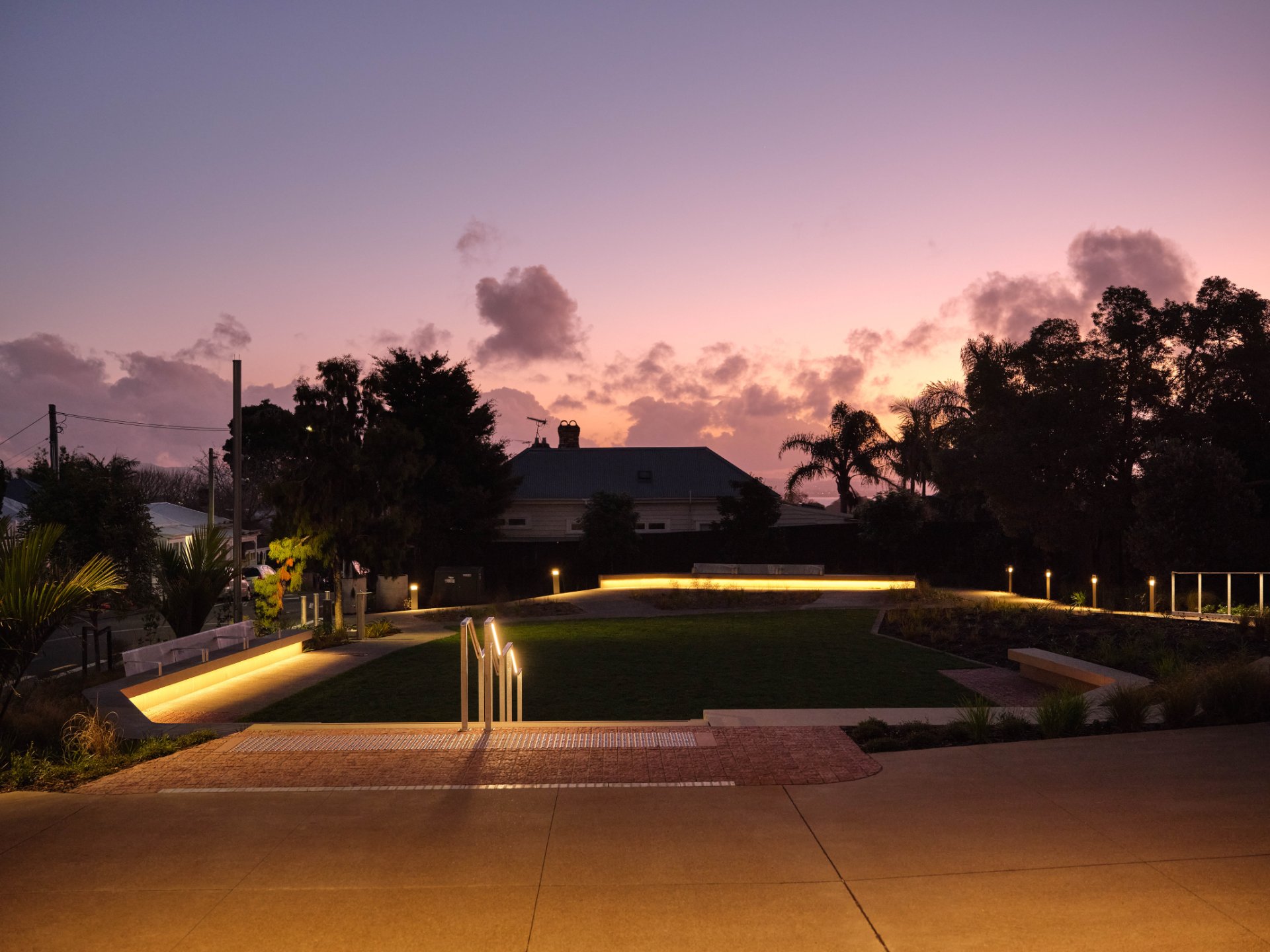
“The lighting really dives into that idea of an urban oasis – somewhere you can rest a little bit,” Beca Associate - Lighting Design Alix Abanda says. “Especially at night, you get this sense of travelling from this busy road to something peaceful and calm. As you go from the edge of the footpath to the green discovery, the light levels dim, which allows you to look at the sky, the stars and the greenery around you, without urban lighting disrupting your vision. There are patterns and gobo lights that activate the urban living room part, which gives another overlay. The canopy has twinkling lights on the floor and ceiling, echoing the stars.”
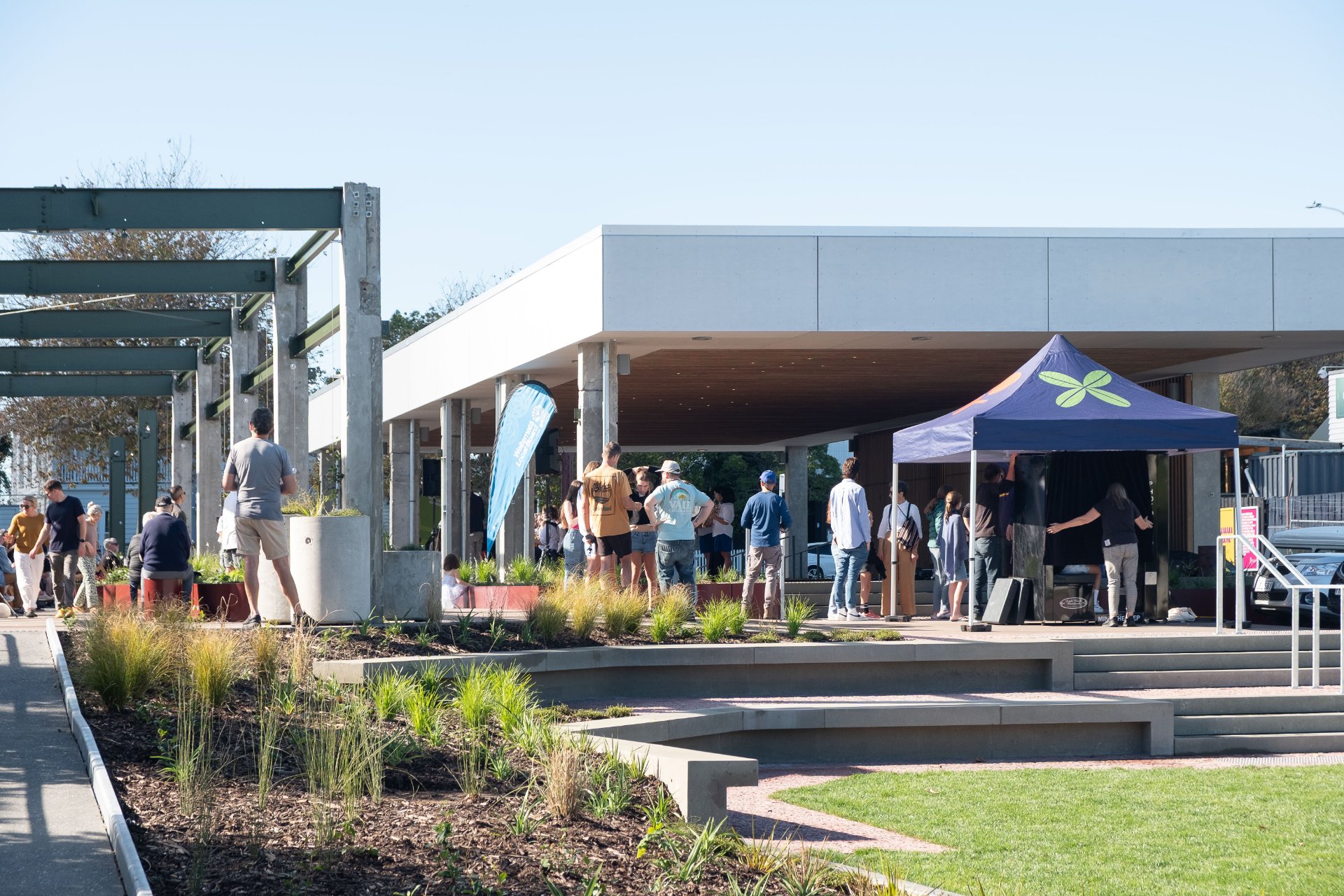
“We repurposed the structural frame of the old liquor store that was there before to make way for this rebuild,” Beca Structural Engineer Nandakumar Koottil Variyam says. “The frame is the backbone of the design, supporting the canopy and green space. It was good to give a second life to those materials. Rather than taking steel away from the site, we reused and strengthened it, and upgraded the canopy roof.”
The project, which opened in 2025, is the result of many years of community consultation. A community group, part of the original design group, now works alongside the Waitematā Local Board to maintain the space and coordinate community activities.
Auckland Council Project Manager Bill Jackson and the Parks and Community Facilities team see the project as demonstrating a thoughtful and highly responsive approach - successfully bringing together design, engineering and community outcomes to deliver a vibrant and welcoming public space.
“It’s a very family oriented place,” Alix says. “You will see kids playing in the grass. My daughter was cycling around there while we were doing the commissioning. From a designer’s point of view, this is the kind of space that brings the community together and makes your work worthwhile. It’s the kind of project that fills your heart.”
Awards

Designers Institute of New Zealand (DINZ) BEST Awards ‘GOLD’ (2025)
IESANZ Lighting Award – Excellence “Protecting the Night Environment” RASNZ (2025)
NZILA Award of Excellence in Unbuilt Visionary (2019)
World Architecture News (WAN) Future Projects: Civic Award Winner (2018)
World Architecture Festival (WAF) Civic Future Project Award Finalist (2018)