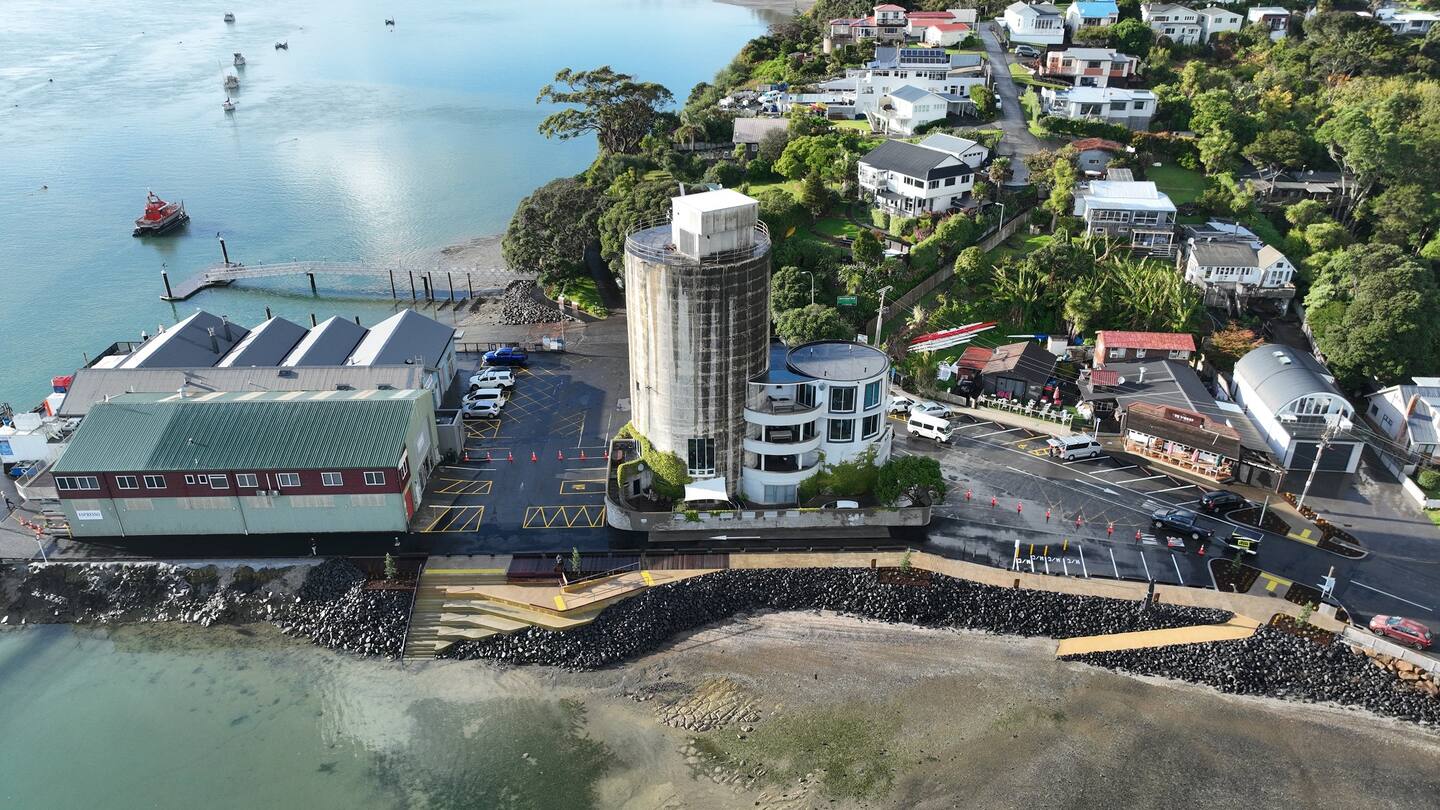
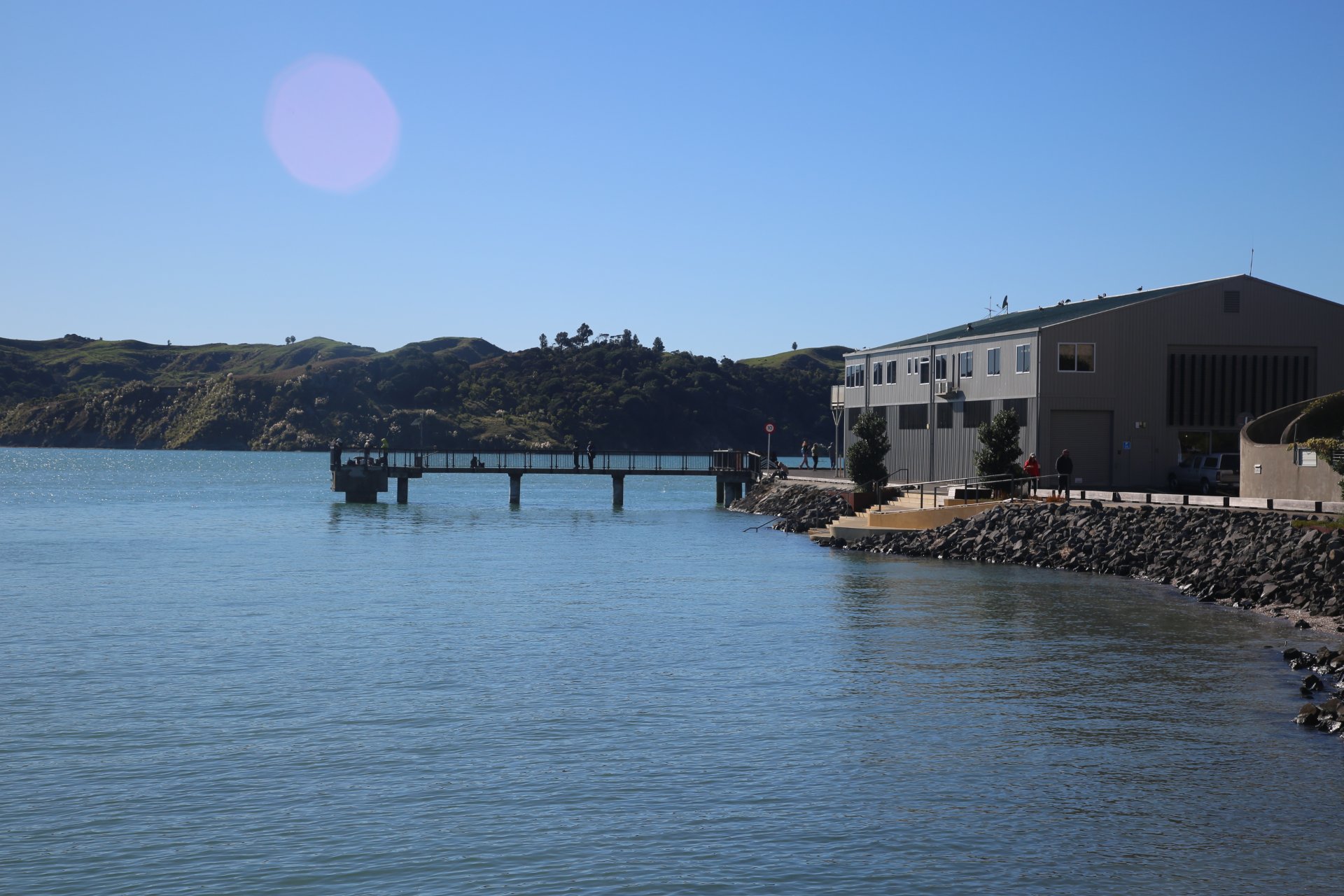
Built in 1921, Whāingaroa Wharf remains a working wharf providing deep water access for larger fishing boats as well as the Coastguard, charter and tour boats. After a fire gutted the buildings on the wharf in 2010, the retail tenancies were rebuilt and reopened in 2012.
Redeveloping Whāingaroa Wharf
It’s a popular destination for locals and visitors wanting to fish off the wharf; launch a boat or kayak; pick up some fish and chips and enjoy the harbour views; visit the artisan retailers that operate out of the wharf buildings; or access the holiday apartments created within the 1960s cement silos.
While Raglan’s resident population is just over 3,000, it receives around 22,000 visitors each week in summer. By 2019, the wharf was in need of repairs to extend its life and improvements to better meet the needs of its various users. With the support of government funding Waikato District Council began redeveloping the wharf across four projects identified by the community:
- A plan (the Whāingaroa Harbour Strategy) for the future of the harbour;
- A new pontoon at the eastern side of the wharf to provide improved capacity and access for loading and unloading of boats throughout the tidal range;
- Essential structural repairs and maintenance to the concrete and steel to extend the life of the existing wharf;
- and the Whāingaroa Wharf Walkways project, which has created a walkway along the western edge of the wharf including tidal terraces, a ramp to access the beach and made pedestrian access to the precinct safer.
Beca was involved in all four projects, providing landscape architecture, communications and engagement, structural, geotechnical, civil, marine and coastal engineering and construction support services.
Beca Associate – Communications and Engagement Regan Powell led community engagement for the Whāingaroa Harbour Strategy, the wharf repair works, and the development of the new pontoon and walkways.
“Genuine community involvement was essential to the success of the wharf projects. We focused on creating meaningful opportunities for locals to shape the work — from hosting on-site community events to share updates and gather feedback, to providing clear, accessible information through signage in the town centre and at the wharf," Regan says.
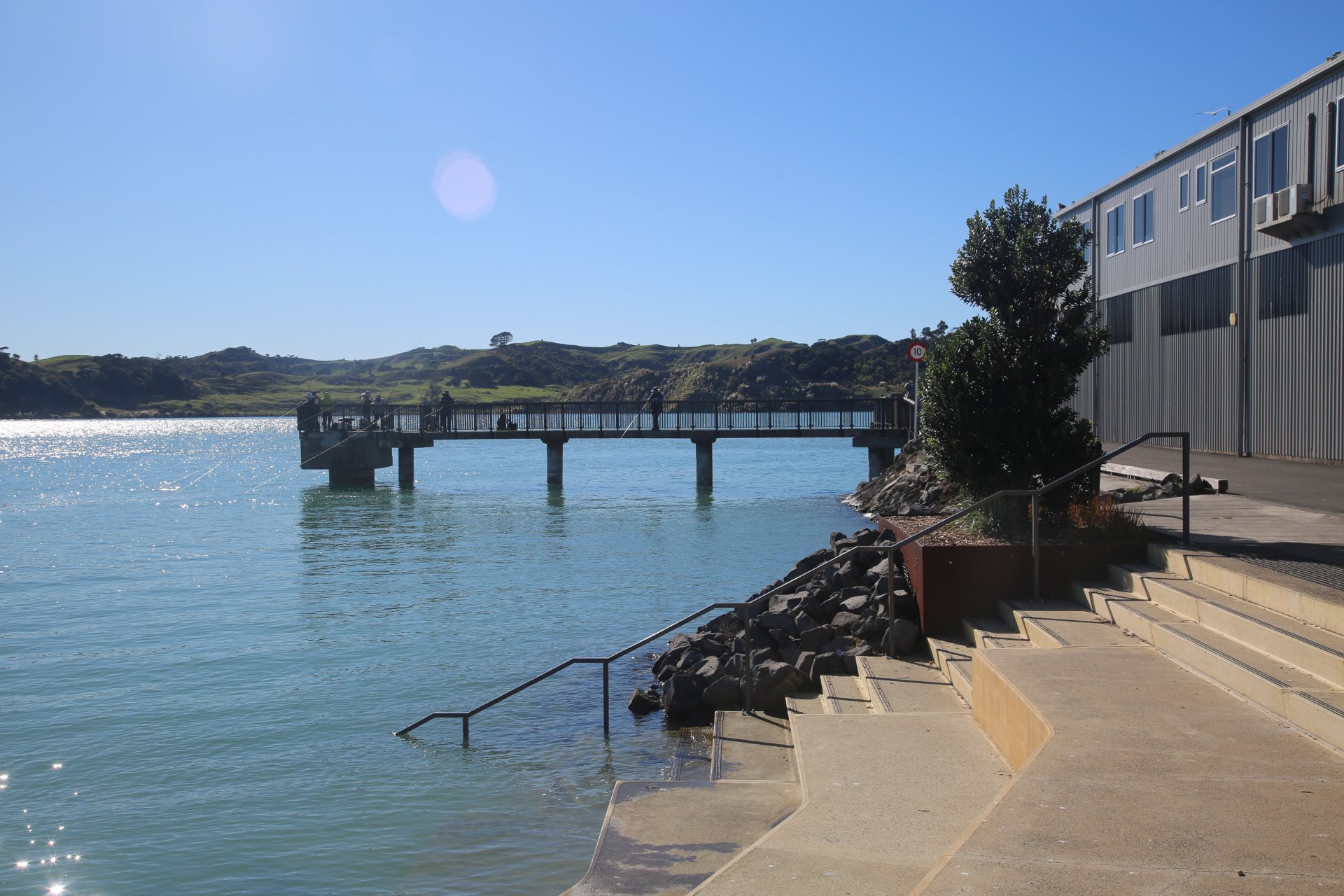
The tidal steps provide easy access to the water for swimmers at high tide.
Beca Landscape Architect Tom Abbott led the design of the public space.
“There was a big emphasis on improving safety, because of the way the wharf has evolved over time and the many overlapping uses that the space now supports. Working wharves with public access provide an interesting tension between the working element (such as Coastguard operations and fishing boats) and its public uses, which include locals fishing from the wharf; accommodation; vehicle circulation for boat users; and people shopping or heading for the fish and chips at the end of the wharf,” Tom says.
“Previously, there was nowhere for people to just sit and enjoy the space and the views. There was also a need to improve boat access, so the pontoon is an important outcome for the wider community, giving the ability to increase the functionality of the boat ramp in loading and unloading of vessels. And then there was the ageing infrastructure – the wharf and sea walls were in need of repairs and strengthening. So this project was an opportunity to hit those resilience and safety outcomes through an integrated precinct plan that would also provide an attractive and inclusive public space,” Tom says.
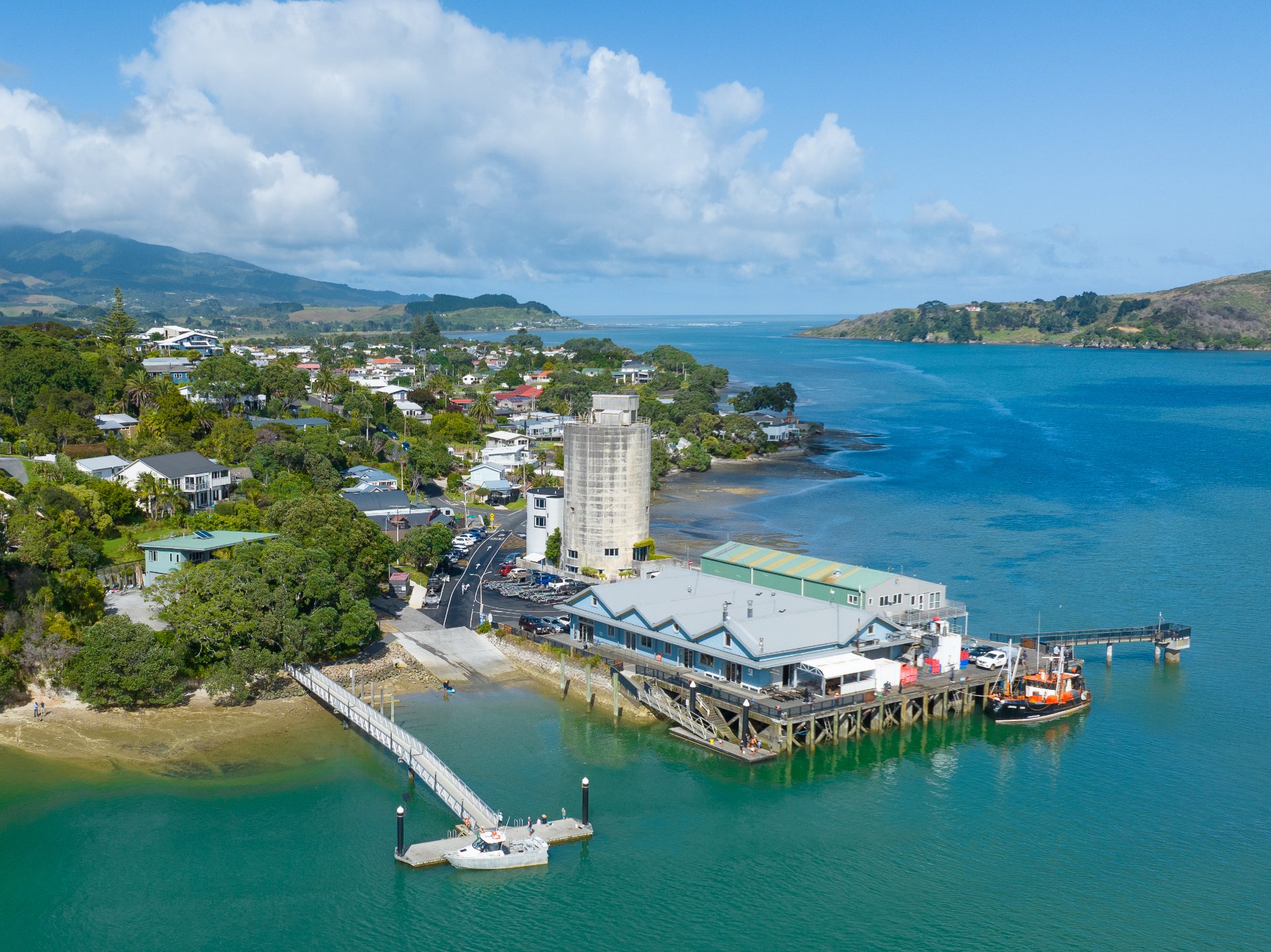
The new eastern pontoon increases capacity for boats to load and unload.
“It was a relatively complex project despite its size, because you’re working in an exposed and dynamic coastal environment; combined with the age and active uses of the wharf; the need to plan for climate resilience; and Raglan’s relatively remote location adding cost and complexity for the procurement of materials. Despite those complexities the project has delivered a high quality and safer wharf precinct that Council and the community are very pleased with,” Tom says.
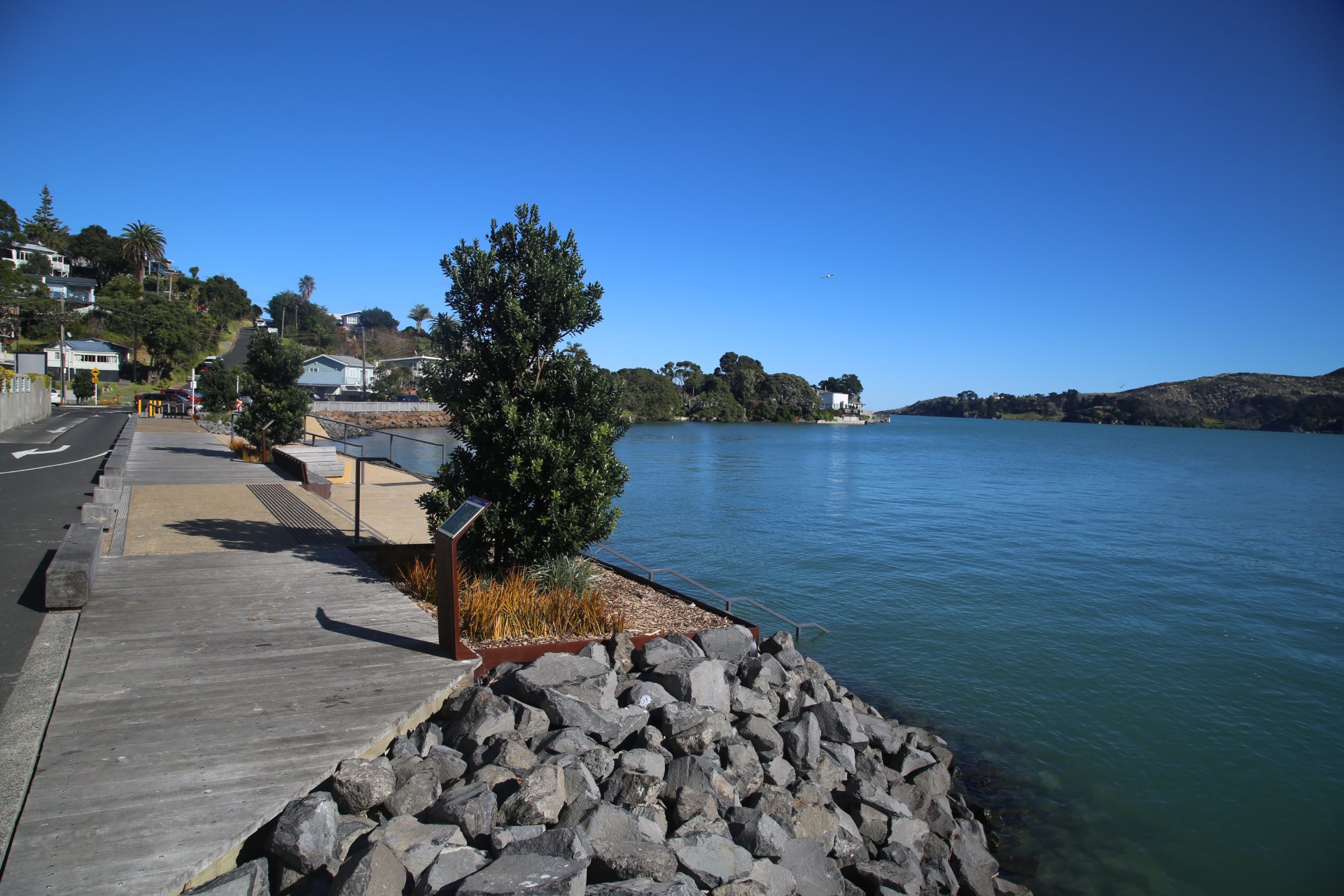
The design features new balustrades around the wharf to improve public safety. There are new seating areas and a new seawall with tidal steps, terraces and a kayak ramp that make it much easier for everyone to access the water.
The precast concrete terraces were designed to reflect the colours and forms around the harbour margins. Young Pōhutakawa trees have been planted into the seawall.
“That was an interesting aspect of the design that wouldn’t be apparent to most visitors. To ensure the trees established and remained healthy, we had to develop tree pits that were self-contained and protected the roots from tidal innudation as well as predicted sea level rise, while also draining surplus water and supporting the structural integrity of the seawall. I’m really looking forward to seeing the trees mature and eventually provide shade along the walkway,” Tom says. “The trees will provide a living connection to the Harbour and enhance what can be a very exposed coastal edge. They’ll have quite an impact when they mature and will soften the seawall and create a more welcoming pedestrian environment, which was an important outcome for the project.”
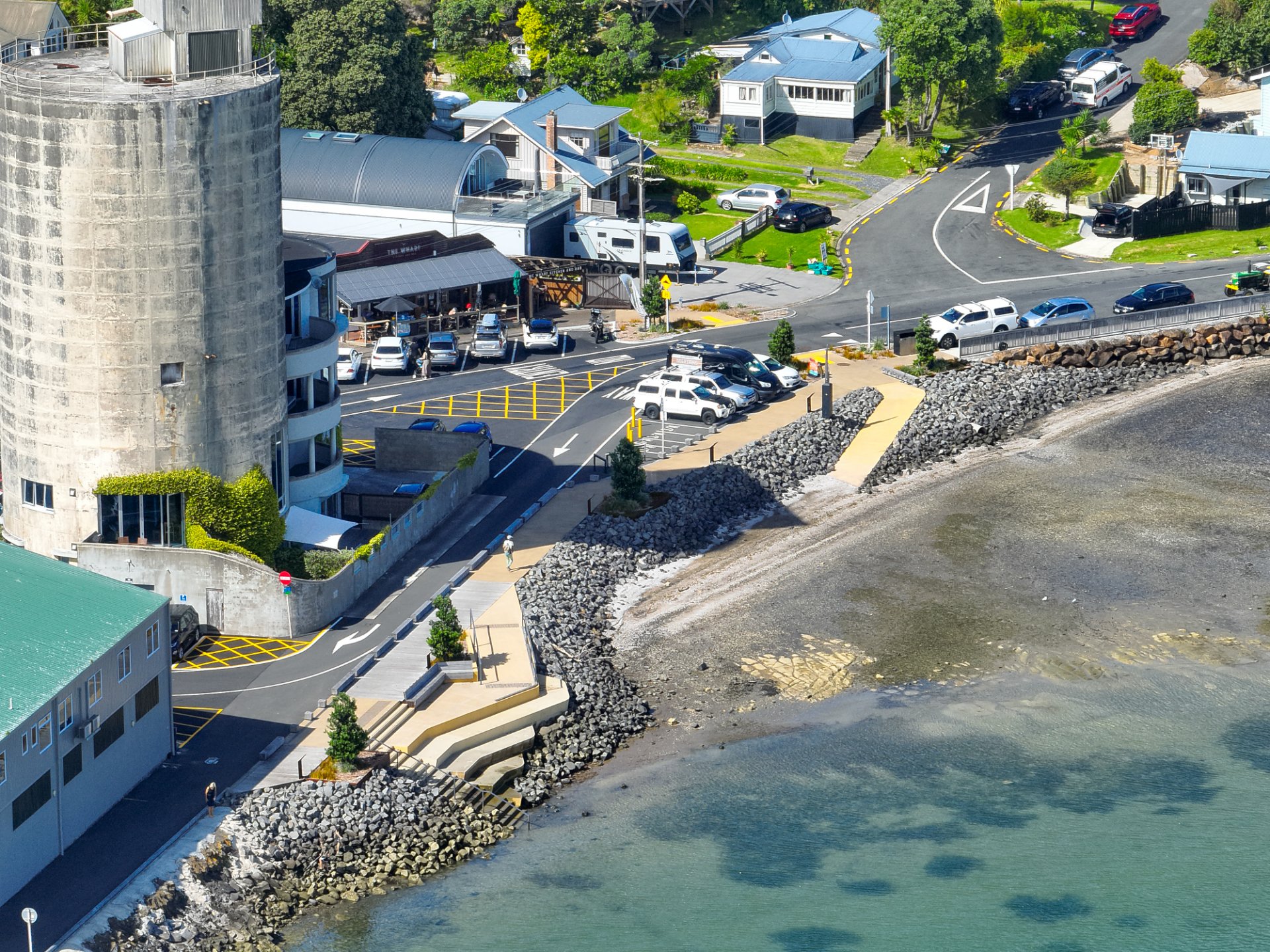
The tidal steps, terraces and kayak ramp provide easier access to the water. When mature, the Pōhutakawa trees will provide shade along the walkway and terraces.
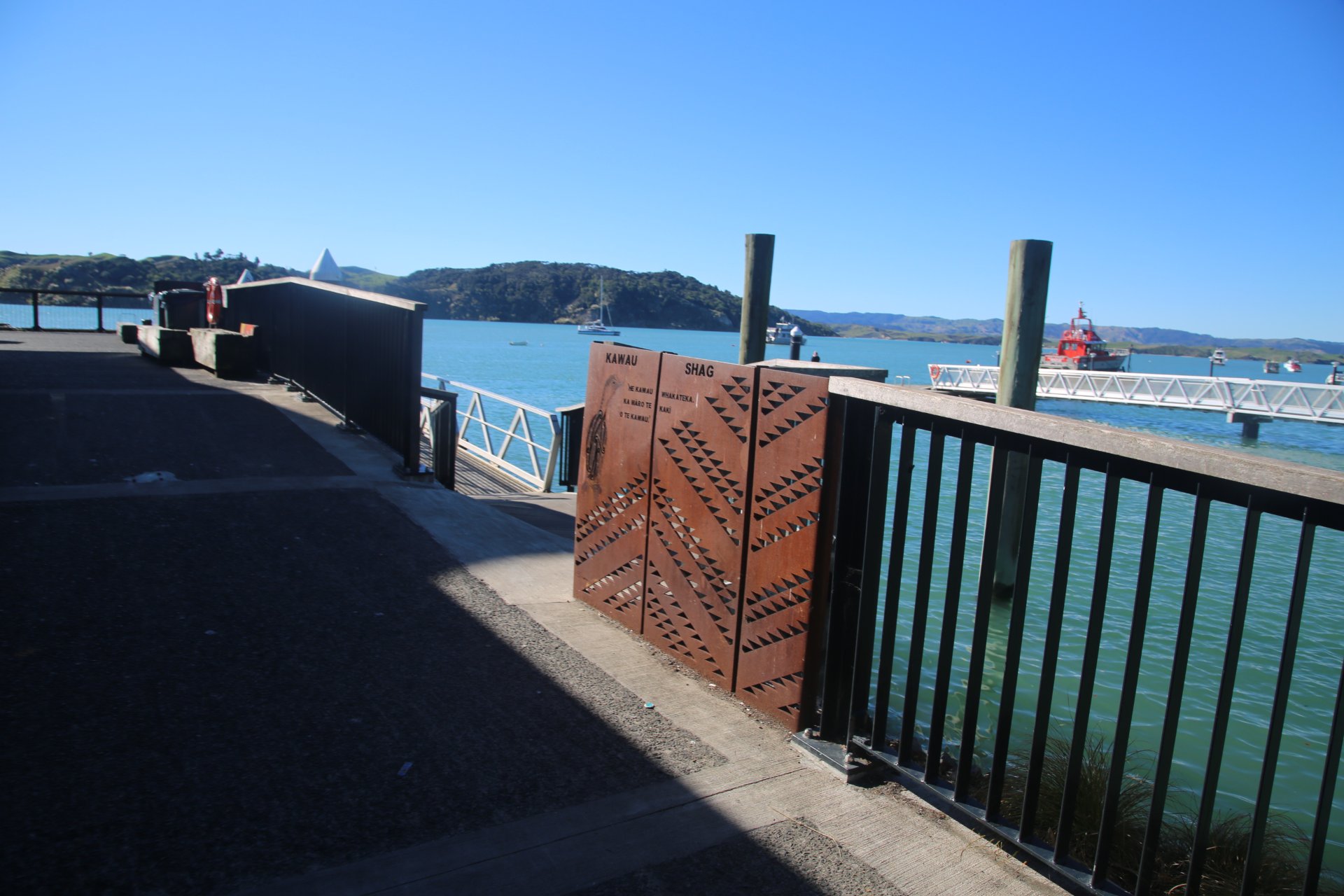
The need for new balustrades to improve public safety around the edge of the wharf was an opportunity to incorporate additional artwork by Simon Te Wheoro.
A series of five interpretation boards around the wharf edge are an opportunity to share local stories.
“I’m really pleased with how the cultural integration played out. We engaged with the local board and mana whenua early which led to meaningful outcomes that enriched the overall process. Local narratives are inscribed into the design and told in the information panels along the walkway,” he says. “It was important to the design team and council that we highlight local elements relevant to the wharf and wider harbour,” Tom says.
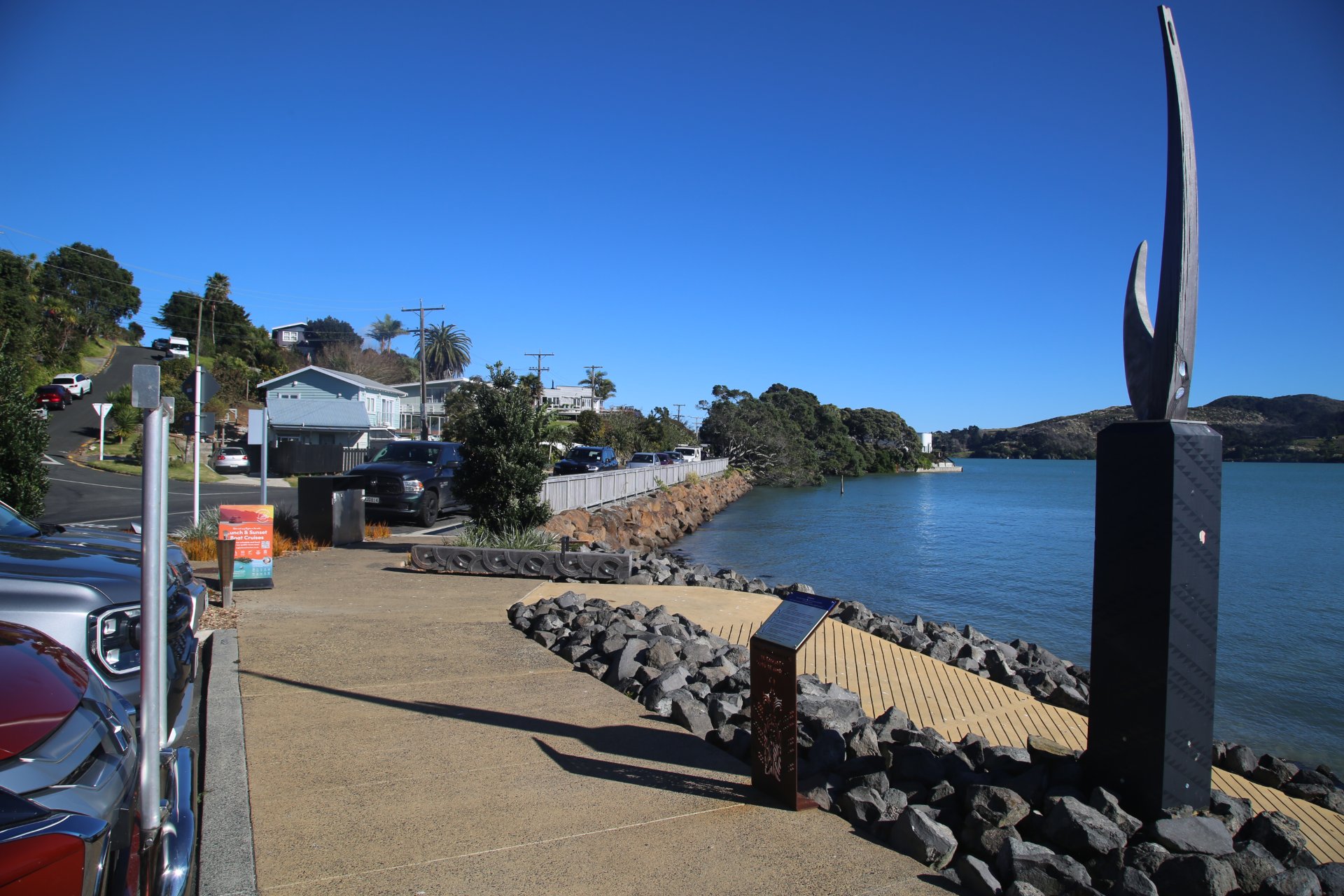
Beca’s landscape architects liaised with local artist Simon Te Wheoro (Ngāti Ranginui, Ngāti Mahana, Te Aupouri) who created all of the mahi toi elements for the project, including the Pā Kahawai sculpture at the entrance to the precinct.
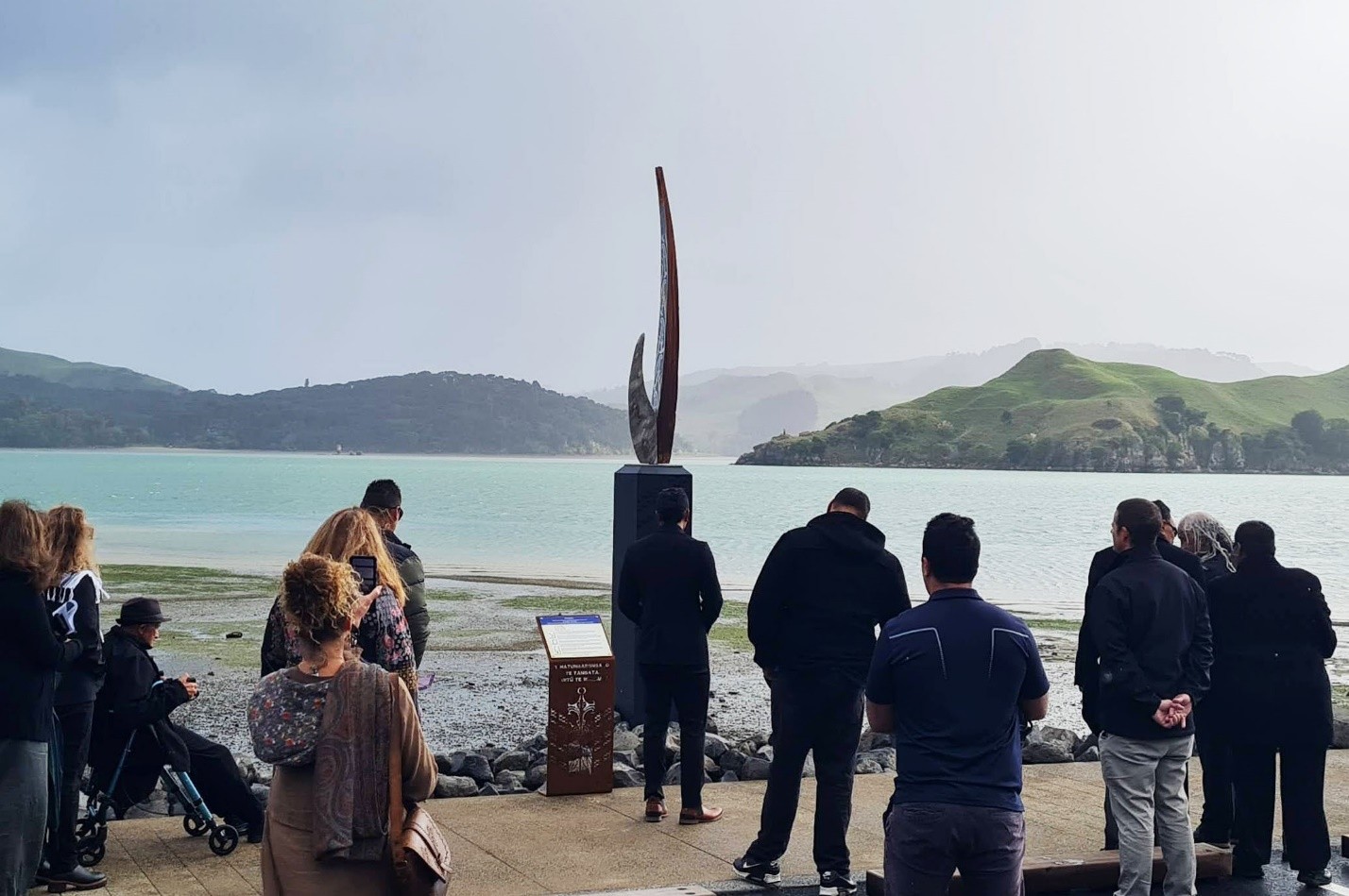
Pā Kahawai by local artist Simon Te Wheoro stands at the entrance to the precinct.
“Our structural engineers also worked closely with Simon to anchor the sculpture, ensuring it supported the artistic outcome.”
Simon wanted to create a sculpture that references the activities at the wharf, hence the decision to create a lure or fish hook.
“It references concepts of sustainability and engaging with the environment. It’s an opportunity to acknowledge the space with traditional narratives of how Māori engaged in the space. We wanted to create a bit of education around fishing methods, the environment, the ecosystem and an awareness of the species in that environment,” he says.
The corten steel panels that form part of the balustrades feature species like the kawau, orca, kingfish and stingray.
“They incorporate Māori metaphors and reference how Māori used those species. It was all about the revitalisation of those narratives, which are a huge influence on my work.”
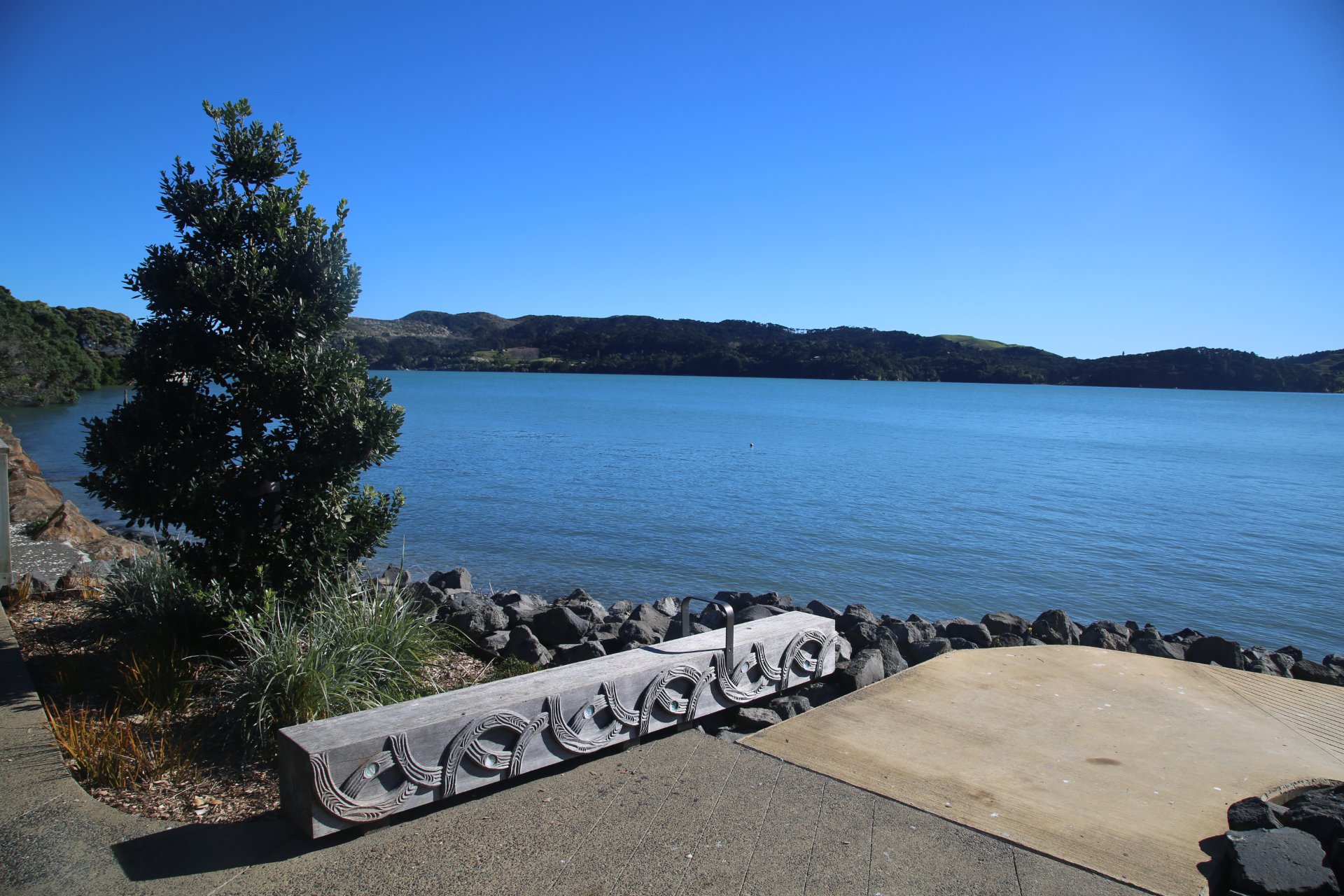
Simon also designed mahi toi for the carved seating.
“There’s a design on the two seats that is called matakupenga. It’s a fish net pattern. So there’s a reference there to Tangaroa, god of the sea, and that connection to sustainability. It’s really nice for me to give back to the community and create awareness of these local narratives through different kaupapa.”
“I grew up here, I went to kura (school) here and have been here ever since. I have a studio space, just as you come into Raglan. It’s been such a beautiful journey to give back to my community, it’s really overwhelming to be honest. What’s nice is that, nobody knows who I am when I go down there and just sit and have a feed of fish and chips. I can watch people looking at the balustrades and reading the information panels. I like to see people engaging in the space and spending a bit more time than they did before.”
Civil engineer Tania Langley lives in Raglan and is the Manager of Beca’s Waikato-based Infrastructure team.
“I was the liaison between Waikato District Council’s Project Manager and the Design Team. As well as the technical support across multiple disciplines, I think the client appreciated that we had a few Raglan locals, including myself, on the team. It really made a difference that we had people who could easily go to the site as needed.”
Tania says the new features are being well used by the community and have made a real difference to how people use the wharf.
“It’s a really nice space. On a sunny evening you’ll see lots of people down there using the seating and enjoying their fish and chips and watching the sun go down. Lots of people will take their kids down to the pontoon with fishing rods. Previously, you had cars and pedestrians trying to use the same space, so if you had small kids you really had to hold onto them. Now the cars and pedestrians are quite separate, so you can relax and enjoy walking along there,” Tania says.
“It’s a great place for watching events too. There’s a waka ama event held in Whāingaroa Harbour every year, you can get an amazing view from the wharf. And sometimes we are lucky enough to see pods of orca chasing stingrays up the harbour in summer. I’ve seen them a couple of times over my 15 years in Raglan,” Tania says.
An opening event was held to celebrate the completion of the redevelopment.
“There was a real sense of community at that event. I think the Council did a great job of involving the community all the way through, and through this project you got a sense how tight-knit a community Raglan is and that the improvements at the wharf really mean something to the locals,” Tom says.
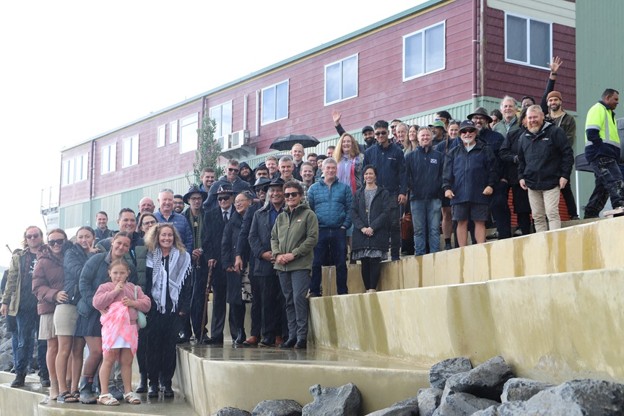
The project team and community members gather at the opening event.
“It was a great event,” Simon says. “There was a good turnout and there was kai for everybody, it was nice and relaxing. With such a big project there are always lots of curve balls and so everyone was really pleased to see it completed. It was important to unveil it and give people the opportunity to kōrero, meet the artist and learn the stories.”
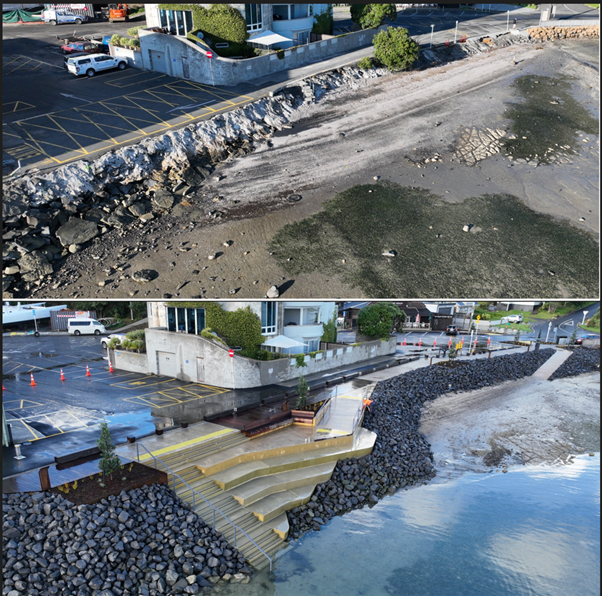
Before and after images showing the improvements along the harbour edge.
Our client says
“It was important to us that this project was shaped by community input to ensure it was fit for purpose and truly met local needs. The support provided by Beca, particularly in communication and engagement, was outstanding and enabled us to develop a design that successfully delivered on this brief.
“We are very pleased with the transformation achieved at Whāingaroa Wharf and greatly appreciate the technical expertise and guidance from the Beca team throughout the process. The feedback from the local community has been overwhelmingly positive, and it is rewarding to see the new facilities being so well used.”
Megan May
General Manager Assets and Infrastructure, Waikato District Council