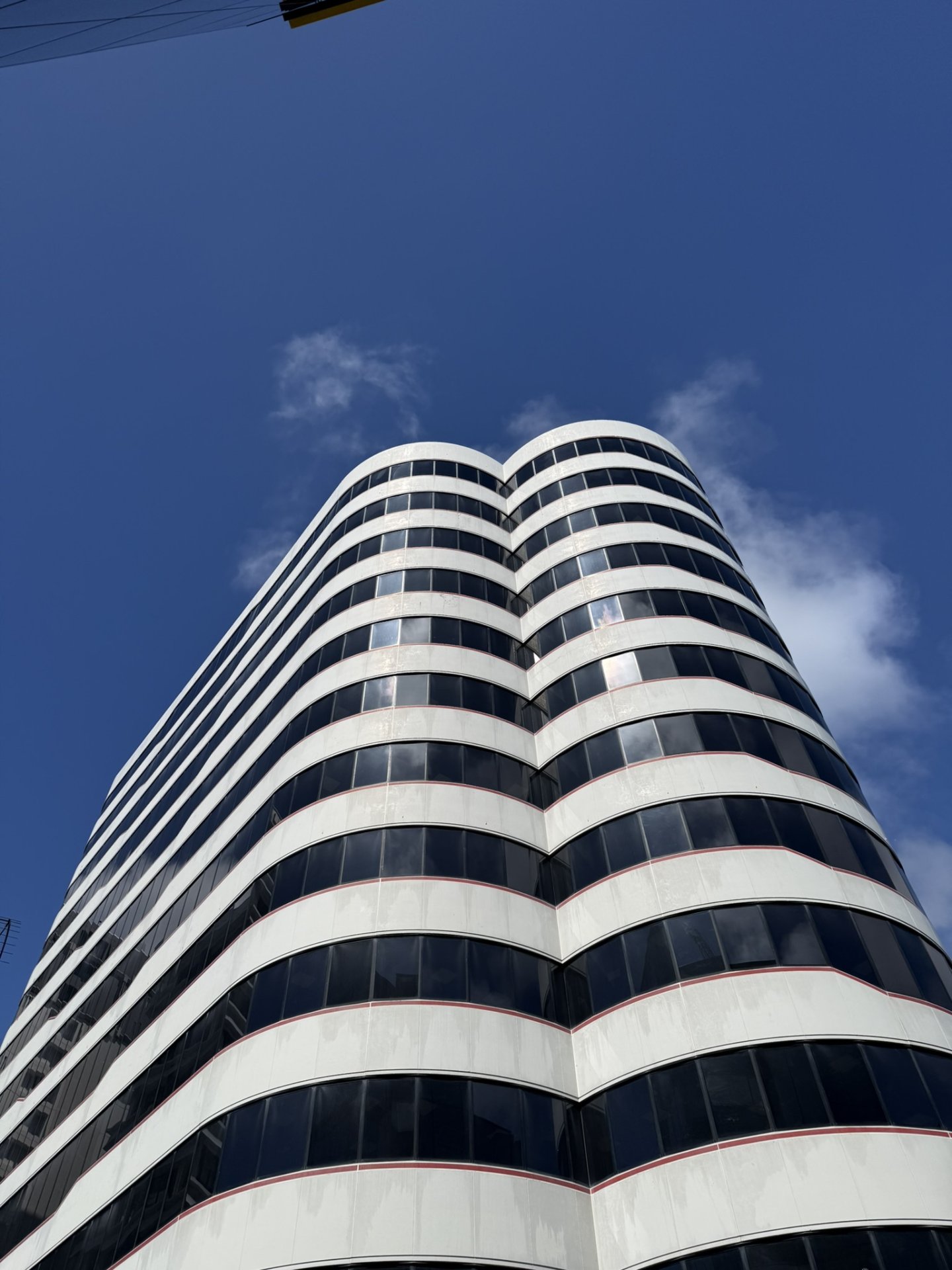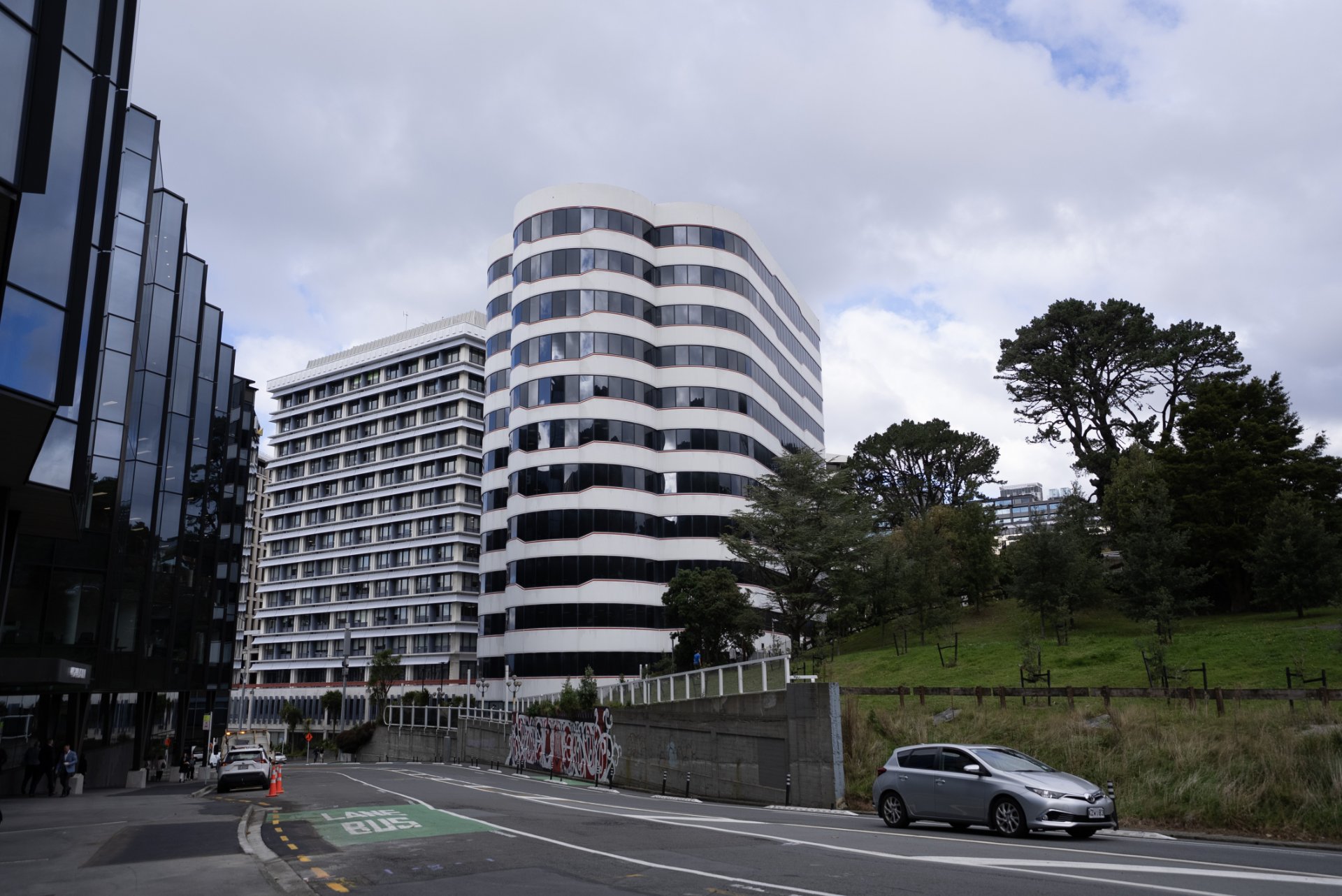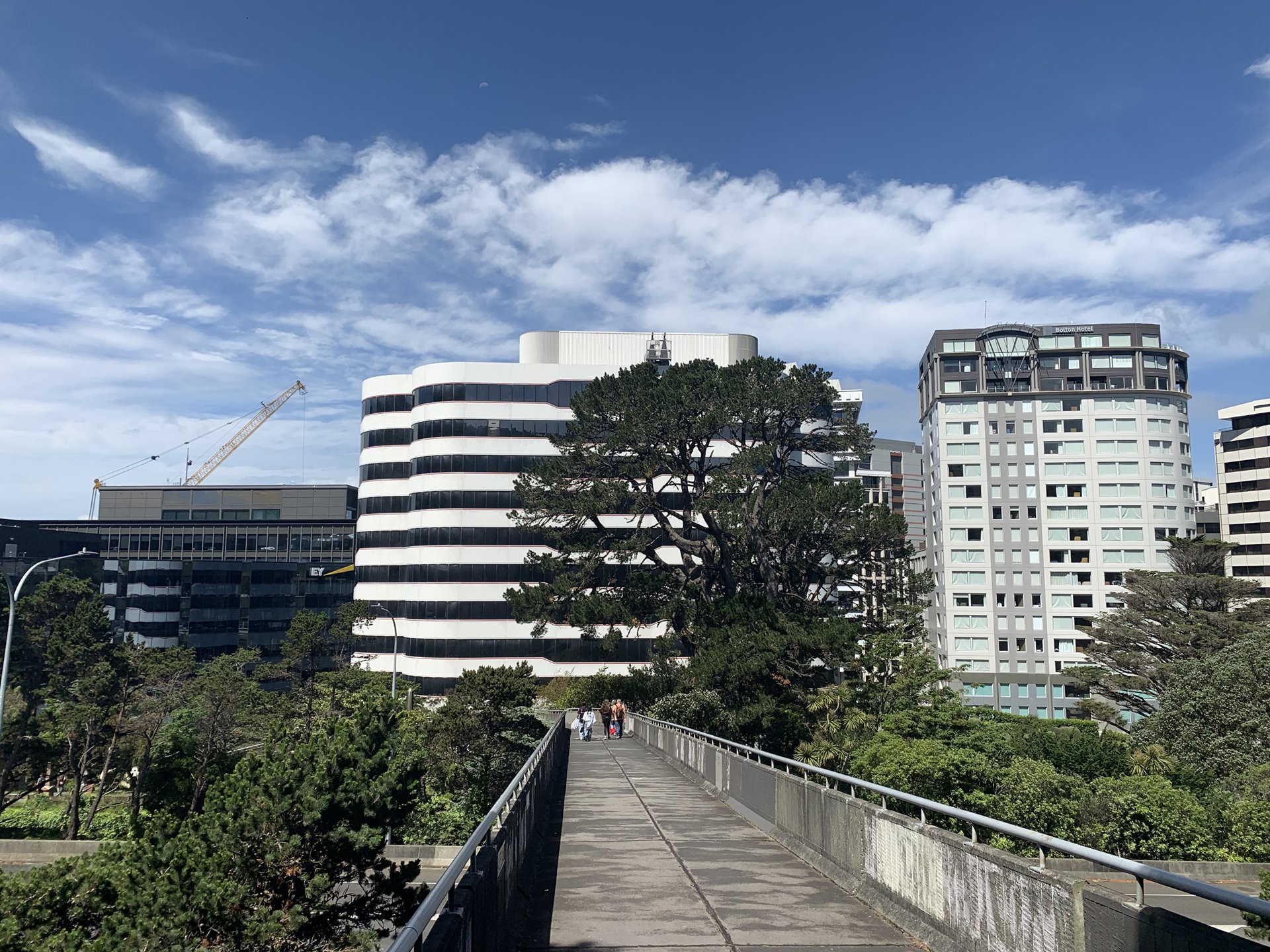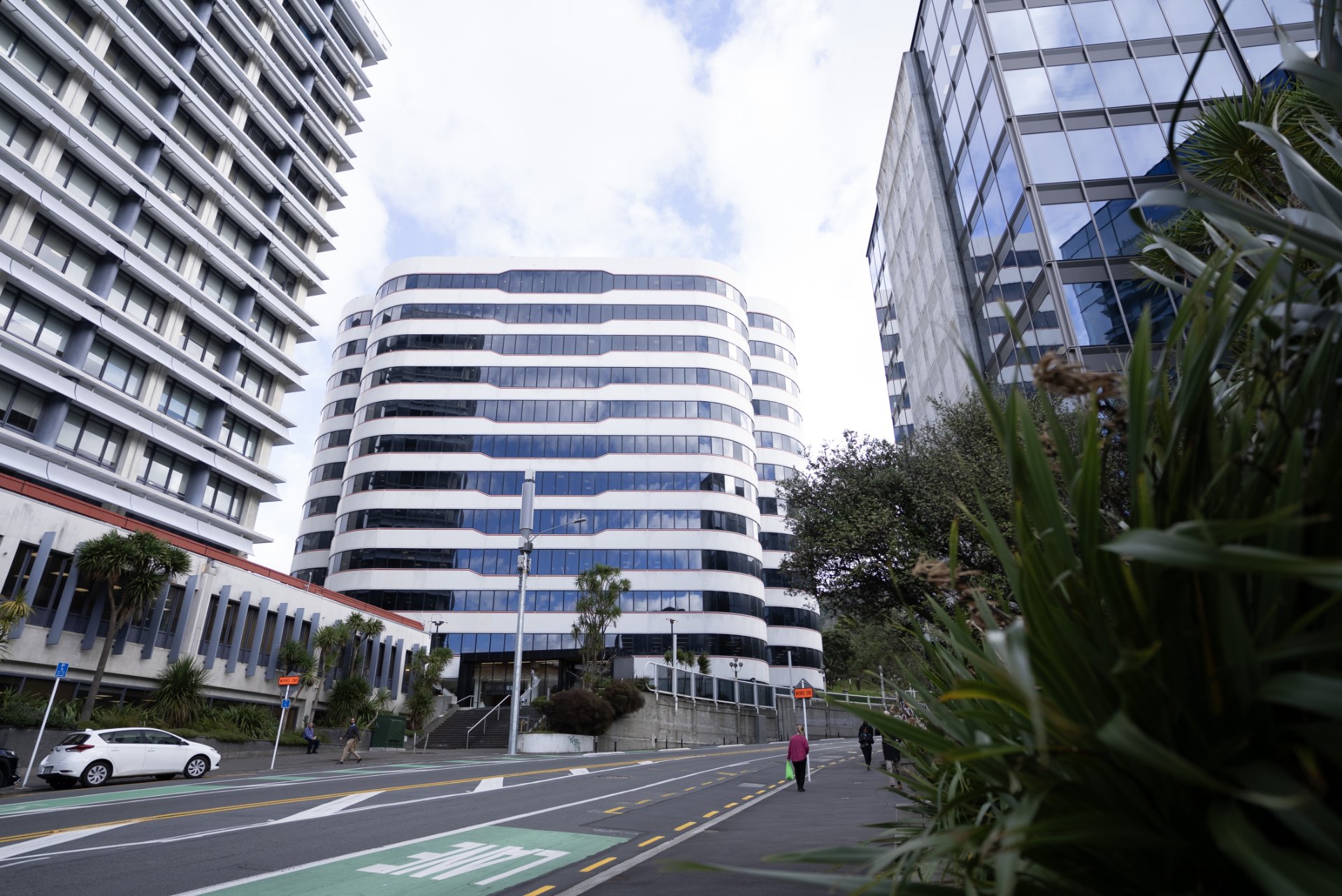
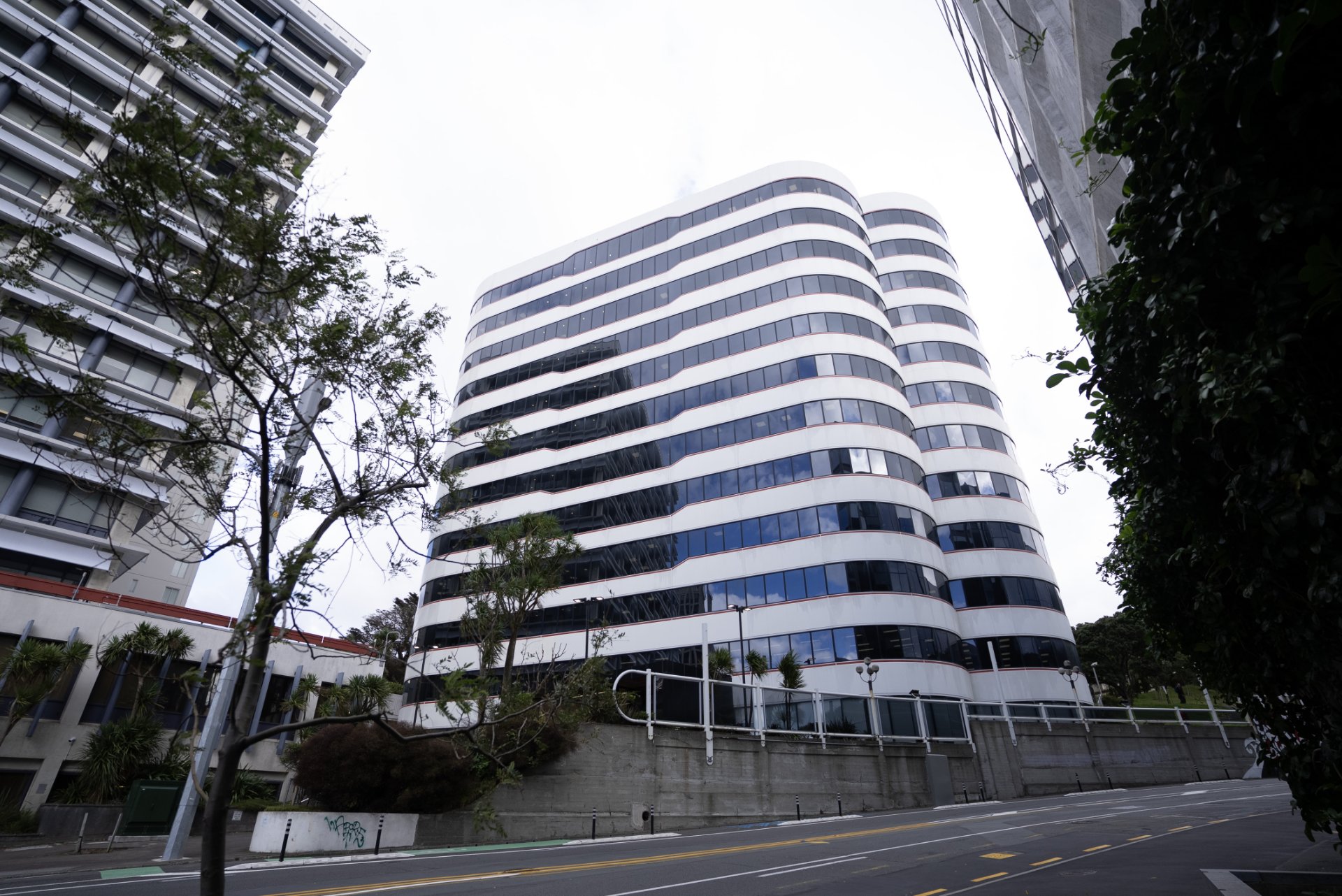
It’s not uncommon for mid-1980s and 90s commercial buildings in Wellington to have seismic concerns. At that time, commercial buildings were typically built with reinforced concrete moment resisting frames and precast hollowcore floors. Since then, our understanding of how these perform in an earthquake has improved, meaning they require significant strengthening to meet current building standards. This was the case for 33 Bowen Street in Wellington, which has been occupied by the Ministry of Education since 2016.
A detailed seismic assessment by Beca in 2022 rated 33 Bowen Street at 35%NBS (percentage of “New Building Standard” means the seismic standard required of a new building built today on the same site – i.e. to the current standard).
Future proofing at near parity cost
With a minimum strengthening target of 80%NBS, 33 Bowen Street faced a moving goalpost: a new earthquake standard (a few years away) is expected to lift seismic demands by at least 60%, based on updated insights into the Hikurangi Subduction Zone from the 2022 National Seismic Hazard Model update. The risk? A future slide in the building’s ‘real’ market rating despite meeting today’s code.
The owner wanted an A-grade building reflecting the future increase in hazard. The building needed to meet a target of at least 80% of the new hazard, which translates to 150%NBS when using the current hazard. A four-fold increase in seismic resistance was required.
Conventional strengthening couldn’t deliver this outcome without unacceptable trade-offs. Even reaching 70%NBS (doubling 33 Bowen Street’s current 35%NBS) would demand extensive intervention in both foundations and superstructure, making it financially impractical; carbon intensive; and highly disruptive to function and aesthetics – potentially making the building unlettable. Pushing to 150%NBS by traditional means was simply not possible.
Thanks to MOODD and viscous damping technology, a 150%NBS rating was achieved at a very similar cost to a conventional approach that would only reach 70%NBS.
What is MOODD?
MOODD (Multi Objective Optimised Dynamic Design) is a state-of-the-art, physics based, Performance Based Design framework that treats total project cost as an explicit design variable.
Applicable to both wind and earthquake hazards, it efficiently arrives at solutions that meet the defined performance objectives at the lowest practicable cost, enabling evidence-based decision making considering all possible trade-offs.
By contrast, the conventional Performance Based Design approach starts with simplified ad hoc approaches, then resorts to brute force iteration involving thousands of analyses, endless parameter tweaks, and months lost just to clear compliance. Even then, the solution won’t be cost effective or carbon effective.
How do fluid viscous dampers work?
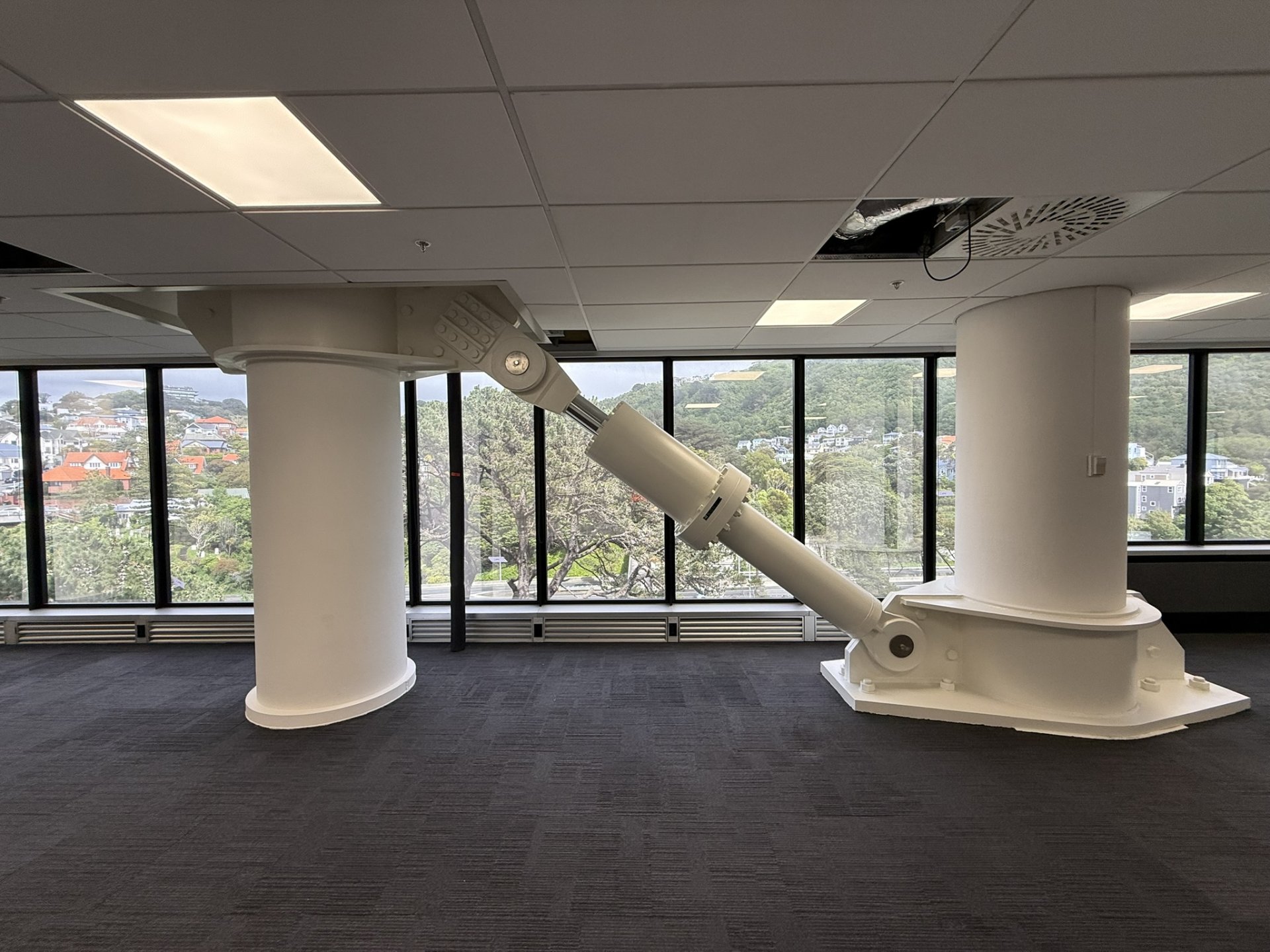
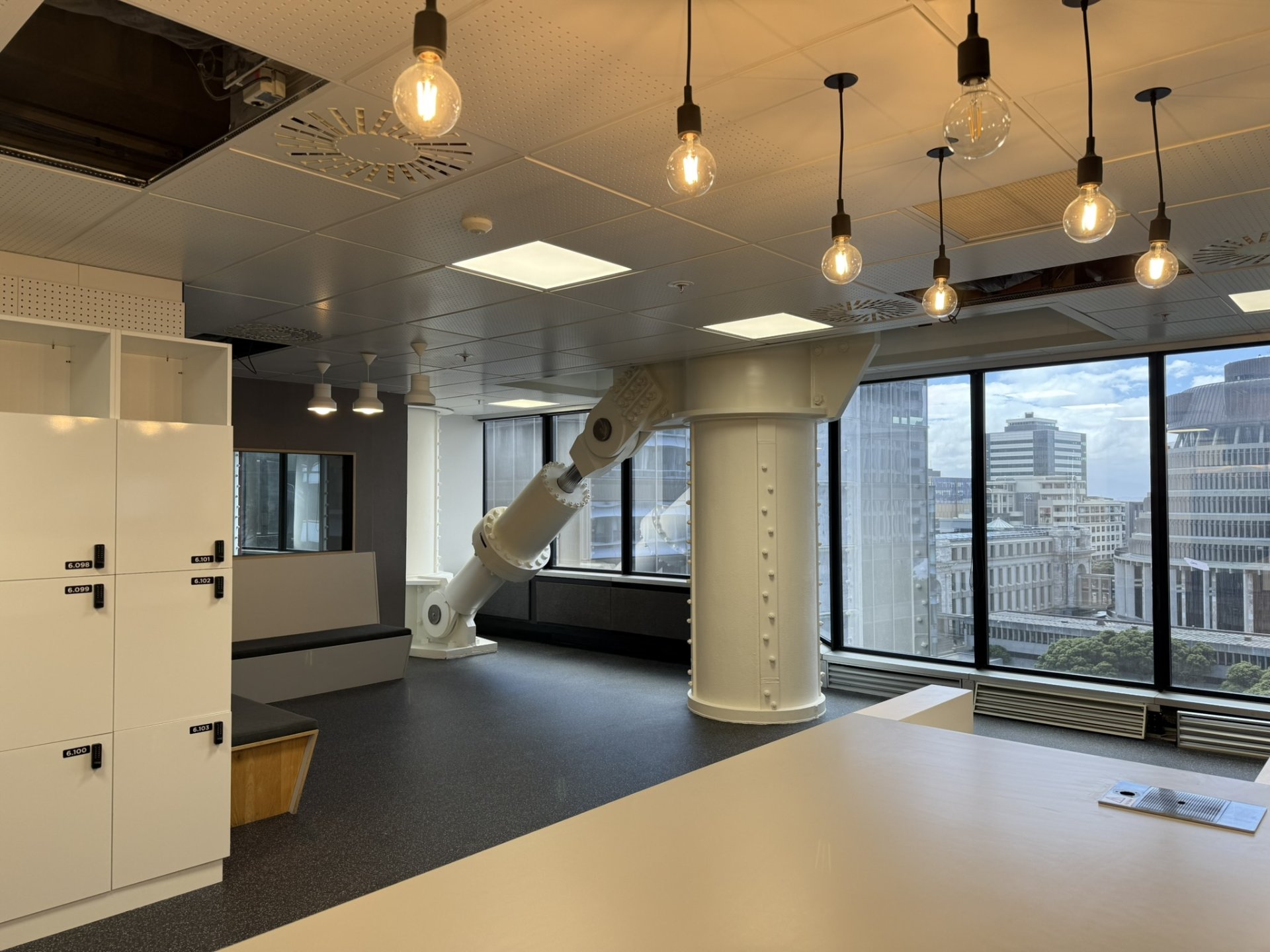
Fluid viscous dampers are high performance mechanical devices that work like a shock absorber in a car. They convert kinetic energy generated by the movement of the structure into heat. A piston moves through a very viscous fluid which is forced through small apertures in the piston head, all contained in a steel cylinder. The increasing fluid pressure generates heat and dissipates earthquake energy.
When applied in the right quantity and placed in the most strategic locations, these devices significantly reduce the building’s movements during an earthquake, meaning less damage to the building and its contents.
What is the traditional approach?
For typical 1980s and 90s mid-rise reinforced concrete frame buildings with precast floors (such as 33 Bowen St), retrofit options adopted by the industry generally fall into four sets:
(1)
shear only beam strengthening with strong backs under every precast floor unit and extensive strengthening plates on every floor, which achieves ≈100%NBS at ~2.5% drift
(2)
steel/reinforced concrete bracing, which achieves ≈100%NBS at ~1% drift, but requires upgrading piled foundations and diaphragm upgrades
(3)
base isolation, which achieves ≈150%NBS at ~1% drift and results in the lowest damage, but is highly intrusive, requires foundation upgrades, is high carbon/high cost, and often constrained by rattle space on tight city sites
(4)
traditional ‘brute force’ damper schemes, which achieve ≈150%NBS but drifts near ~2.5%, involve many devices with strong backs under every precast floor unit and extensive strengthening plates on every floor.
Here, drift is a measure of damage: the higher the drift, the higher the damage.
In summary, while base isolation provides the best performance with minimum damage, its intrusiveness results in high up-front carbon and cost, making it a highly unsustainable solution and extremely challenging for dense urban retrofits.
Viscous dampers are a more judicious alternative for retrofits, though the traditional design approach produces designs that tend to underperform, incur high upfront carbon, and cost more. MOODD is a game-changing capability that unlocks the potential for dampers in retrofits.
What does MOODD deliver?
MOODD leverages the real physics of building frames, diaphragms, connections, and added dampers, to tune stiffness, strength and energy dissipation where it matters. The result is a base isolation-like performance (minimum damage) with around 60% lower up-front carbon and cost than base isolation or any of the conventional retrofits listed above, enhancing resilience and sustainability.
The bottom line is that MOODD achieves a base isolation-style outcome without base isolation or the cost/carbon associated with it. MOODD turns complex seismic behaviour into a targeted, lower carbon, lower cost retrofit that prioritises the cost-benefit ratio and fast-tracks the project delivery in comparison to traditional Performance Based Designs.
Our experience in Wellington
In addition to 33 Bowen Street, Beca’s experienced Wellington-based team of structural engineers and seismic specialists also used MOODD in the award-winning retrofit of 8 Willis Street, which brought a 1980s structure up to 130%NBS using just 12 fluid viscous dampers and added five new storeys to the existing structure, with no significant foundation upgrade for the increased lateral loading.
The judges of the UK IStructE Structural Awards commented that the “technical and elegant” placement of the dampers at 8 Willis Street allowed for open spaces uninhibited by structural elements.
MOODD has also been applied in the seismic retrofit of one of the heritage buildings that makes up the St James Theatre complex in Wellington. The use of fluid viscous dampers and MOODD technology reduced the overall retrofit costs by minimising the amount of added structure and intervention, thereby enhancing sustainability, increasing the lettable area and preserving the aesthetics and view, ultimately giving new life to an ageing asset.
Similarly, 55 Molesworth Street showcases MOODD in a 12-storey reinforced concrete new-build commercial office in the heart of Wellington: open, flexible floorplates with views uninterrupted by heavy seismic reinforcing, delivering the serene feel of a non-seismic environment. The building has the look and feel of a premium office in London or New York, but with the seismic resilience expected of a premium asset in Tokyo or California.
Our experts


Dr Arun M. Puthanpurayil
Technical Director - Structural Dynamics
Our client says:
“Beca’s ability to include cost optimisation within the structural analysis for this impressive seismic upgrade meant our final construction cost was within the budget set at the preliminary stage.”
- Building owner’s representative for 33 Bowen St, Brian Coburn of Hesketh Henry