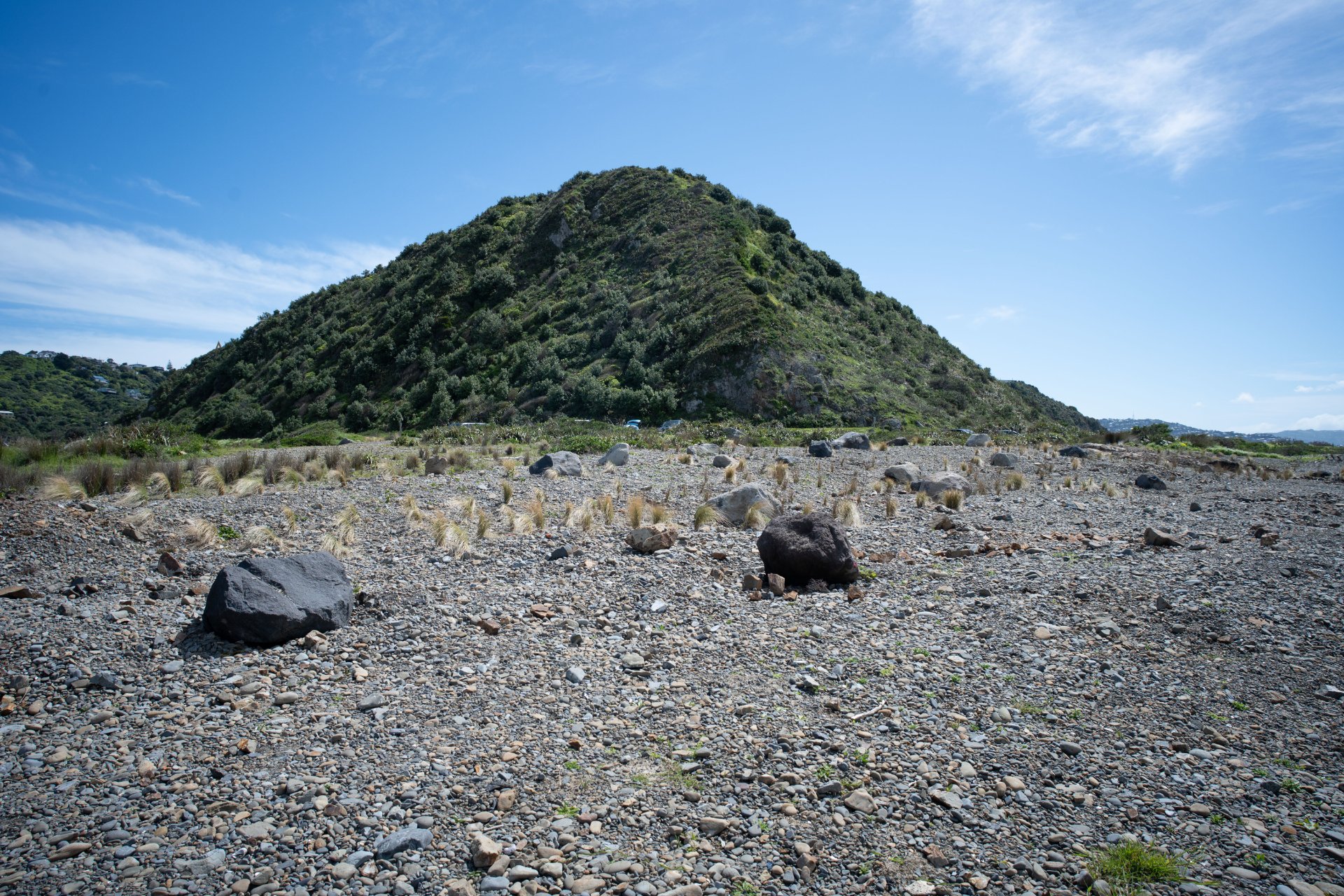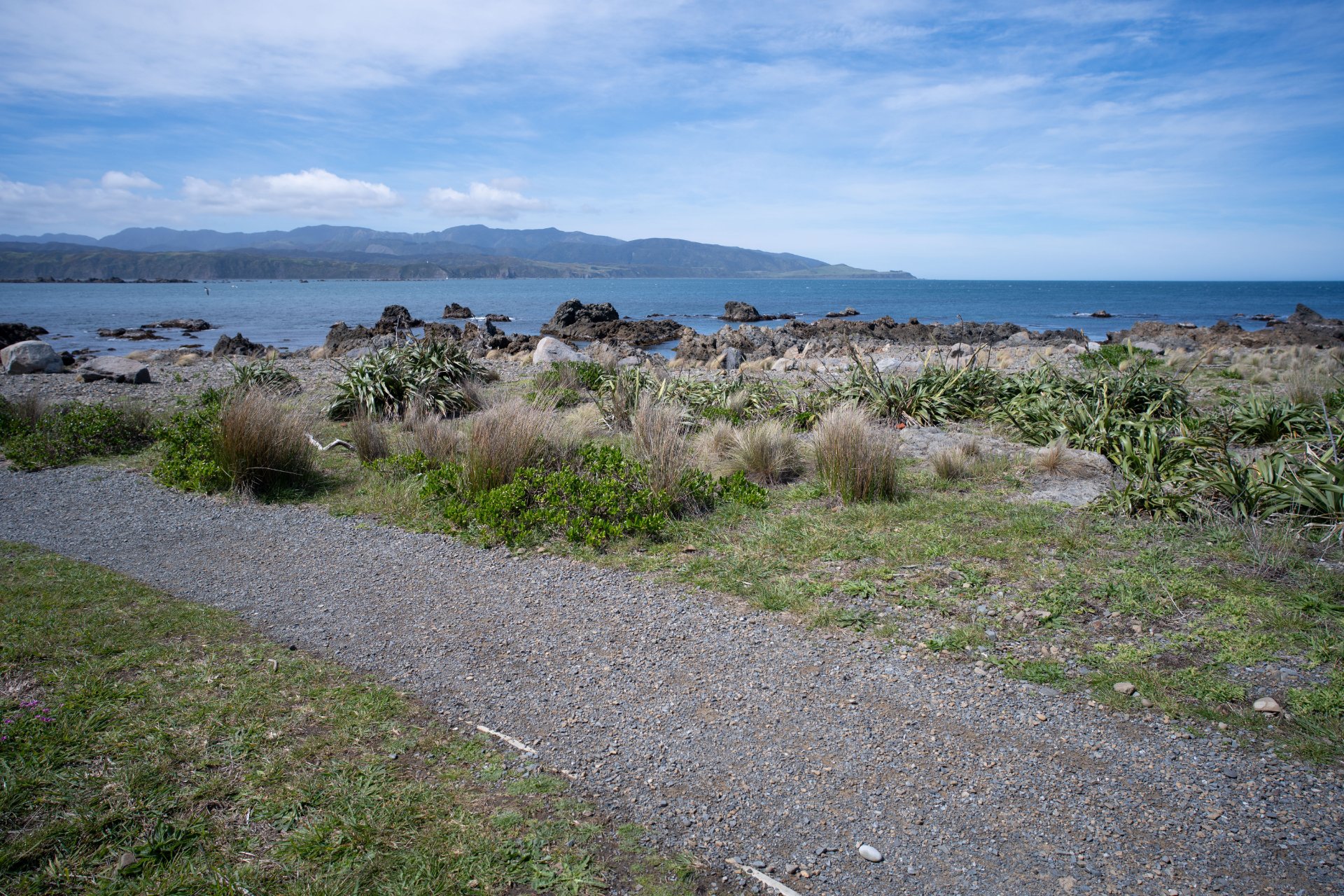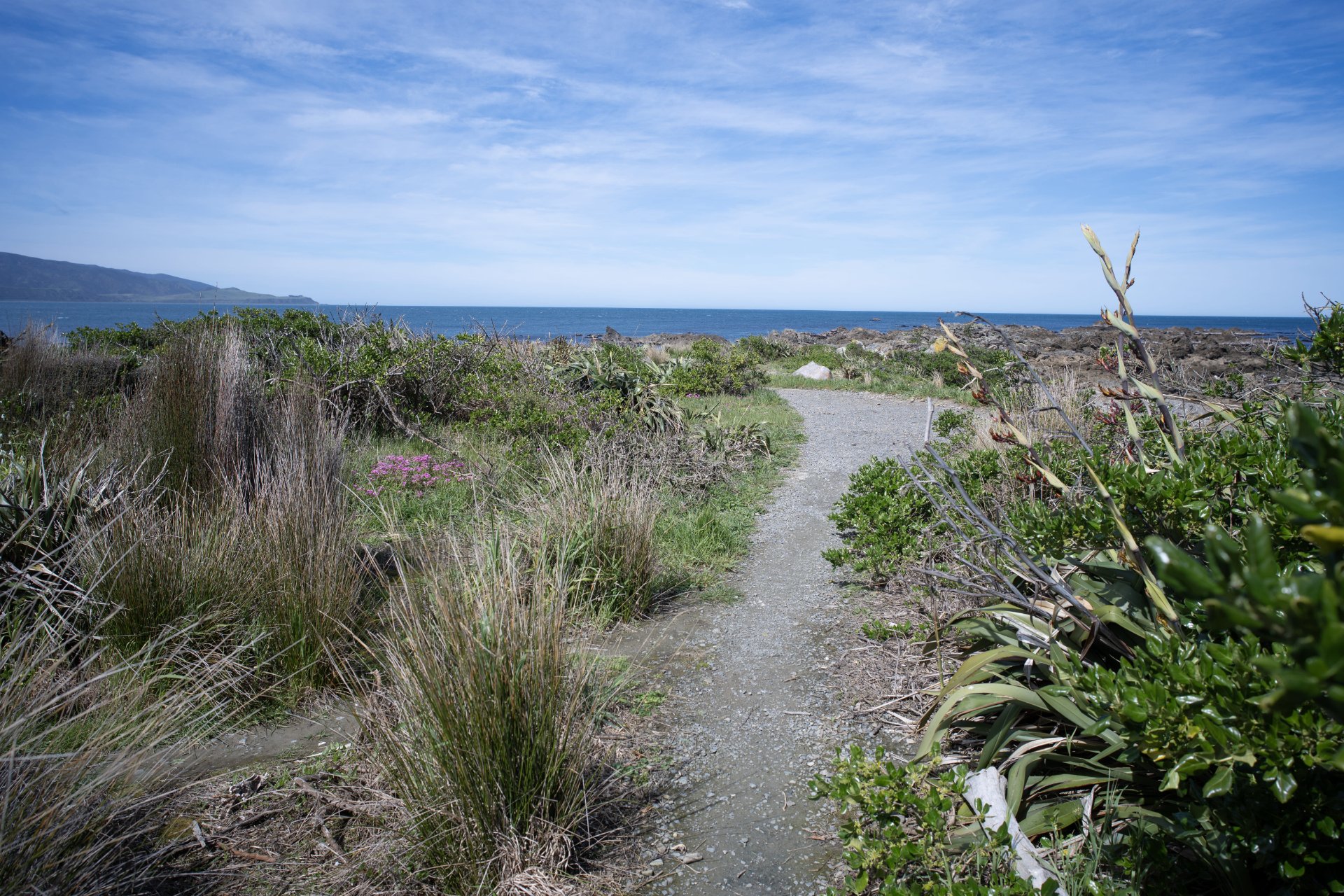
Te Raekaihau Point (‘the headland that eats the wind’) protrudes from Wellington’s south coast between Lyall Bay and Houghton Bay, and marks the boundary of the Taputeranga Marine Reserve. It’s a rugged, wild coastal environment with a walkway that’s well used by walkers, runners and cyclists.
In 2021, a member of the public walking along the beach came across exposed rubbish in a bank that looked to include asbestos-containing material and reported it to Greater Wellington [the regional council]. After some initial investigation, Wellington City Council established that the fill extended further than just the eroding bank area.
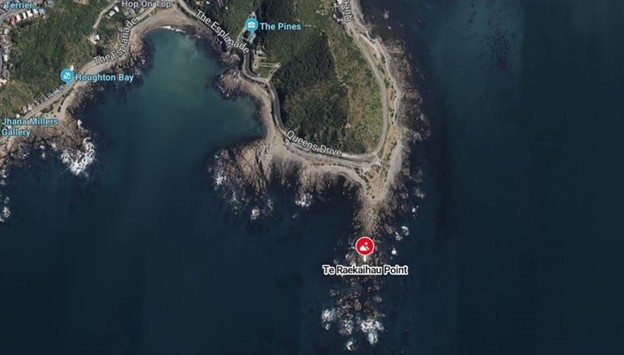
A desktop exercise undertaken to determine the history of the site found that the area had previously been used for gravel and sand extraction in the 1930s and 40s. The remaining low-lying area had been used as an opportunistic dumping area with various fill materials buried up to 2m below ground level. This included old car parts, household goods, asbestos-containing material, and cosmetics dating back to the 1940s. Later investigations would also discover localised areas of blue billy (containing cyanide) and coal tar. Wellington City Council chose to act promptly and deal with the problem proactively rather than leaving it to be gradually exposed by storm surges.
“One of our waste team went down and did some initial investigation of the site, and that was when Beca got involved to do a preliminary site investigation,” Wellington City Council Project Manager – Marine and Coastal, Joel De Boer says.
Beca has a long relationship with Wellington City Council, having worked on projects including the Southern Landfill Expansion Option, coastal wharf upgrades and Waihinahina Park (a closed landfill).
“We were asked to do a preliminary site investigation to piece together what had happened there. We undertook test pitting and soil sampling to look at the nature of the contamination and identified that it was a reasonable quantity. We suggested that council apply to the Ministry for the Environment’s fund for Contaminated Sites and Vunerable Landfills, and they were successful,” Certified Environmental Practitioner – Site Contamination Specialist and Technical Director Sarah Shepherd says.
“That was great to have that expertise,” Joel says.
“These kinds of sites are popping up more frequently, because of the changing climate and increased intensity and frequency of storm surges. It means sites like this are more vulnerable to being disturbed and the material being discharged. Sometimes the best option is to manage the material in place, but with the long term risk of material being discharged to the coast, that was not the best option here,” Sarah says.
Dr Genevieve Smith, who won Contaminated Management Young Professional of the Year at the 2025 WasteMINZ awards, was responsible for the early research and completed two site investigations to delineate the extent of the fill on site.
“There was a lot of trawling through old archives, historical aerials and newspaper articles to piece together what happened in the last century, which I really enjoyed. From what we have found, the site was used to quarry sand in the 1940s, and then the hole made was backfilled with all kinds of material,” Genevieve says.
“Sometime in the 40s, 50s or 60s it was used as a dumping ground. Not a lot of thought went into the future and what that might mean,” Joel says.
“There were a number of factors that made this project complex,” Sarah says. “Our Planning team needed to seek resource consent from both the city and regional councils, which was not a small undertaking. Our Ecology team obtained wildlife permits from the Department of Conservation to relocate the lizards that were on the site, which has long-term monitoring and pest management requirements.”
The site is significant for Te Atiawa and Taranaki Whānui. Council engaged with iwi early in the process. Rāwiri Walsh was council’s iwi liaison representative on the project.
“It’s the iwi boundary for both Te Atiawa and Taranaki Whānui so it’s incorporated into our tauparapara. When we introduce ourselves Te Raekaihau is right there, centre and foremost. It was a launch point for fishing and diving, so a really important site for mahinga kai (food gathering place),” Rāwiri says.
“We’re really pleased that Council swung into action and moved as quickly as they could. The lengths that they went to, to remediate the contaminated landfill, and the willingness to have iwi involved in the planting and restoration,” Rāwiri says.
Beca Ecologist Kat McGee carried out the lizard salvage and relocation.
“It’s a site that’s very familiar to me – I did my Masters thesis on lizard research and for that project I did lizard monitoring very close to the site. At the time, we didn’t know about the hazardous material, so it’s nice to have been back there and feel that we’re doing something good,” Kat says.
“Our first step was to map out the vegetation on site then put out some traps - a small tunnel that the lizards can crawl into and then can’t find their way out of. We fill the traps with grass, a piece of pear as bait, and a damp cloth so that there is moisture for the lizard. We go back each day to check the traps and relocate any lizards we find to the release site. In the second stage, we monitor the vegetation clearance in case any more lizards are found, and relocate those as well.
“At the release site, we do some habitat enhancement to make sure they’ve got the resources they need when they’re released. Then, there will be ongoing pest control and monitoring at the release site over three summers, to make sure they’re doing well,” Kat says.
“Mokomoko (lizards) are a keystone species in the environment, they form part of the taiao (natural world) that feeds into everything that eats them, and they play a huge role in the things that they feed off and eat as well. Mokomoko were often seen as a tohu (symbol) for death but they also have that association with life,” Rāwiri says.
For the Beca team, the project has been an opportunity for multiple disciplines to work together to bring about a very satisfying conclusion – particularly for the Wellingtonians who live and work nearby.
“It’s always good to have people from many different parts of Beca involved. For this one we had the survey team, the environments team, the planning team, followed by our project managers looking after the on-site work and our ecologists managing the lizard relocation,” Sarah says. “Almost all of the Beca people involved are Wellingtonians, with help from a couple of extras such as myself, supporting the team from New Plymouth. Having started my career in contaminated sites working in Wellington on the closed landfills, it feels like coming full circle.”
For Genevieve, this was an opportunity to be involved in not just the initial research but also to see it through to the remediation, alongside fellow Environmental Scientist Tyler Neve.
“I was out there on site in an asbestos suit for three weeks monitoring the remediation. Sometimes you hand over information and don’t necessarily get to see what happens as a result. This was a very tangible moment where what you’d investigated actually informed something, and getting to see the fill go from the beach – it was very satisfying. It’s great to see it revegetated and looking like a beach again,” Genevieve says.
“This has been a really meaningful project to work on. To see it through from that first phone call to today is very rewarding,” Tyler says.
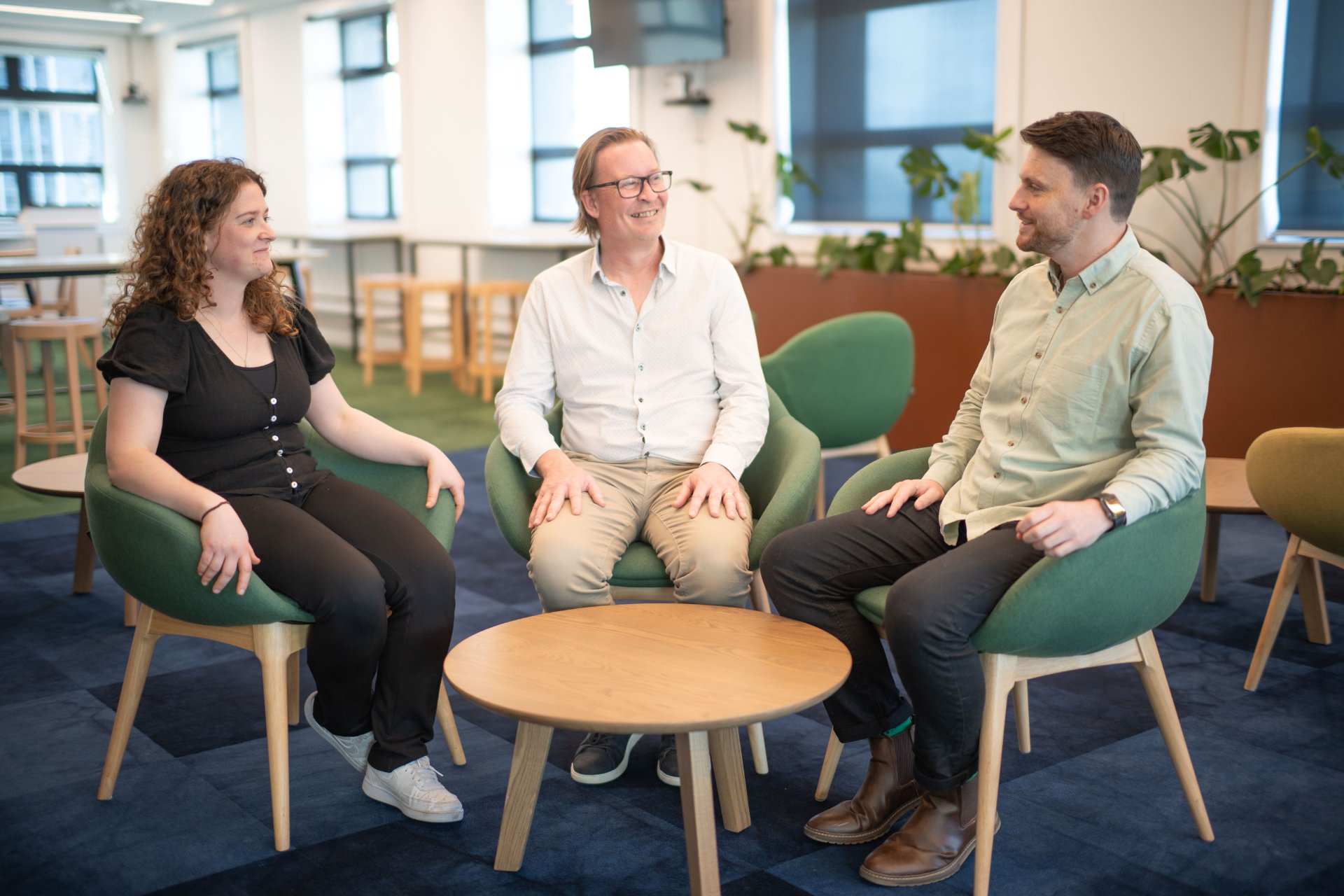
Beca Environmental Scientists Dr Genevieve Smith (left) and Tyler Neve (right) with Joel de Boer of Wellington City Council
Around 1,000m3 of material has been excavated, wrapped and safely deposited at the Southern Landfill. A small amount of residual material further back from the coast has been left in place as it can be safely managed and will be monitored by Council.
The area has been restored with coastal plants to encourage native species like lizards and penguins to return to the area.
“It’s part of the rugged coast. It’s right on the peninsula so doesn’t always attract the attention of people passing through but more those people who are exploring the foreshore and taking a bit more time out and experiencing the area,” Joel says.
“As part of this project we’ve put in some penguin nesting boxes. I engaged with Places with Penguins, a local restoration group. So that was another positive outcome, we’ve put some burrows on the seaward side of the road, so hopefully they take up house there,” Joel says.
A community planting day was held at the conclusion of the project.
“People from Beca, mana whenua and even Scots College came along and we planted about 1000 coastal plants specific to that area. It’s looking a lot better than it was before,” Joel says.
“The community appreciated us being open and honest with them. It was a great project which I’m proud to have been part of. We’ve cleaned up the site for future generations,” Joel says.