
Until hit with a civil emergency event, most of us don’t consider the supply of water from our taps at home and work, or how wastewater or stormwater is cleared from properties. But the future stability of these systems is what keeps infrastructure managers awake at night, balancing cost with looming population and climate issues.
In light of these considerations, Dunedin City Council is taking a bold view as to the management of the city’s drinking water, wastewater and stormwater assets over the next 50 years.
Dunedin City Council’s Planning Manager Jared Oliver looked at the challenges that lay ahead in planning for the resilience of these systems, and it was clear to him there was a need for a coordinated view of the constraints and possible solutions across all three water networks.
It was also clear to Jared that mana whenua, as Dunedin City Council’s Treaty Partner, needed to be part of the team if enduring solutions were to be found.
“The size and complexity of this project presented an opportunity for an innovative, inclusive and collaborative approach,” Beca’s Business Director – Water Dan Stevens says. “Dunedin City Council brought together a team of consultants from Beca, Stantec, WSP, Aukaha and local runaka [iwi authorities] who worked collaboratively with the Council team and were focused on what was best for the project.
“Having Aukaha and local runaka involved from the very start was really good - it meant we were hearing each other’s perspectives and understanding the cultural impacts of decisions from the beginning,” Dan says.
Upholding traditional Māori knowledge and practices in relation to water became part of the project’s guiding principles – acknowledging that protecting the health of water protects the health and wellbeing of the wider environment and communities.
The project team worked together over a five-year period to create an integrated systems plan. By looking at the three services holistically, the impact of investment decisions for each water could be appropriately balanced and outcomes optimised.
“This was an industry leading approach that tackled a wide range of technical and practical challenges enabling us to make robust and defensible decisions regarding the future of our system.”
- Dave Ward, General Manager 3 Waters, Property and Urban Development, Dunedin City Council
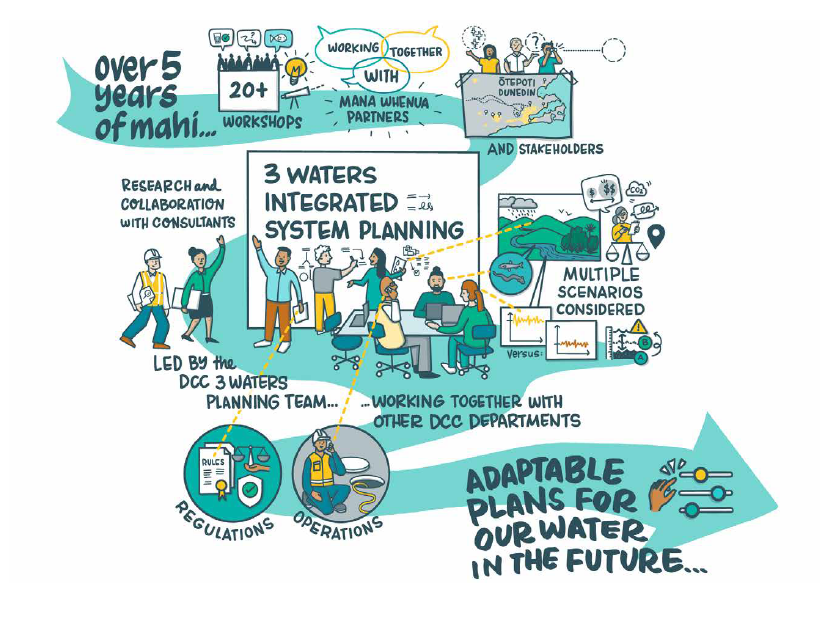
Using the project team’s specialist knowledge, a myriad of possible responses to the city’s water, wastewater and stormwater challenges were proposed, tested against the project’s guiding principles and objectives and narrowed down to create a pathway forward.
Beca Senior Associate – Planning James Taylor was the lead planner on the project.
“The consenting strategy was prepared in a changing regulatory environment, requiring a deep understanding of the underlying planning issues - such as poor urban water quality and over-allocation of Dunedin’s water supply catchments - that would require action no matter the statutory framework that will eventually apply. This approach provided confidence to Dunedin City Council in making decisions on the pathway ahead,” James says.
The team used Dynamic Adaptative Pathways Planning (DAPP) to set out the preferred pathway a well as possible alternative pathways that might need to be considered in the future. DAPP incorporates signals and triggers for decision making, so that Dunedin City Council can respond to changing circumstances over time – such as the impacts of climate change – and take alternative pathways as needed.
“Working to a 50-year horizon means Dunedin City Council can see what’s coming in terms of its asset management and be well prepared for investments. Using DAPP means the plan is also suitably flexible, so that investment decisions can change if need be,” Dan says.
“Using DAPP for this kind of work is fairly innovative. It’s not the traditional way of planning for water infrastructure. It was an effective way of tackling water, wastewater and stormwater at the same time and thinking about the linkages, what was most important and creating pathways, triggers and responses,” Dan says.
Climate Adaptation Specialist Dr Laura Robichaux led the DAPP work.
“We stress-tested these pathways in a scenario-testing workshop, to satisfy ourselves that the pathways selected were robust – and that the signals and triggers would help us understand if things were changing. It was great to see the culmination of five years of effort understanding options, constraints and potential performance all come together,” Laura says.
Some of the key challenges that needed to be addressed were:
- The affordability of keeping assets and services running, and deciding where investments should be made
- Maintaining good service levels while also dealing with unexpected weather events
- How to select the core pathway in the face of changing statutory requirements and regulatory standards
- Dealing with the impacts of climate change, particularly of sea level rise on low-lying infrastructure
- The need to reduce greenhouse gas emissions created through water treatment processes, particularly wastewater
- Maintaining ageing infrastructure and assets.
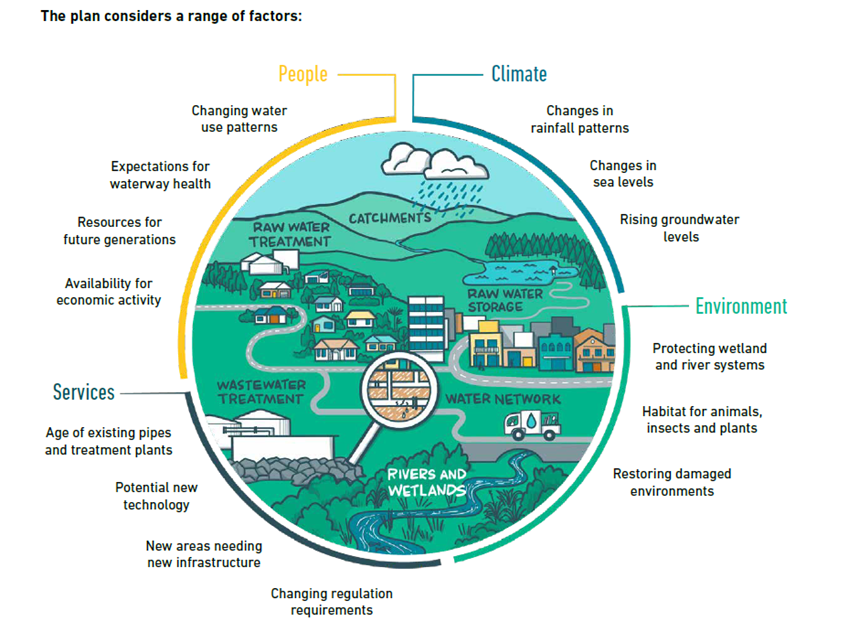
The core pathway the team have developed focuses on:
- Planning for water efficiency and conservation, as well as ongoing pipe replacement
- Improved water supply resilience and raw water storages
- Reduction of wastewater network overflows into the environment
- Development of catchment-based solutions to reduce flooding impacts and improve the quality of waterways
- Specific responses addressing continued operation and decommissioning of key assets
“This was a particularly rewarding project to work on, both for the collaborative way the project team worked together, and for the outcomes it will bring for the people of Dunedin. We are already seeing projects being planned for as a result, that will improve the resilience of the city’s water infrastructure,” Dan says.