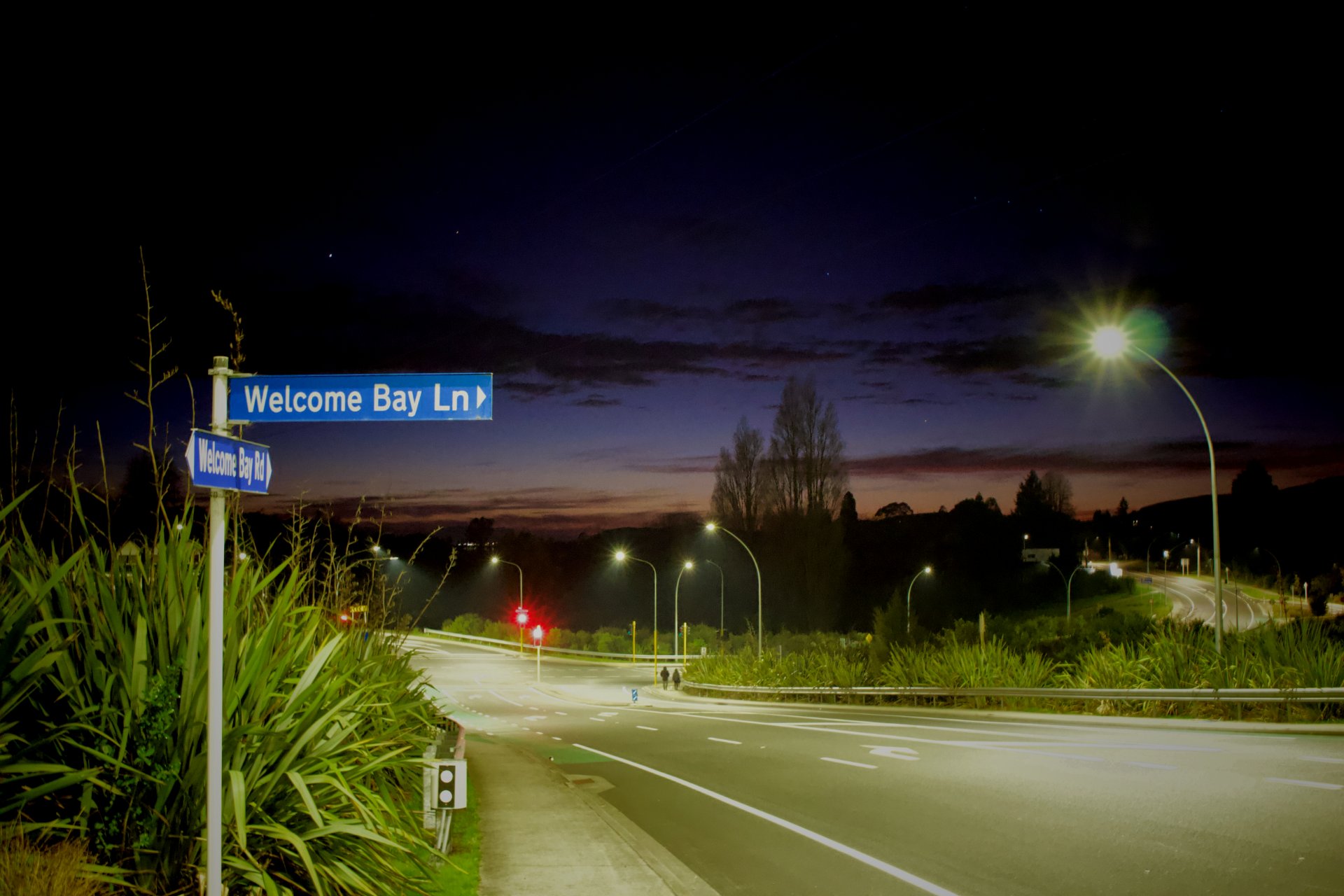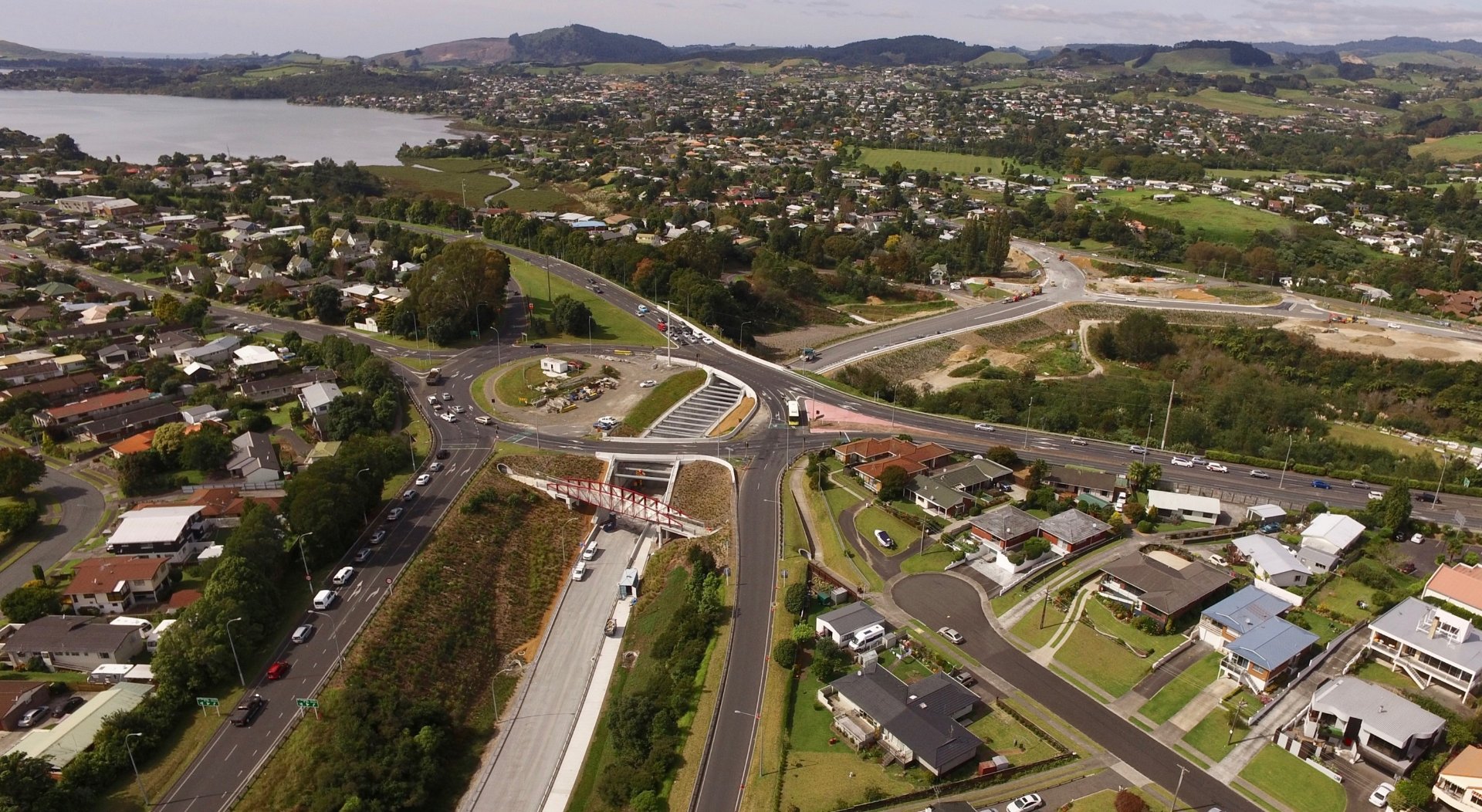
As the city of Tauranga-moana has rapidly grown and urbanised, significant roading infrastructure projects have been necessary to keep the city moving. One such project was the construction of the Maungatapu underpass, part of the Harini Link project which connected Welcome Bay Road and State Highway 29A to ease congestion in the area.
Embedding indigenous knowledge into wetland restoration
In order to construct the underpass, part of the Hairini wetland needed to be removed. It was then restored as a condition of the resource consent. The Hairini area between Welcome Bay and Waimapu Estuary has traditionally been home to hapū of Ngāi Te Ahi, Ngāti Hē and Ngāti Ruahine. This project and others over the years have impacted the connection to and privacy of Te Pāhou, which is the urupā (burial ground) located on the edge of the wetland. Te Pāhou and the wetland now sit on an island of land surrounded by State Highway 29a, Welcome Bay Road and Welcome Bay Link Road.
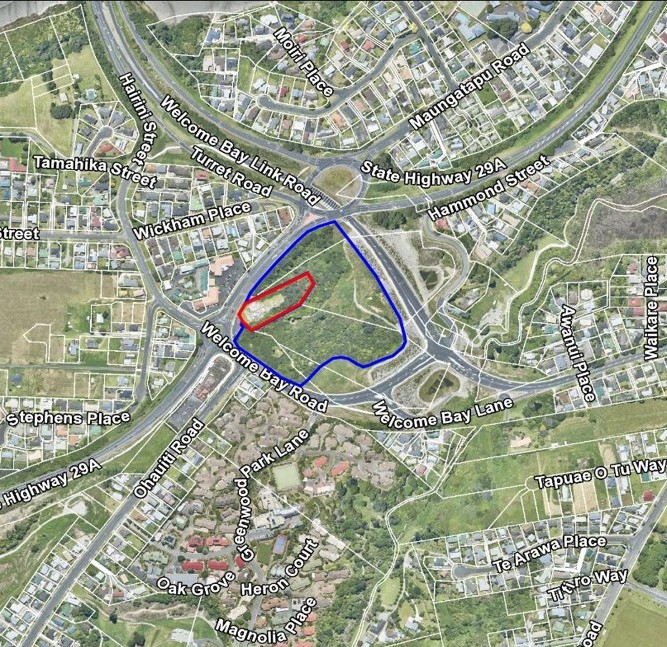
The urupā is outlined in red and Te Pāhou wetland is outlined in blue.
NZTA needed to address the cultural and ecological impacts of the Harini Link project, which meant restoring and enhancing the wetland at Te Pāhou; creating a new wetland at Tongaparaoa (Ila Park); and working closely with hapū to address the cultural impacts on the urupā.
This was an opportunity to recognise hapū as the kaitiaki (guardians) of the affected wetlands and create a partnership model that would give hapū the ability to lead and shape the restoration efforts on their ancestral lands.
Kaitiakitanga (guardianship) and manaakitanga (generosity) were guiding principles for the project – the intention was always that the work would be completed by the people, for the benefit of the people.
Prior to its use as an urupā, Te Pāhou was a functioning pā site; defensive ditches are still visible around its eastern edge. It is of great significance to hapū and it was important that the project works didn’t unearth human remains or taonga (treasures).
Over the years, the land below the urupā had become overgrown with pest plants, so the project was also an opportunity to clear the invasive plants and begin a programme of planting that would create a native canopy.
Anthony Tākiri Ririnui is Chairperson of Ngāti Hē Hapū Trust and has been involved throughout the project.
“For our hapū, restoring this particular whenua was fundamentally about restoring its mana. The area holds deep historical and cultural significance for us, particularly in relation to our urupā and the stories embedded within the landscape. The restoration process allowed us to reconnect with and better understand the historical features of the site, while ensuring it is cared for in a way that reflects our tikanga and responsibilities as kaitiaki,” Anthony says.
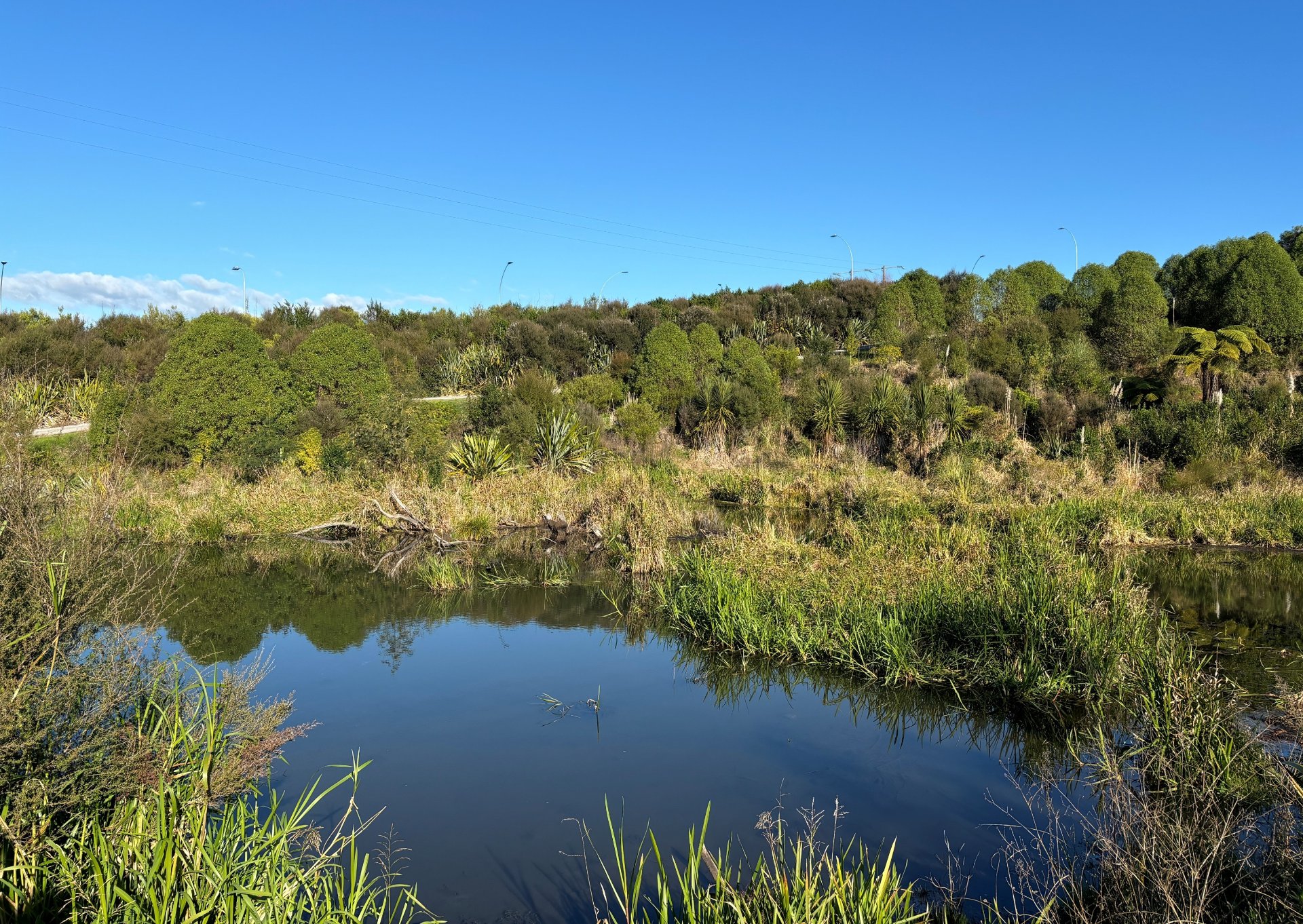
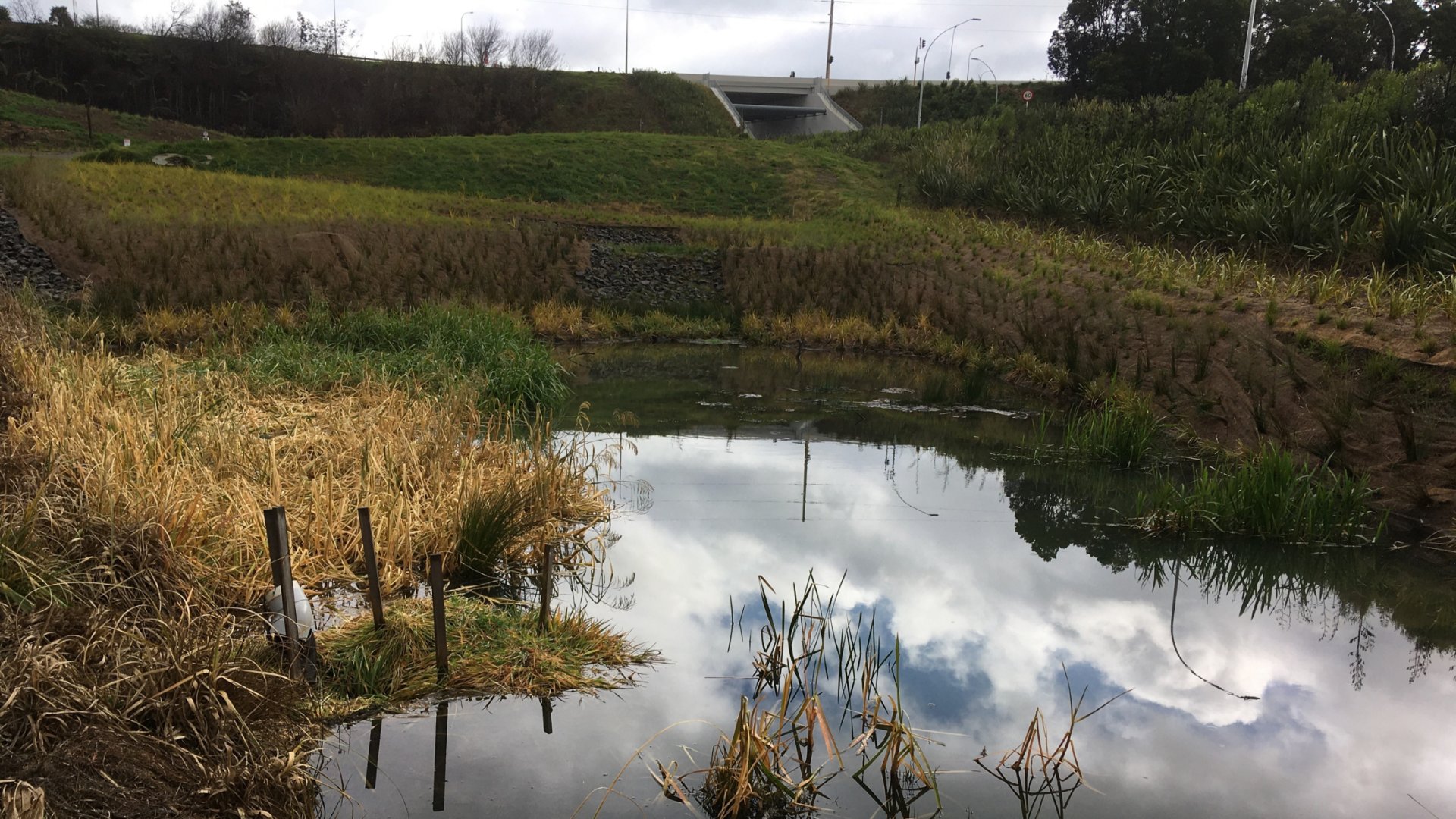
One of the ponds in the restored and replanted wetland.
Des Heke Kaiwha (Ngāi Te Ahi, Ngāti Hē) is an environmental advocate based in Tauranga-moana who has been involved in various project to protect local waterways. He was the Kaitiaki (Cultural Monitor) for this project. Des says that, in the early plans for the Hairini Link project, the wetland hadn’t been identified as being of any significance.
“Then, an ecology plan was created, and there were ecologists here from Boffa Miskell, and that was when we started to talk about the fact that were features of a wetland here. The Boffa Miskell ecologists studied these pools, and in one of them they found three giant kōkopu (native trout). I feel that was when everyone started to seriously consider the wetland. After that, a consent was created, and that led to the opportunity to deliver this wetland project,” Des says.
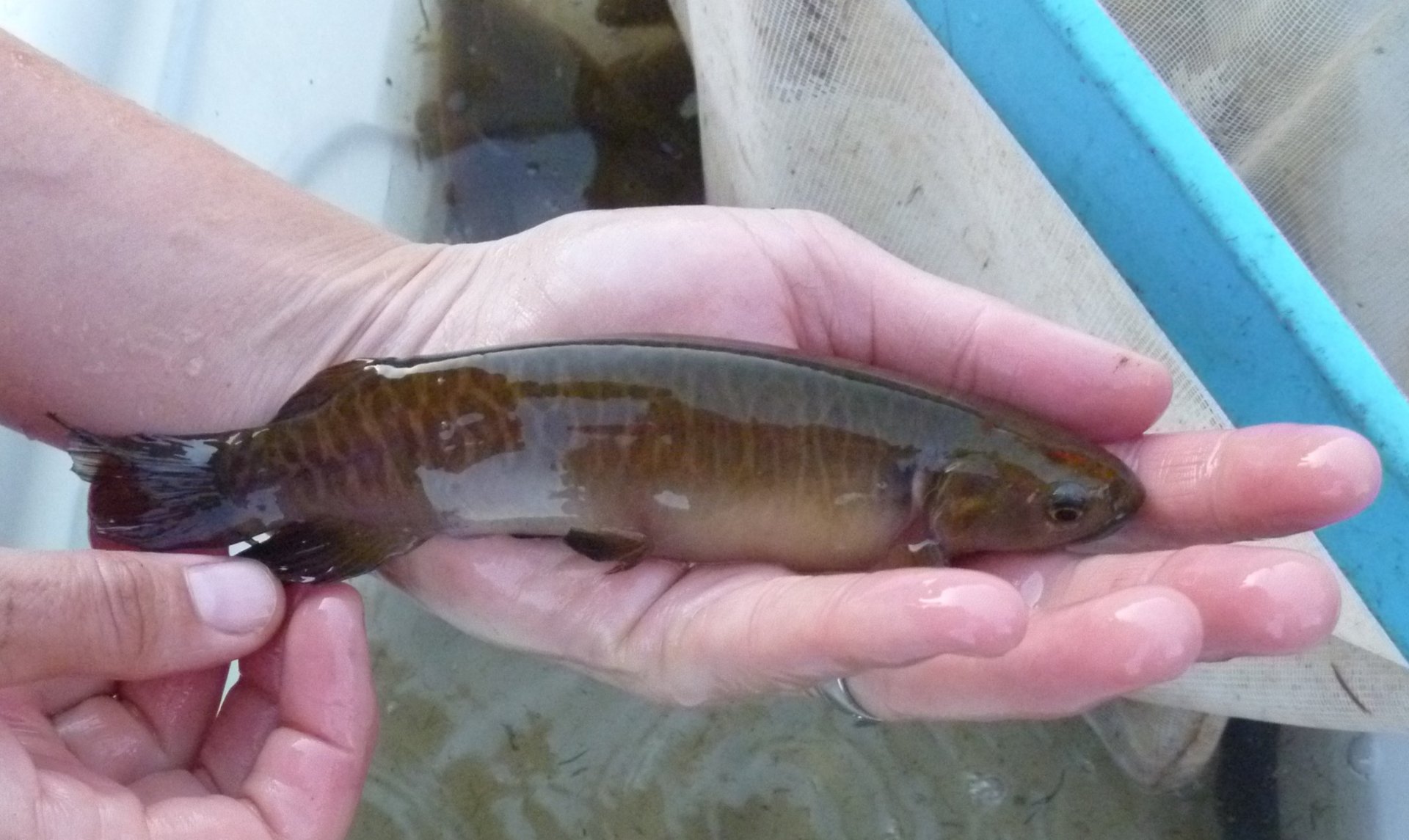
Kōkopu (native trout) were discovered in the wetland ponds.
Beca provided project management support for the wetland restoration at Te Pāhou, following the Ecology and Cultural Restoration Plan prepared by Boffa Miskell.
“What was special about this project was the social procurement model that was used. The three hapū created a commercial entity, Te Rōpū Aonui Hou Limited (TRAH), which delivered the wetland works. The objective was to employ local people and grow the skills of the local community. Beca supported TRAH with coaching around financial management, programme management, scheduling of works and getting the right people involved,” Beca Project Director Jandre van Zyl says.
“Our relationship with hapū began during the planning and construction phases of the Hairini Link project, where early and ongoing engagement helped build a strong understanding of what was important to them. During the wetland restoration project, a key focus was role clarity. Open and transparent conversations helped everyone understand their responsibilities, manage project complexity, and focus on the key decisions needed early. This also enabled TRAH to clearly convey information back to their hapū and organisation,” Jandre says.
Once the right governance structures were in place, Jandre handed the day-to-day project management to Beca Civil Engineer Matariki Bennett. It was a unique opportunity for Matariki to combine his technical and cultural advisory skills to support his people, and build on his personal connections to form strong relationships.
“Two of the hapū in the collective are of Ngāti Ranginui Iwi. I’m also of Ngāti Ranginui descent, but a different hapū. The people leading the hapū collective are people who grew up with my father in the same area – they went to school together,” he says.
“The model we used meant hapū had the mana to influence the direction of the project and how things should be done, so matauranga Māori (Māori wisdom) was embedded in the restoration process. They established local working groups, employed their own people and brought them back to the land. It was a learning journey for many of them, of reconnecting to the whenua (land) and their whakapapa (ancestry),” Matariki says.
“Matariki’s involvement has been instrumental to the project,” Jandre says. “His personal connections and understanding of where hapū were coming from as well as being able to speak te reo Māori, helped build trust. There were strong emotions at times which Matariki handled very well.”
Matariki says having the opportunity to work with hapū has been a career highlight.
“There are lots of people at Beca who have additional skills they can bring to projects, beyond their technical skills. For me, it happens to be my upbringing in te ao Māori (the Māori world) and kura kaupapa (Māori language immersion schooling), that eventually bear fruit in projects like this,” he says.
“I was liaising directly with TRAH in terms of how they wanted to procure things. I’m fortunate that I’m able to understand where they’re coming from and what’s really important to them.”
“The relationship between hapū and Beca on this project has been one of mutual respect,” Anthony says, “with knowledge and support shared both ways throughout the project. Having Matariki as a consistent point of contact, particularly in the latter stages, was critical. During that period, we experienced some challenges that required different thinking and a collaborative approach to work through. Matariki’s leadership and input were invaluable in helping us navigate those complexities and maintain momentum.”
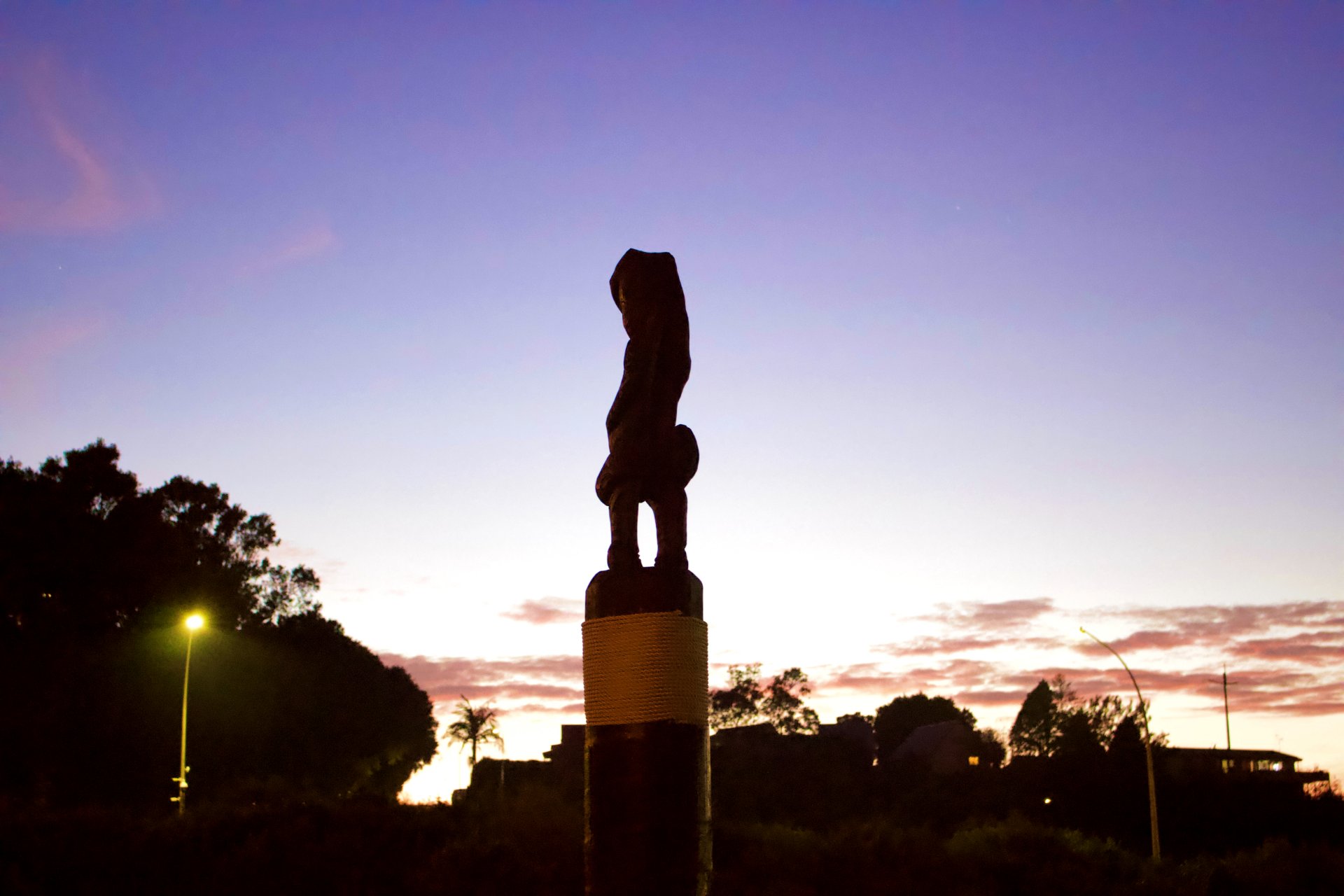
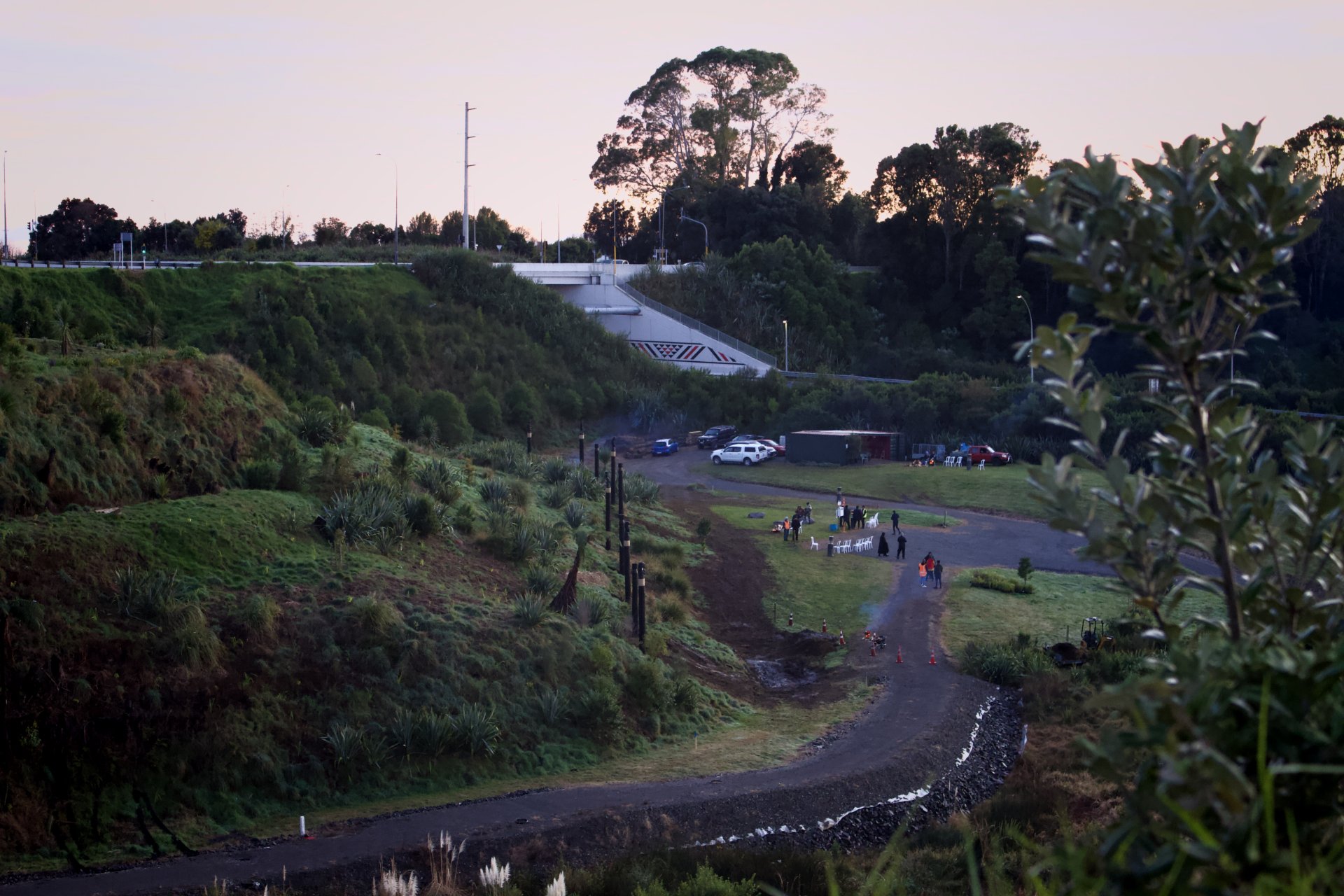
As part of the cultural restoration of the site, 12 pou whenua have been installed around the base of the urupā to enhance its terraces. A blessing ceremony was held at the site for the pou whenua during Matariki (the start of the Māori new year), which was an opportunity for hapū members to come together and reconnect. A tomokanga (gate) has also been designed, which will form a new entrance to the site.
Beca Landscape Architect Chris Judd is based in Tauranga and was the Job Manager for the project.
“I was involved in management of the landscape works and helping get the cultural works across the line, including the pou, waharoa and signage. It’s so good to see the pou and waharoa in place, and to hear how much hapū have benefited from this project,” Chris says.
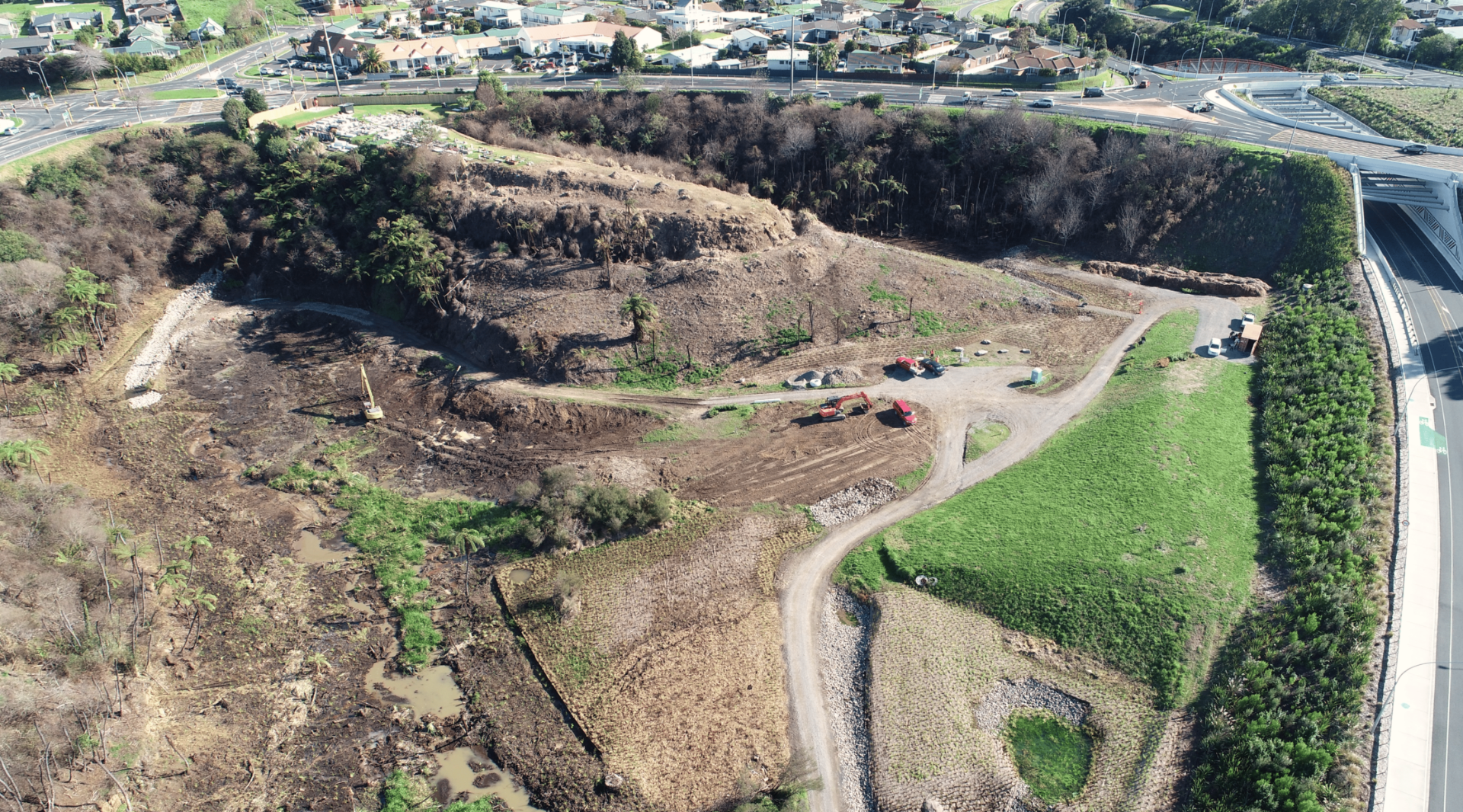
A mid-construction photo of the wetland before replanting began.
Anthony has observed the benefits of having hapū deliver the works on this project themselves.
“Beyond the environmental outcomes, the project has strengthened our position at the table as a genuine partner within the structure of the development. It has enabled direct employment opportunities for hapū contractors over several years, supporting local capability and economic participation. Importantly, it has kept our people connected to our whenua throughout the works. A significant milestone for us was holding a Matariki event on-site to bless the cultural assets — reinforcing the spiritual and cultural dimension of the project alongside the physical restoration,” Anthony says.
The project has also been an educational opportunity for students at nearby Mangatapu School. The history and ecology of the site is being captured and developed collaboratively into storyboard content by the school and hapū. The intention is that these storyboards will be available for the public to read at five locations around the site.
Anthony says hapū are open to sharing their experiences to support broader learning and encourage similar collaborative approaches elsewhere.
“Our aspiration is to maintain and enhance what has been established, while also exploring further opportunities for wetland development in our wider rohe,” Anthony says. “We see this as an ongoing journey of restoration, partnership, and intergenerational stewardship,” he says.