Te Pae o te Rangi (the ledge of the heavens) is the walkway extension project under way on the Taranaki coast.
New Plymouth walkway extension
The walkway runs from Port Taranaki to the CBD and Mangati (Bell Block) and is being extended as far as Waitara, making the entire coastal path almost 23km long. As well as providing a way for people to safely walk, run or cycle between these places, the project is bringing local indigenous stories to life through its design. Members of four local hapū are part of the project team working in partnership with New Plymouth District Council.
“This project is co-everything,” Beca Project Manager Chad Williams says. “Co-governance, co-design and sharing knowledge in all directions. We have been part of this story from the beginning – from the strategic case and then the business case stage, to get funding from NZ Transport Agency Waka Kotahi. But it’s not about Beca doing the work - we came to the decision fairly early on that the project partners would do everything together: Ngā hapū (Manukorihi hapū, Otaraua hapū, Pukerangiora hapū and Puketapu hapū) and New Plymouth District Council,” Chad says.
A project charter was created in the early stages, to establish some shared values between Beca, hapū and New Plymouth District Council. Beca Job Director and Landscape Architect George Woolford (Ngāti Kahungunu) says the value that stood out to him the most from this process was ‘Mō to mokopuna’.
“It was about acknowledging that the benefits and the impact of the project is about our children’s children and the future generations, even if we may not realise all of them,” he says.
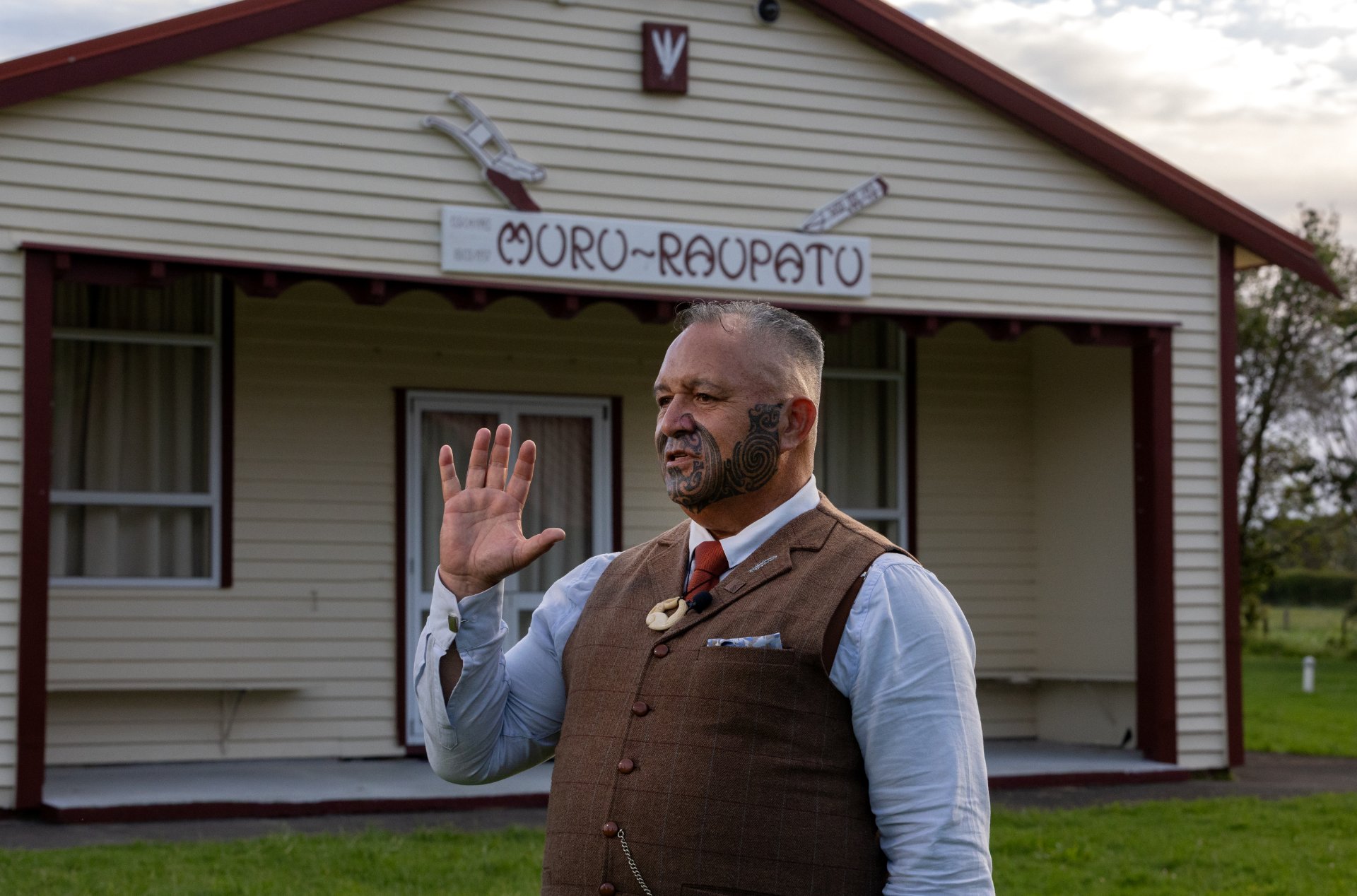
Anaru Wilkie, Trustee and Co-Chair for Puketapu hapū, at a project hui at Muru-Raupatu marae.
Anaru Wilkie is a Trustee and Co-Chair for Puketapu hapū and has been part of the working group for Te Pae o te Rangi since the very beginning of the project.
“It’s important to hapū to have our stories told – to let people know the story of the cultural landscape of where we live,” Anaru says.
“The co-design process is important because it brings our community together with the planners and the creative people. It has us at the table making decisions together,” he says.
“At the co-design hui, we listen to what’s important and then we sketch it together, then we model it to see what it will look and feel like. It’s really cool, going through this journey to the point where we have something tangible we’ve worked through together,” Chris says.
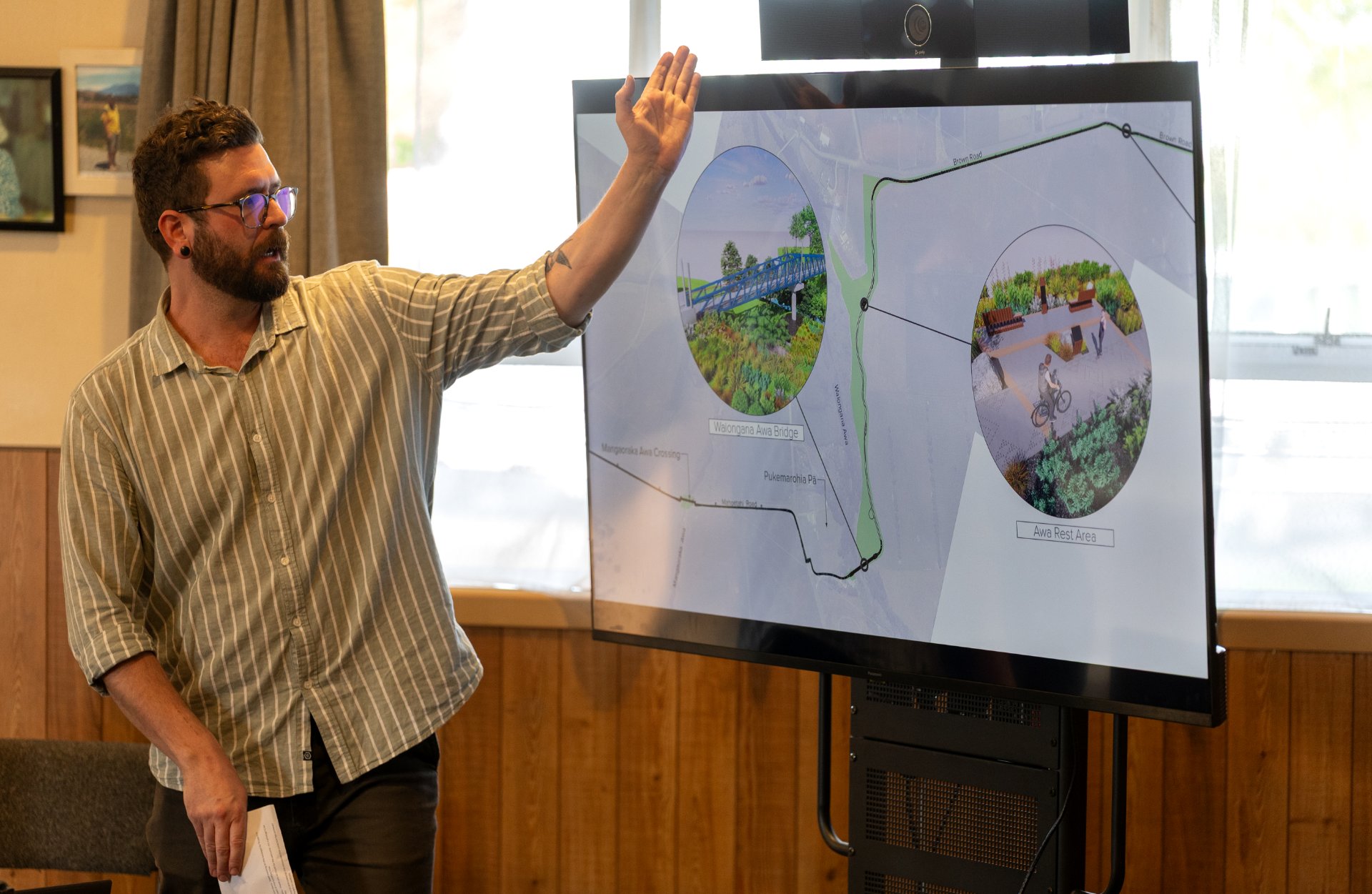
Beca Landscape Architect Chris Judd has been deeply involved in the co-design process for Te Pae o te Rangi.
“The whole process has been set up with this genuine relationship and partnership with hapū, probably more so than I’ve ever experienced. To the point where hapū have the ability to affect the design of everything. They get to embed their local knowledge of the land and ecological areas into the process, which is quite cool and feels quite genuine,” Chris says.
“Following the co-design hui, Ngā hapū have their own Kaitiaki hui where they can speak freely without Beca or NPDC in the room. Pouwhakakaupapa (Project Coordinator) Rangimokai Knuckey then brings feedback to us,” Chad says.
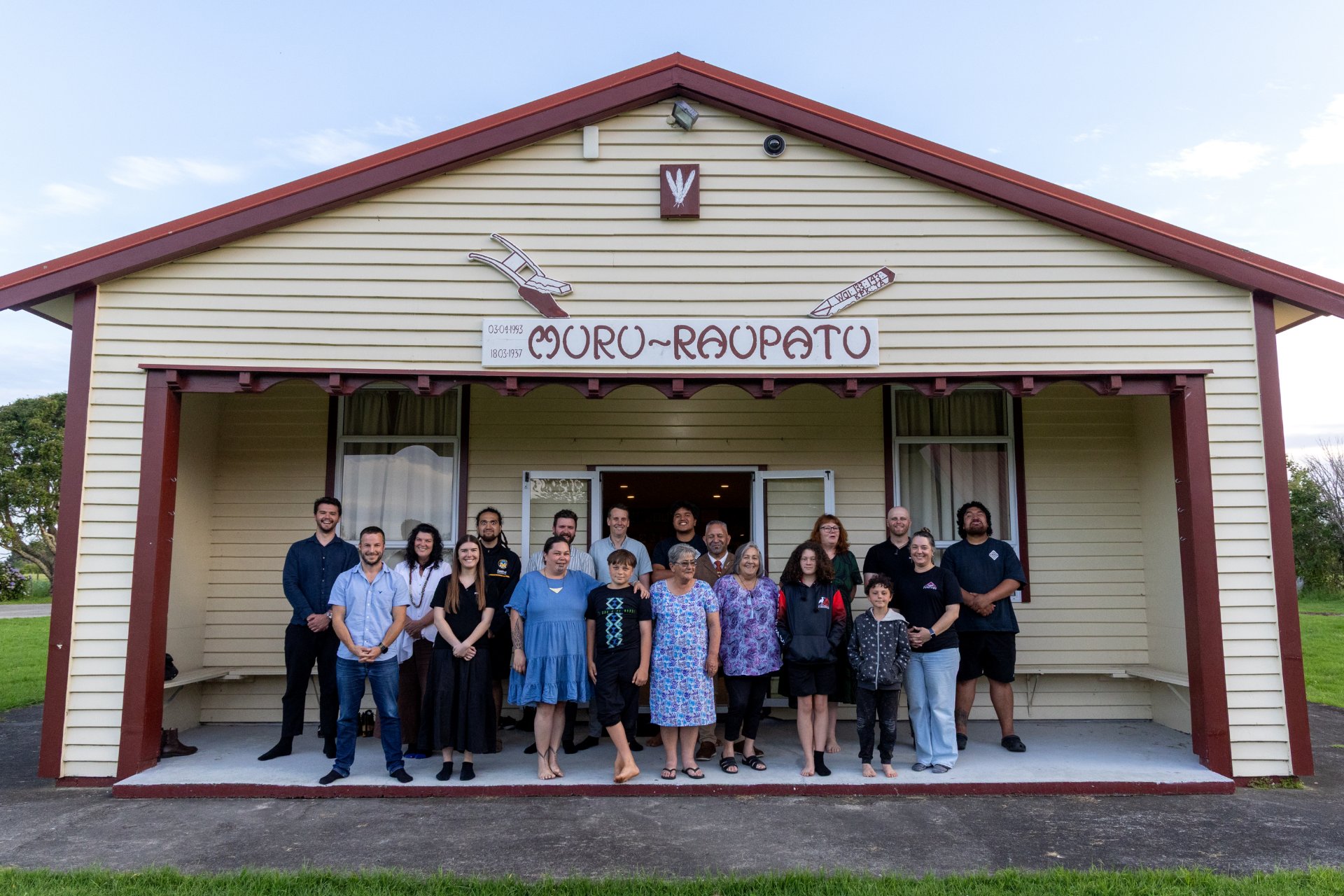
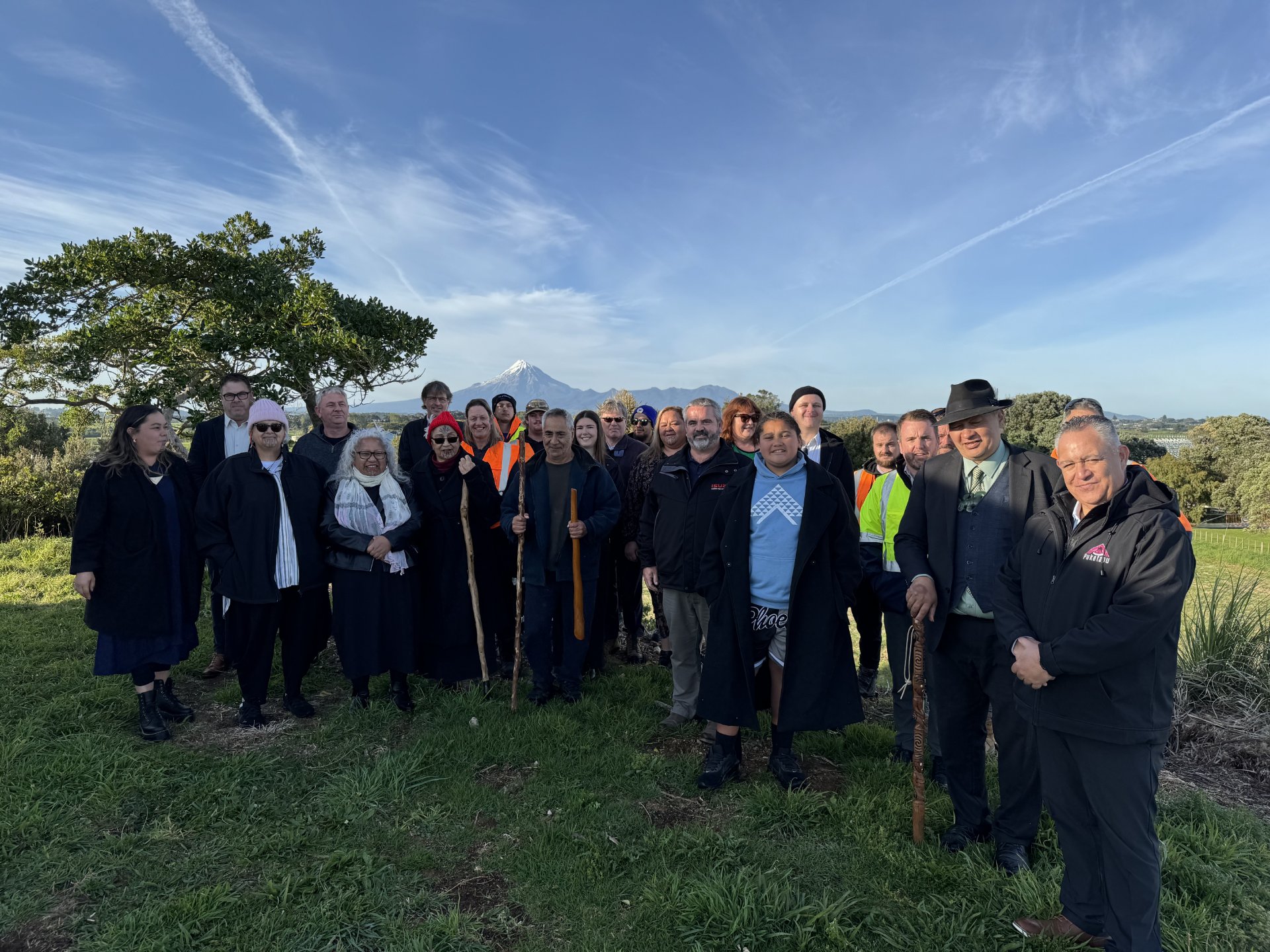
Project partners and hapū representatives gathered at Muru-Raupatu marae to acknowledge the project moving into its next phase of design.
“From a design perspective, this project has everything,” Chris says. “There’s every different landscape from gullies to sand dunes – all sorts of challenging environments. And then there are the other features within the walkway itself like the rest areas and bridges.”
There are many places to stop along the new sections of the path, all with points of interest that have been co-designed. For example the section of the pathway that connects Waitara and Bell Block includes a deck with a view out to sea and slower paths that take users off the main route and allow them to connect with nature.
“This way of working is all about heart. We start with the story and the narrative and get to the engineering later. For example, there’s a footbridge that spans the Waiongana awa (river) in the second stage of the project. The bridge is 63m long, with a clear span of 36m over the awa, as it was really important to hapū that we didn’t disturb the awa in any way,” Chad says.
“We are planning a variable height steel truss bridge. The topography, waterway and geotechnical conditions make for a challenging design which we’re looking forward to seeing come to life,” Technical Director – Structural Engineering Liam Edwards says.
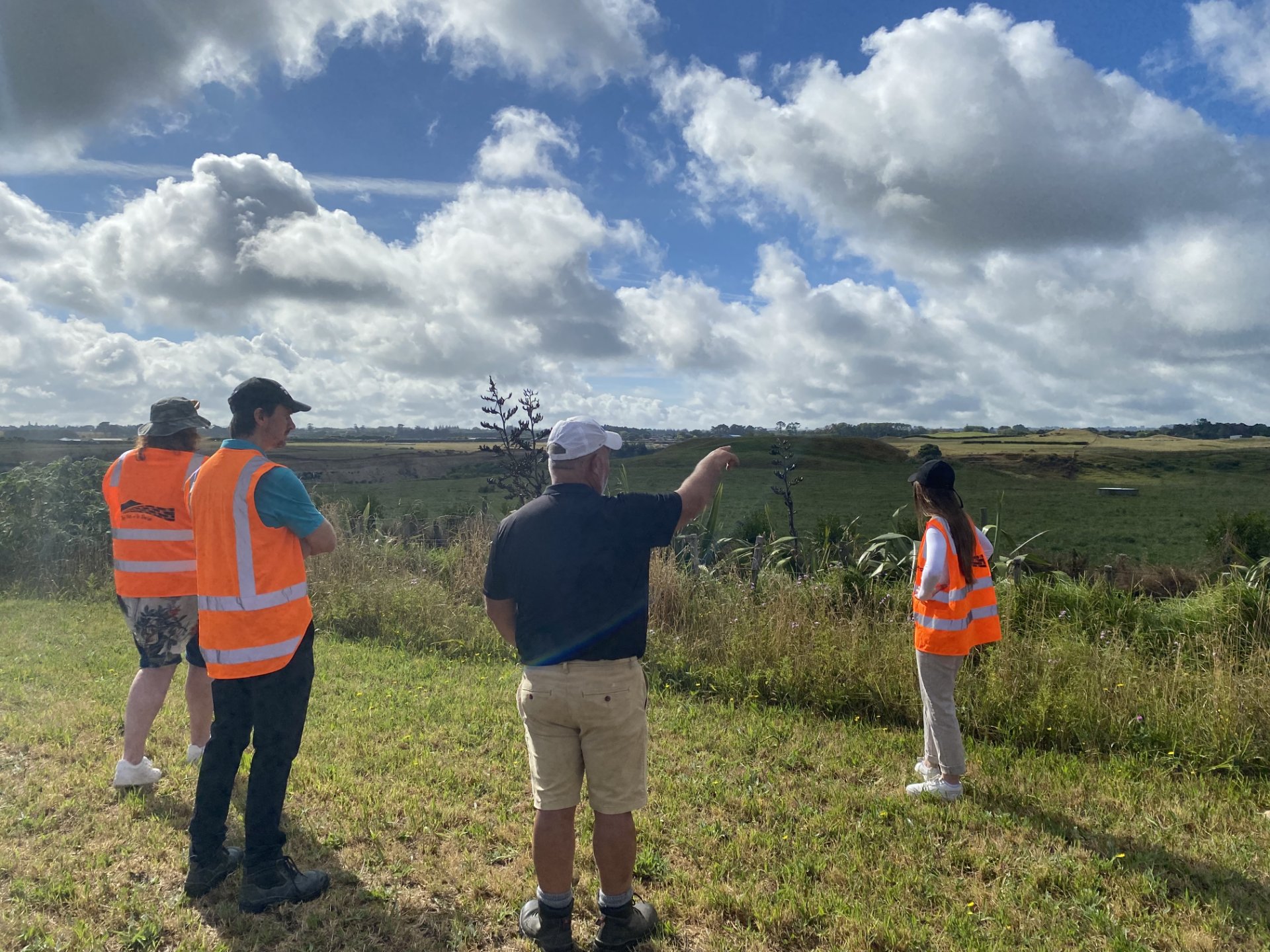
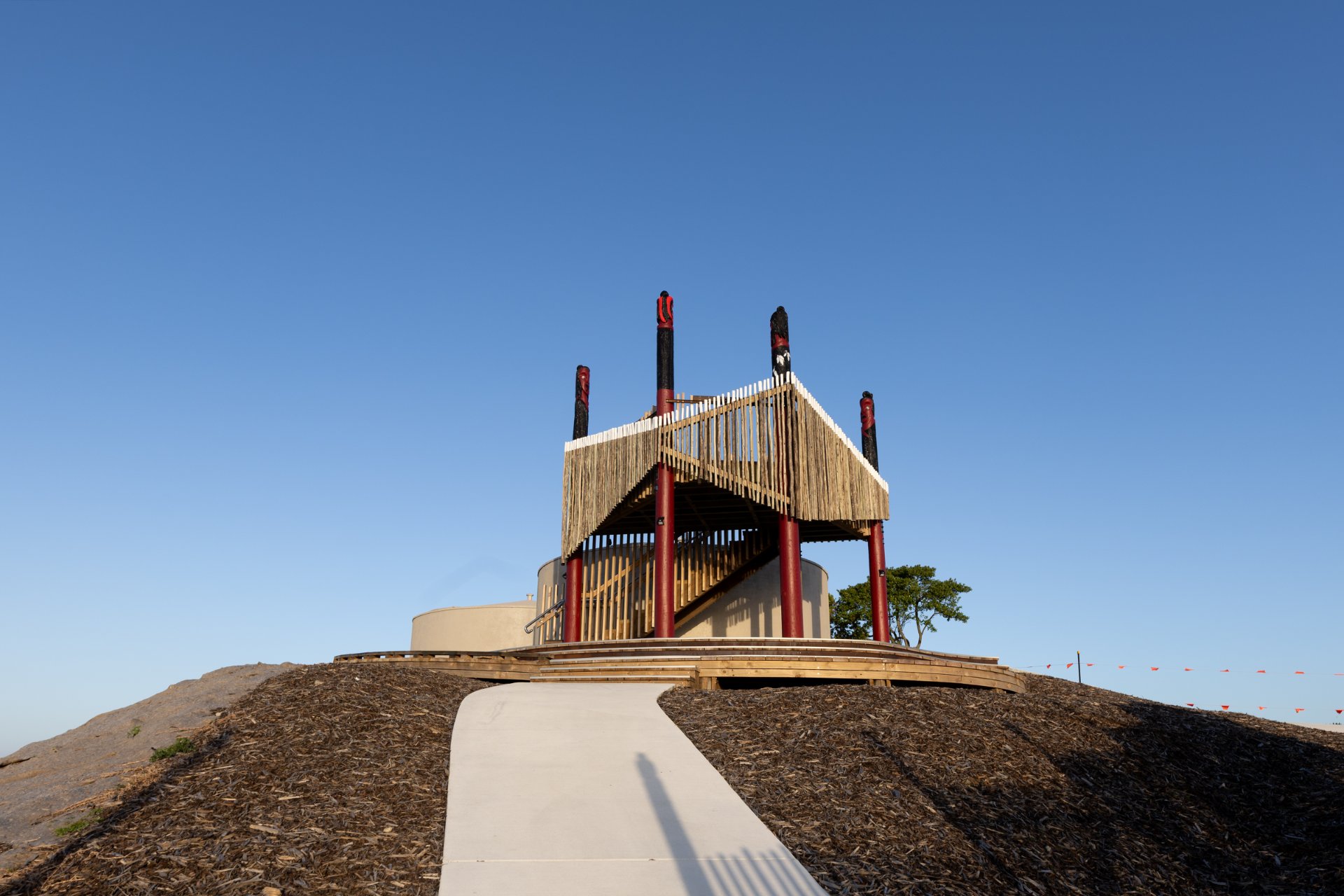
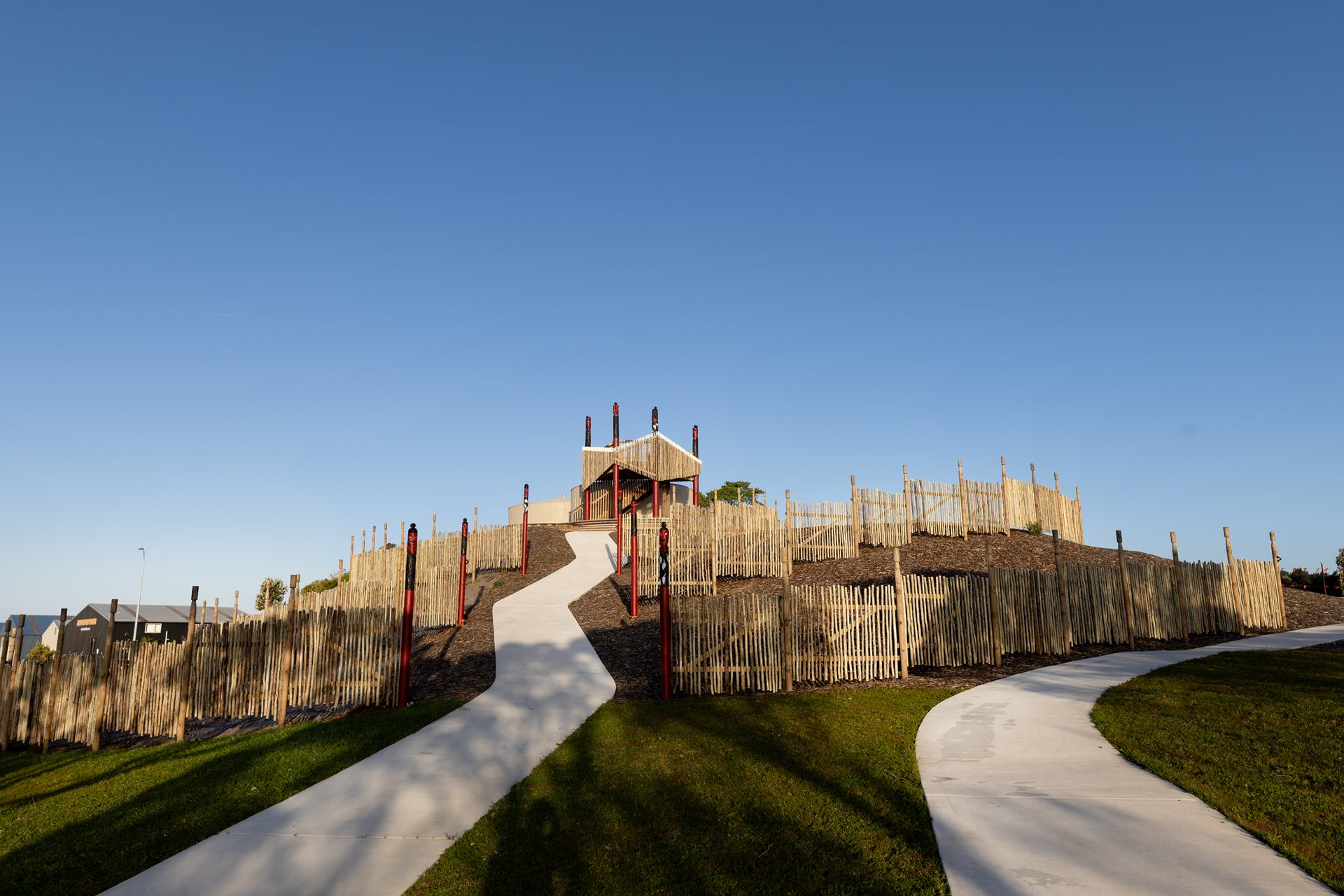
Another of the standout features along the walkway is the viewing platform next to Te Hono, New Plymouth airport.
“The matairangi (lookout) was always part of the design for the walkway extension project, and at one of our co-design hui, we discussed that it would be good to have that ready for Te Matatini [the national kapa haka festival, which was held in Ngāmotu (New Plymouth) in February 2025] to welcome manuhiri (visitors). We had to accelerate design and procurement concurrently to get it done, which was only possible by using a local Bell Block contractor we’d worked with on the first stage of the walkway, and who worked really collaboratively with us. The whole thing was designed and built in five or six months,” Chad says.
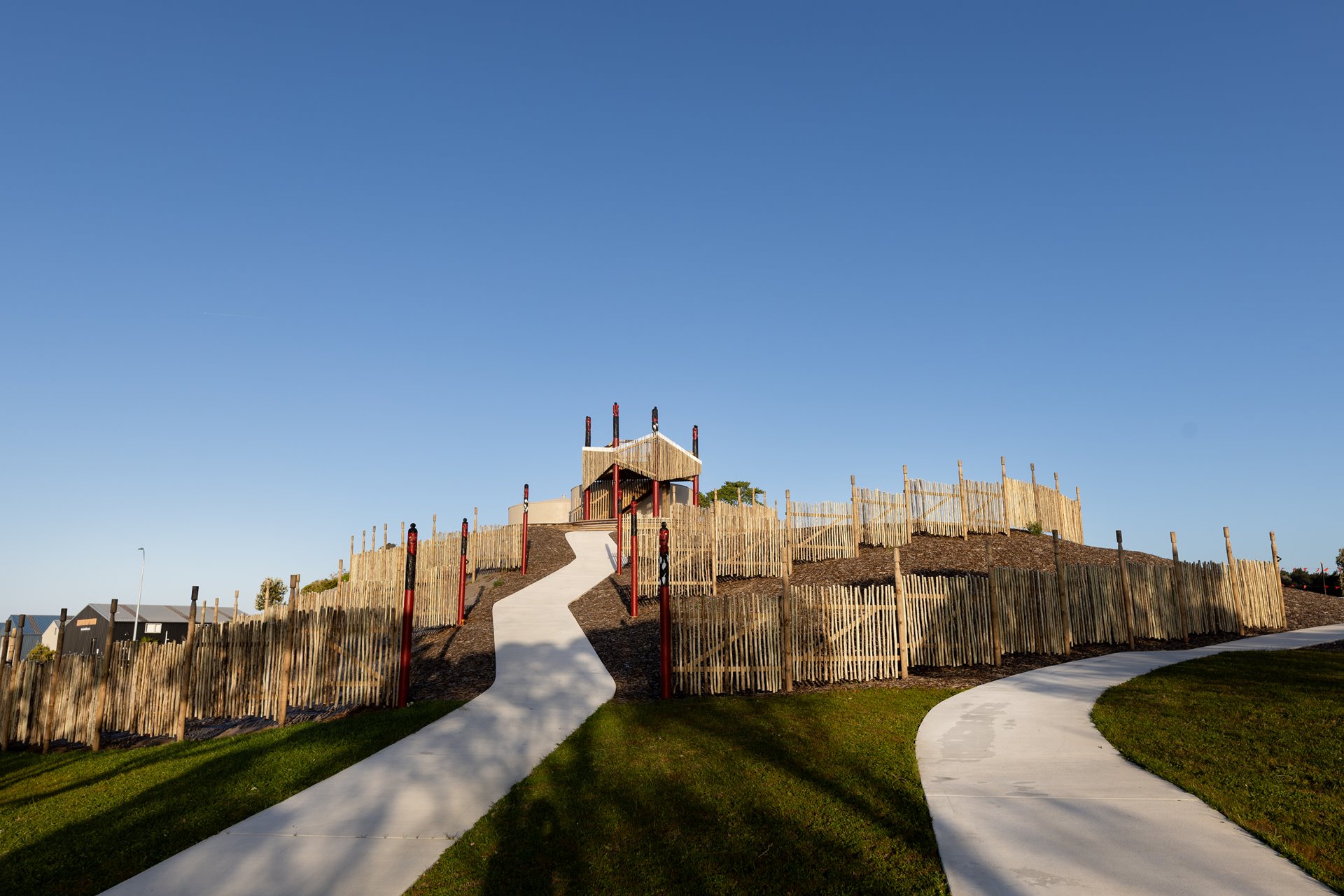
The matairangi located next to Te Hono, New Plymouth airport, is one of the highlights of the walkway extension project.
The matairangi has views of the maunga (Mount Taranaki) and across the rohe (region). It features four pou (pillars) carved by master carver Kenny Trinder (Te Ātiawa). The first pou acknowledges the story of Rakeiora, the ancestor of Puketapu. The remaining three pou are Tamarau and Rongo-ue-roa and their story of Te Ātiawa, as well as Pani-Tīnaku, the atua of kumara, whose mauri (life force) travelled on the Tokomaru waka. Each pou faces inwards, so that each ancestor has their rohe (region) behind them.
When Chad talks about sharing knowledge on this project, he is serious about it going both ways.
“I would say that Beca has learned so much from this – about history and legends, pūrākau (narratives) of the rohe (area). Being able to walk the proposed alignment with mana whenua and have them tell us different stories. Ngā hapū have shared so much knowledge with us. We’ve tried to share some of our knowledge in return, both in terms of the design process but other aspects too. For example, when we did a geotechnical survey, we invited hapū members to join us, we explained the work and invited everyone to get on the tools.”
George also notes that spending time walking the route with hapū was particularly valuable.
“One of my biggest reflections was about hīkoi (walking) – the benefits of design by walking the whenua (land) together. It captures not only an obvious design response but also emotion, experience, history and the richness of stories that hapū have. You hear about which stream the kids play in, where they ride their bikes, where everyone goes to gather kaimoana. It’s a slow reveal of the site and people’s connection to it. We have taken that learning on to other projects,” George says.
Chris is based in Tauranga and observes that the long-term relationship between the locals who are working on the project brings an extra level of commitment.
“There’s a really strong relationship between the local Beca team, Council and Ngā hapū. Many of them went to school together. That flows through to the construction teams, who are local too. Everyone knows each other. This is something they’ll be able to share with their kids, so everyone wants it to be really good,” Chris says.
Chad acknowledges that he feels a particularly strong connection to this project, having been born and bred in Waitara.
“I’m proud to call Waitara home – it will always be home, even though I Iive in New Plymouth now. I don’t whakapapa Māori but te ao Māori is important to me and I guess that comes through strongly when I talk about the project. It’s pretty special to be involved in something significant where I grew up.”
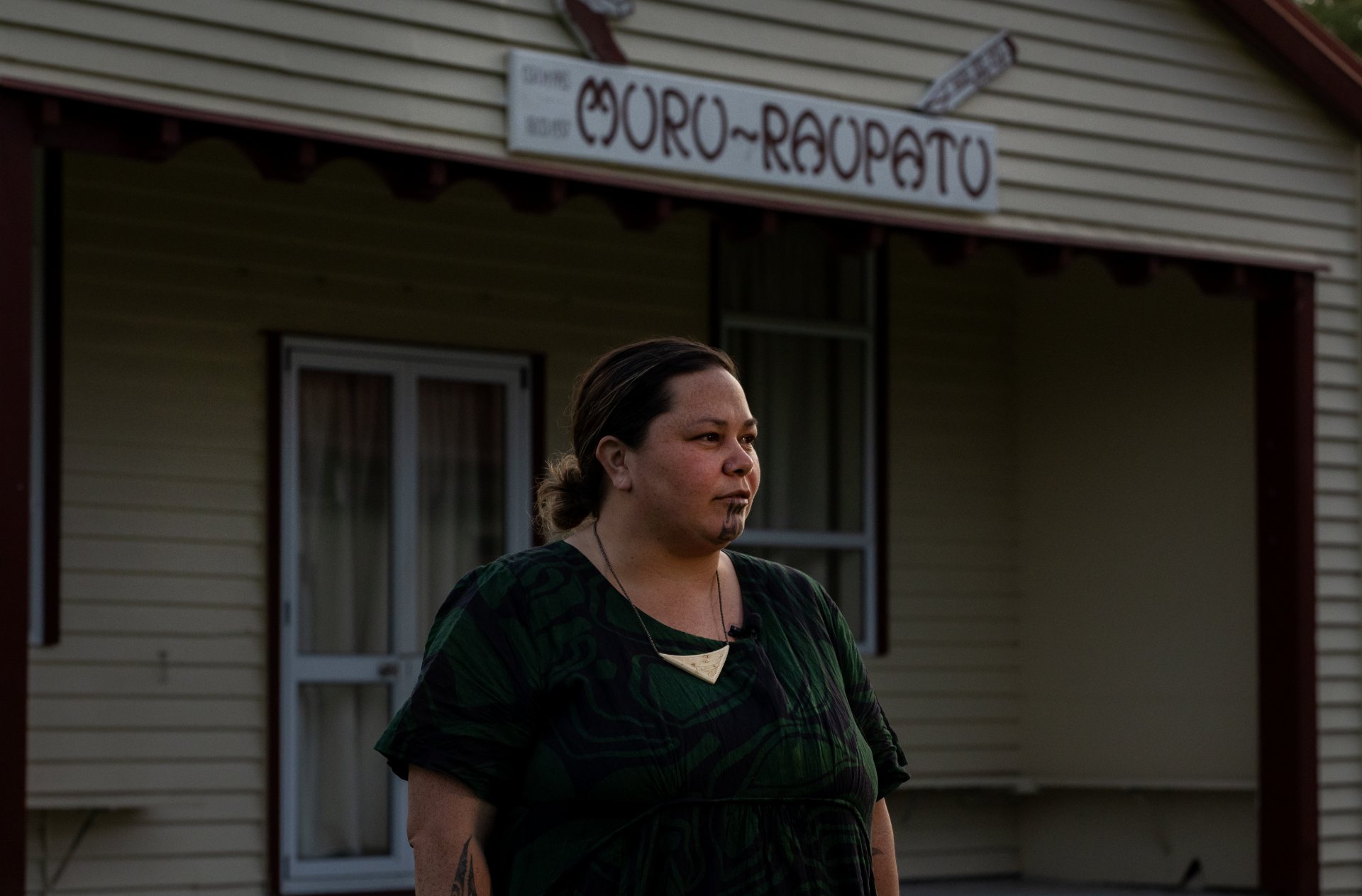
Pouwhakakaupapa (Project Coordinator) for Te Pae o te Rangi, Rangimokai Knuckey.
Rangimokai says its vital that projects like these include hapū in the design process.
“It’s important because not only are we starting something new for our uri (descendants) and our next generation, but it’s moving through our lands, our whenua, and that represents who we are. Being a part of designing what goes through there is really important,” she says.
George reflects on the project charter, and the team’s aspirations for the project’s impact on their children’s children.
“Part of that is about learning and whakapapa. A lot of the design work and what’s been built into the project through this partnership is about learning and so we’ve got a number of opportunities along the pathway to engage with aspects of the past in the way that children can learn about matauranga Māori and their own whakapapa within their hapū,” he says.
Rangimokai agrees that education is a key outcome of the project.
“We want our own whānau to know what our stories are… but also those that belong to this region and have got a big passion for understanding our history… we’ve got a space to take them back to and share our stories.”
The pathway is being built and opened in stages. Construction began in 2023 and is expected to be completed in 2027.
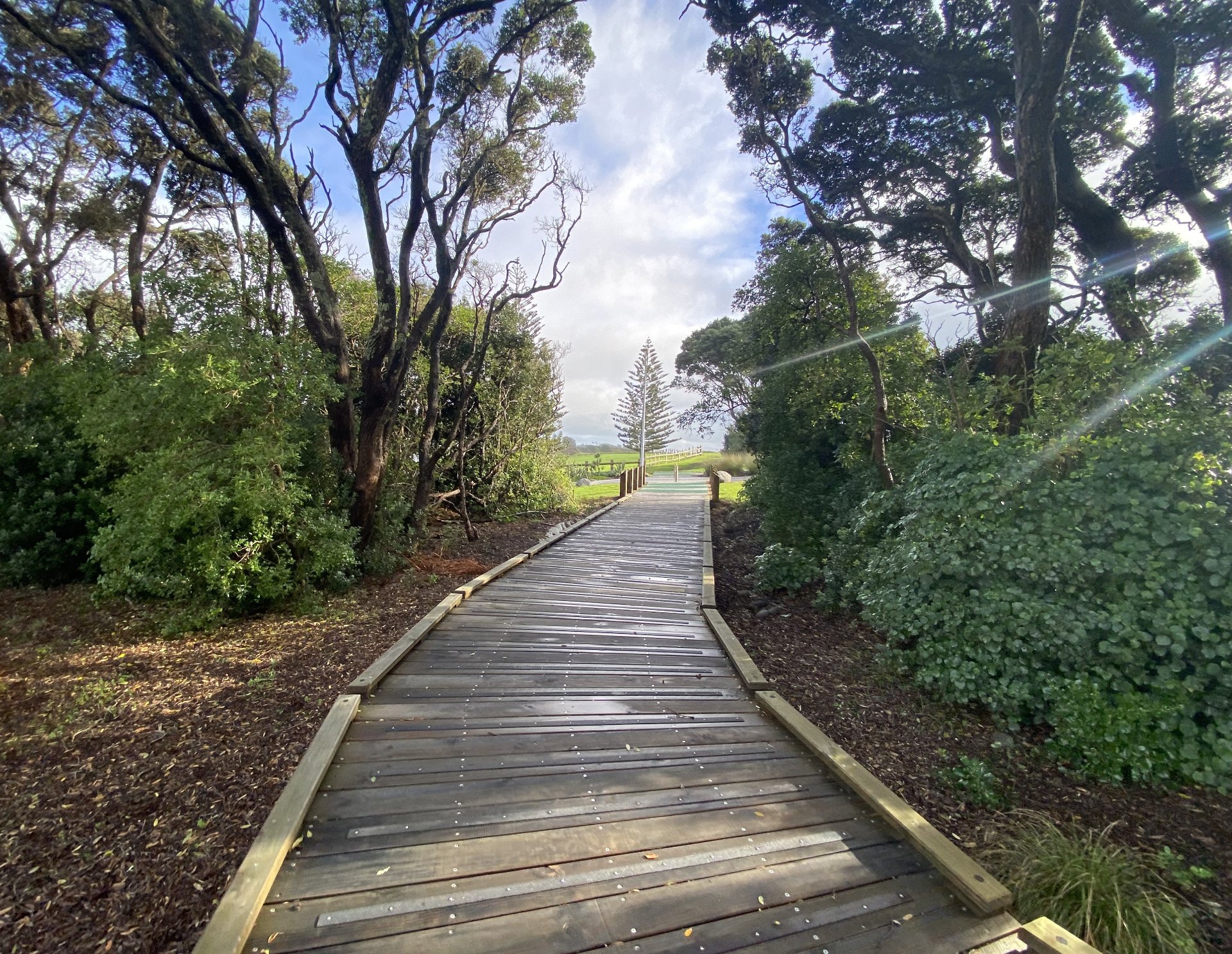
Completed section of boardwalk at Otupaiia