As the Southern seawall that protects Wellington’s airport reaches the end of its life, Beca has worked alongside Wellington International Airport Ltd (WIAL) to deliver a strategic resilience project to renew it.
Designed for the storm
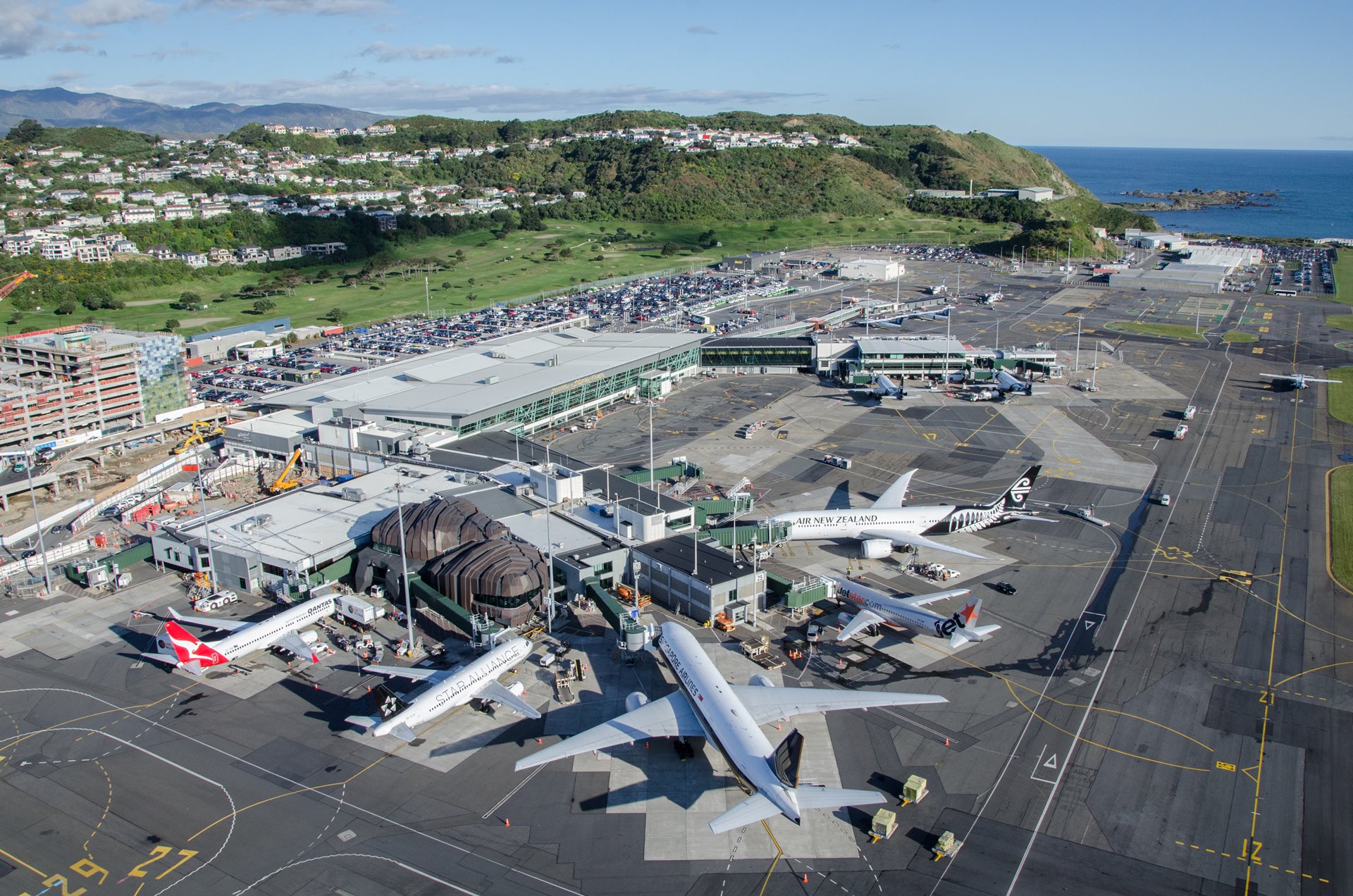
Wellington International Airport is located in Lyall Bay, Wellington, on the south coast of New Zealand’s North Island. The site is directly exposed to southerly swells propagating from the Southern Ocean and South Pacific Ocean.
WIAL’s Southern Seawall Renewal Project helps to safeguard the long-term operation of the airport against coastal hazards, increase resilience to climate change, and reduce the increasing maintenance demands of the existing seawall.
Affordability and value for money are key project considerations. Airline consultation is also an important part of the project.
Beca has worked with WIAL’s project team since 2022 to achieve their resource consent, design and contractor procurement milestones.
Beca’s multi-disciplinary team has undertaken:
- Option identification and evaluation
- Investigations
- Preliminary and detailed design, including physical modelling
- Planning and support for a pilot project to cast and place new armour units
- Resource consent application services, including coastal processes and contaminated land assessments and evidence
- Procurement support for the Pre-Construction Services Contractor (Early Contractor Involvement) and Construction Contractor procurement
- Targeted project management services, including risk assessments, cashflow monitoring and project reporting.
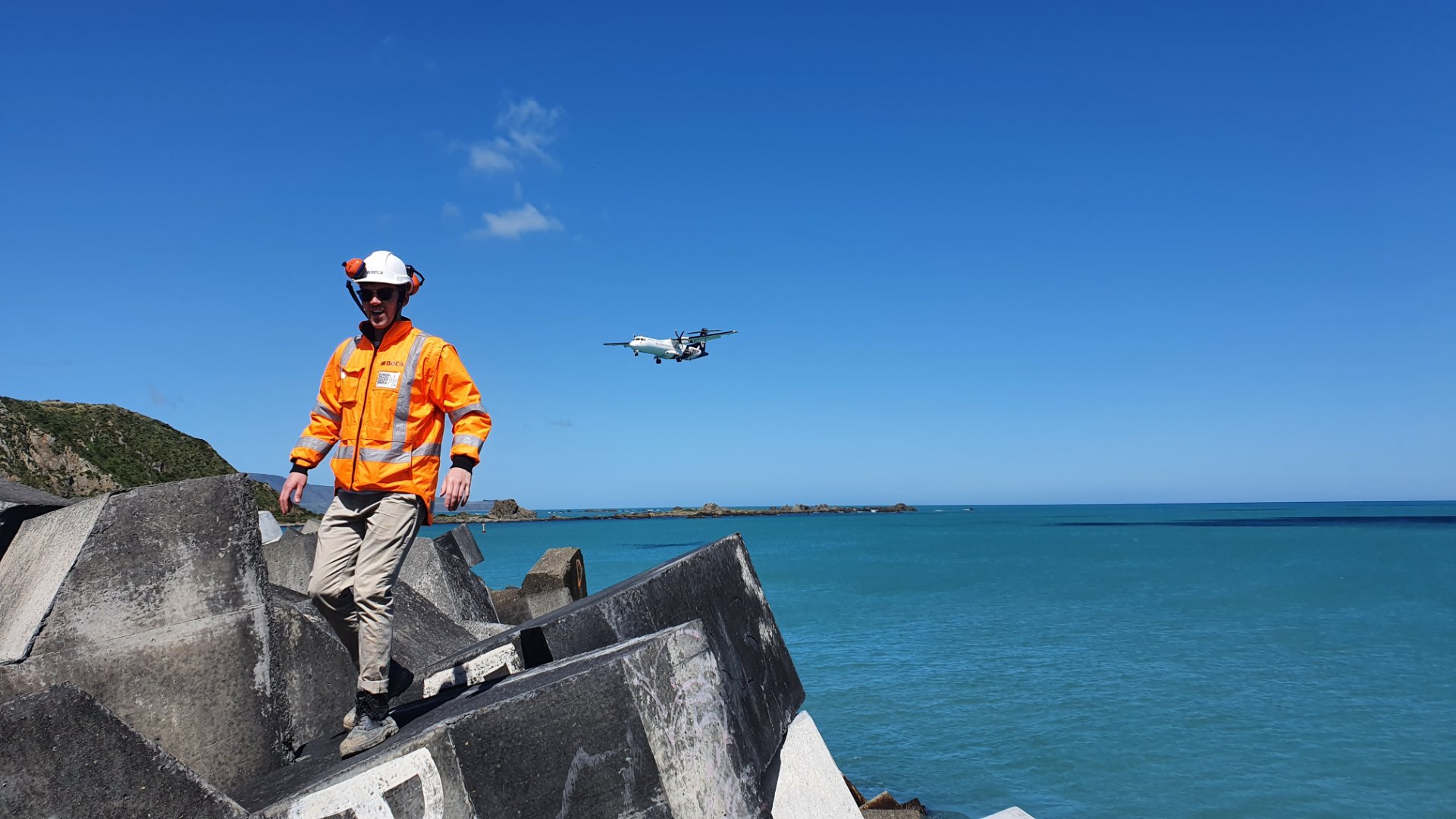
With 10m-high offshore waves, southerly winds regularly exceeding 40km/hr, and flight paths just metres above the seawall, constructability and seawall performance at the challenging site have been a focus throughout the project.
“We included marine contractor representatives and an international seawall expert in our team right from the outset, to make sure constructability and international practice were embedded in the options and design process,” Beca Senior Technical Director – Project Delivery Jennifer Hart says.
The engineering team considered a longlist of options and workshopped these with the WIAL team. These were then broken down into a shortlist and options were scored against project criteria.
“A seawall overlay using Cubipod® concrete armour units was selected – the first time Cubipods® have been used in the Asia-Pacific region. This option has several benefits including its resilience (the armour units can ‘self-heal’ minor damage), and reduced construction and environmental risks as most of the seawall remains in place and is not removed during construction,” Beca Maritime Engineer Bridget Allan says.
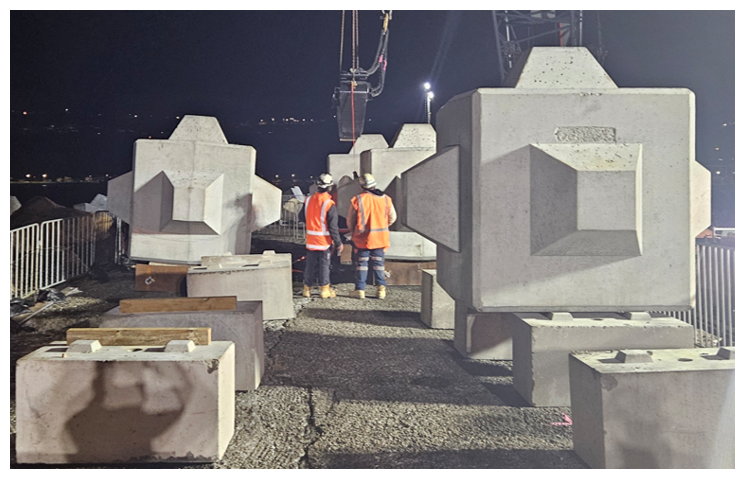
Cubipod® concrete armour units were chosen for the seawall overlay
The design was built and tested at the University of New South Wales Water Research Laboratory in Manly, Australia. The Pre-Construction Services contractor, McConnell Dowell, and representatives of the Spanish Cubipod® developer, SATO, were involved in physically building the seawall model. WIAL project leads and Beca designers witnessed the testing, which included 1/100 and 1/1000 Annual Exceedance Probability storms to test for design and overdesign conditions.
“It’s good practice for complex sea defences that are exposed to large waves to be tested with physical models. It includes testing for the present day and for climate change, well into the future,” Jennifer says. “The modelling was hugely useful in identifying value engineering opportunities that helped to reduce armour quantities by 30%, and identify the most cost-effective seawall toe and crest details.”
In 2025, the project team had the opportunity to pilot the casting and handling of Cubipod® armour units as part of interim seawall repairs. Beca supported WIAL, the Pre-Construction Services contractor, and their subcontractors and worked closely with Cubipod® developer SATO through this process. An innovative casting mould was developed by Preco, the casting subcontractor, and special handling clamps were constructed and trialled. The pilot was also an opportunity to trial using the airport runway to deliver the armour units to the site during curfew hours, when no flights are scheduled.
“This informed the contractor’s pricing, and learnings will be taken forward to the main construction,” Jennifer says.
Assistance with contractor procurement for Pre-Construction Services (PCS) and the main construction contract was also provided by Beca, working with WIAL’s project leads, legal advisors Chapman Tripp and Independent Verifier Alta. This included advice to WIAL on procurement strategy options, facilitating the PCS tender process and evaluation, and supporting the construction contract pricing and contract negotiations process.
In parallel with the investigation and design process, Beca provided specialist coastal processes and contaminated land assessments and general engineering support for the Fast Track Act resource consent application, working closely with WIAL, their planners and the wider team of technical specialists.
“Successfully securing the seawall resource consents in record processing time is a testament to the efforts of WIAL’s team, planners Mitchell Daysh, legal advisors Buddle Findlay and the supporting specialists, and their commitment over years of stakeholder engagement, fieldwork and reporting,” Jennifer says.
Enabling works are expected to start in in the next year and construction of the seawall on site is expected to start in the early 2030s.
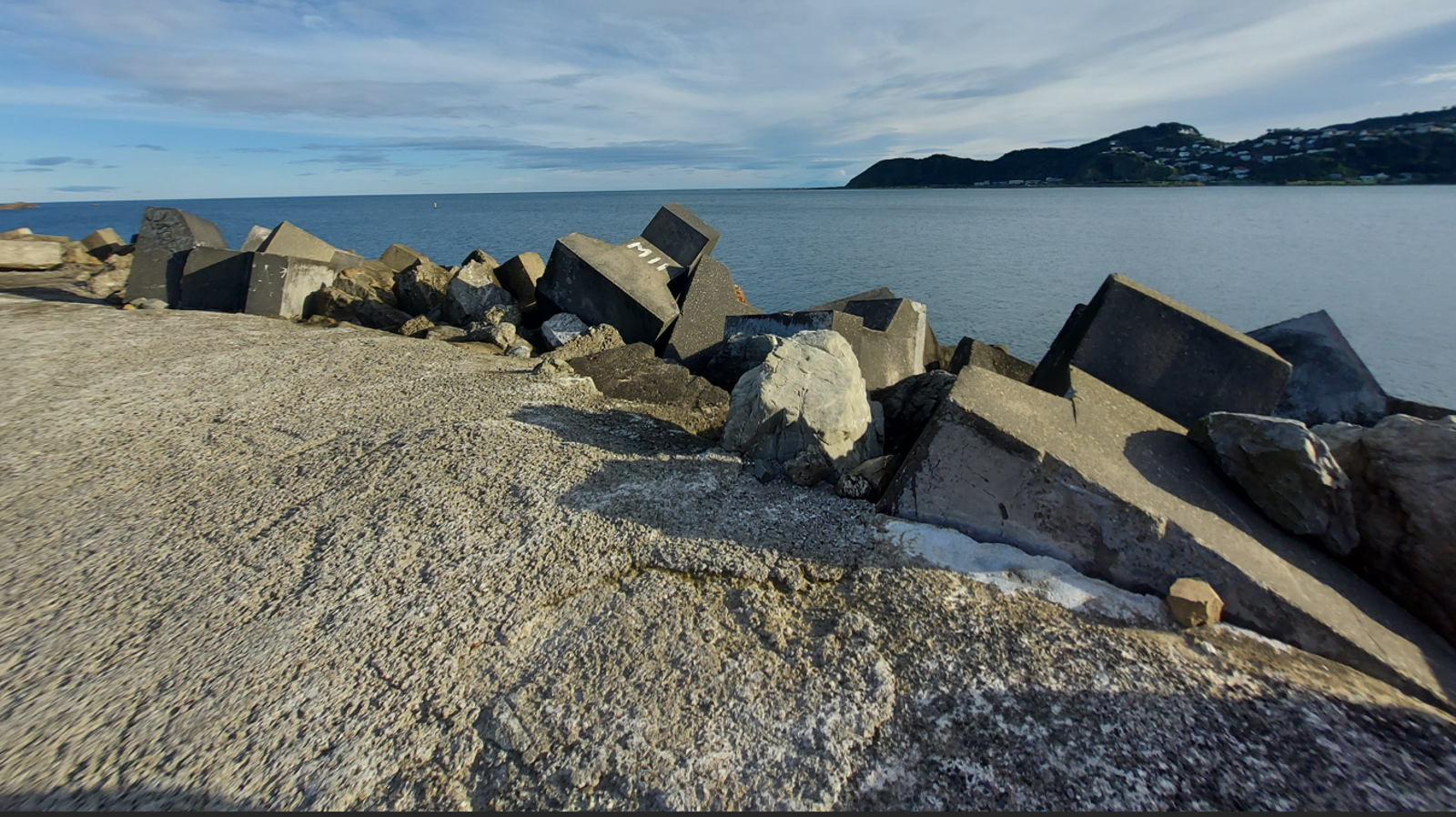
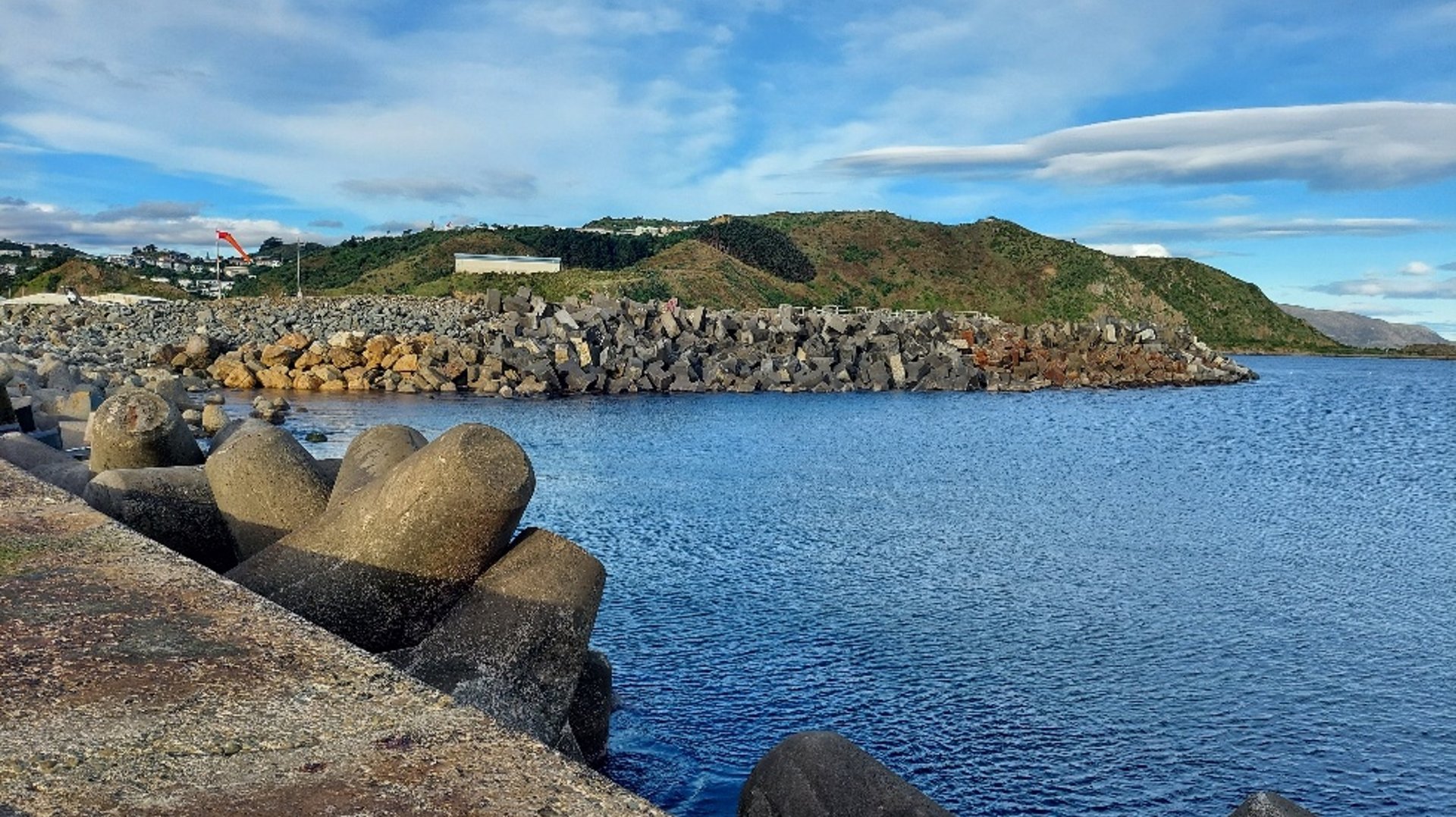
A section of the seawall that protects Wellington Airport