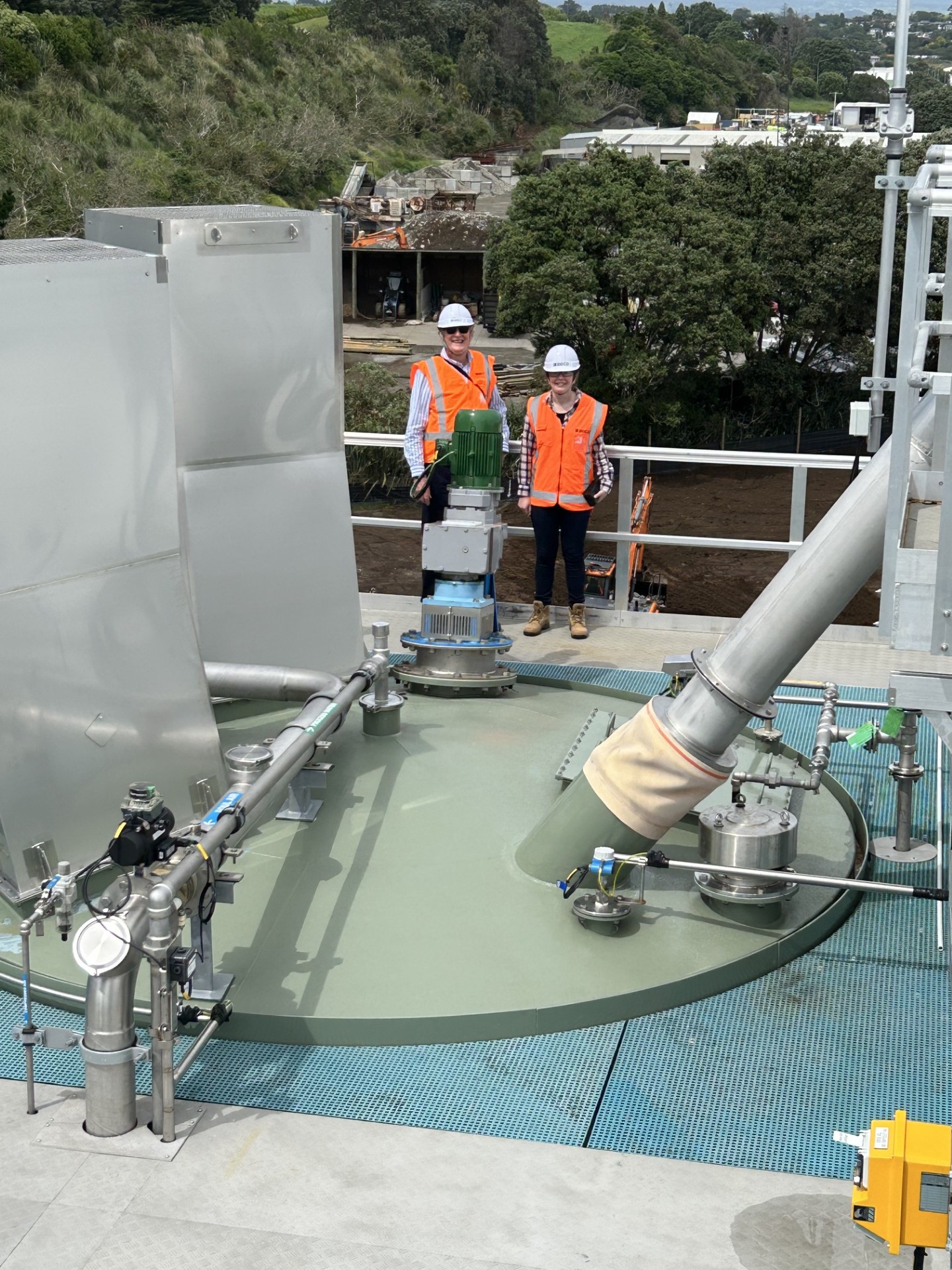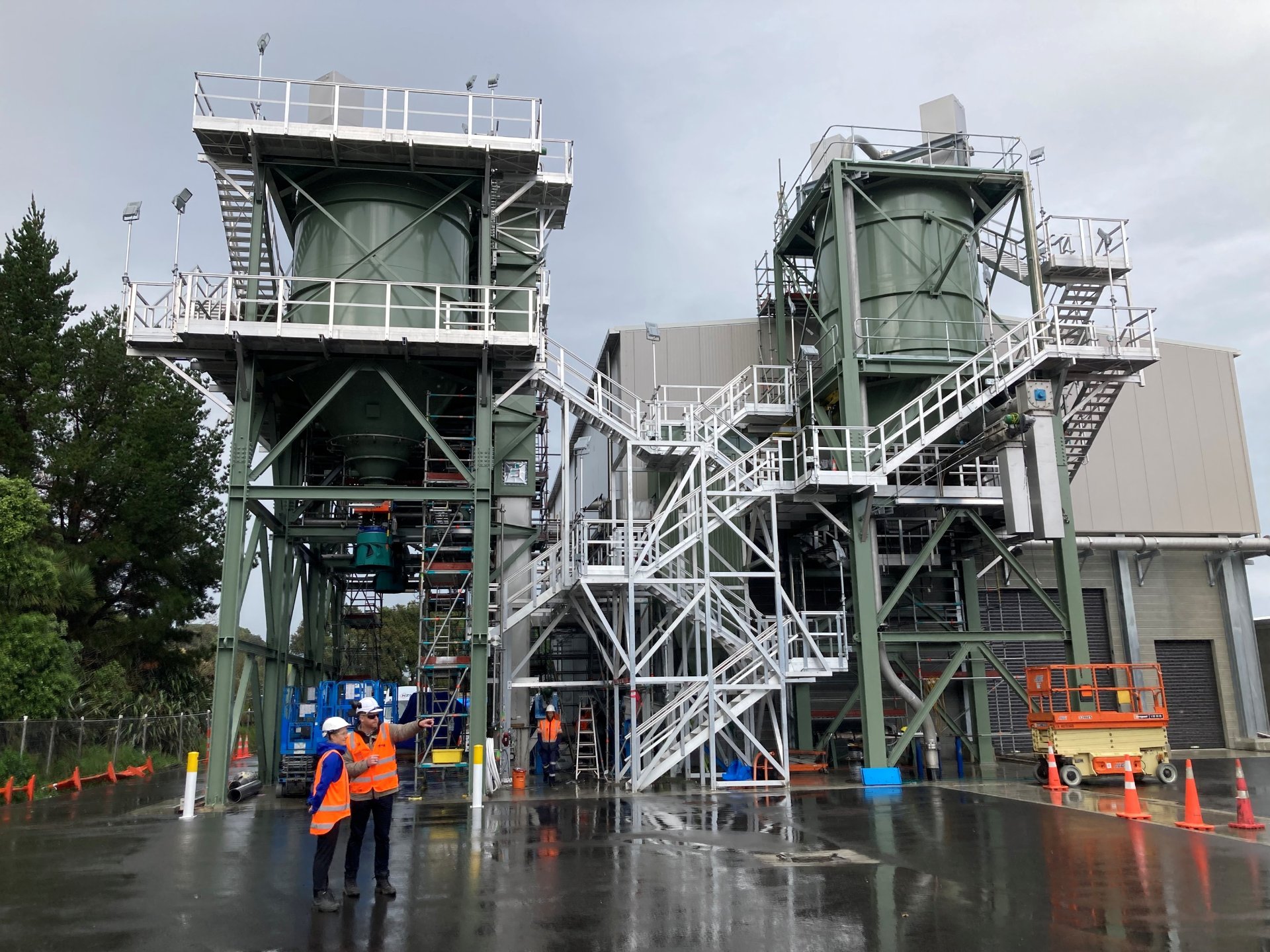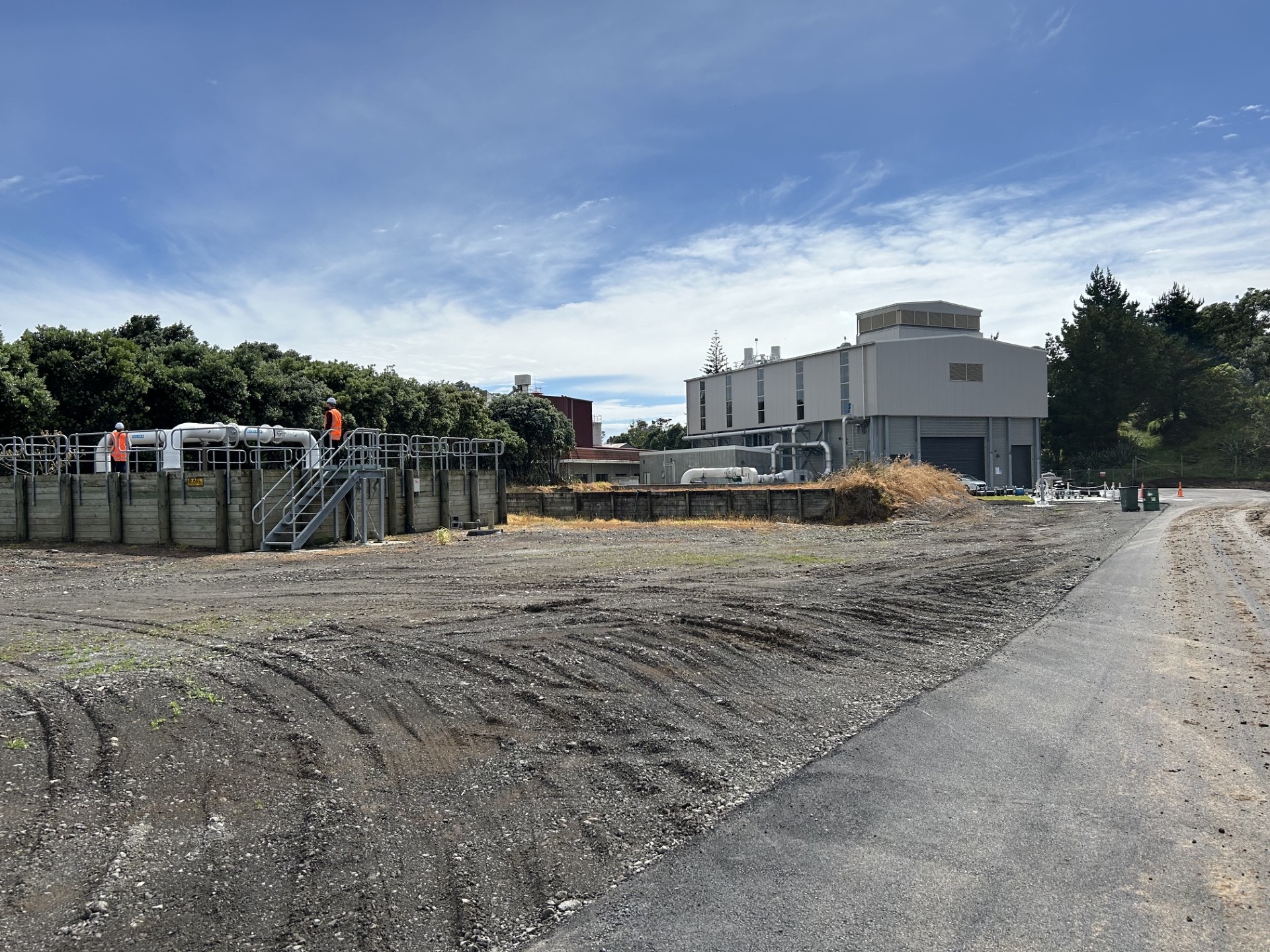
The New Plymouth Wastewater Treatment Plant was home to New Zealand’s very first thermal dryer, which opened in 2002. In March 2026 that innovative facility was upgraded with the official opening of a new, replacement dryer. It processes waste biosolids that might otherwise go to landfill through high temperature drying, transforming it into a nutrient-rich fertiliser that is used on gardens and turf around Taranaki and Aotearoa.
Taranaki Thermal Dryer Facility
After more than 20 years of operation, the thermal dryer in Ngāmotu (New Plymouth) had reached the end of its life and needed replacing.
New Plymouth was the location of New Zealand’s very first thermal dryer. After working with Beca to investigate various options, New Plymouth District Council (NPDC) made the decision to build a new thermal dryer.
With the help of $37 million from the NZ Government IRG funding programme to support the design and construction of the new facility, NPDC has created a resilient and future-focused wastewater treatment solution that will continue to meet the community’s needs for at least the next quarter of a century.
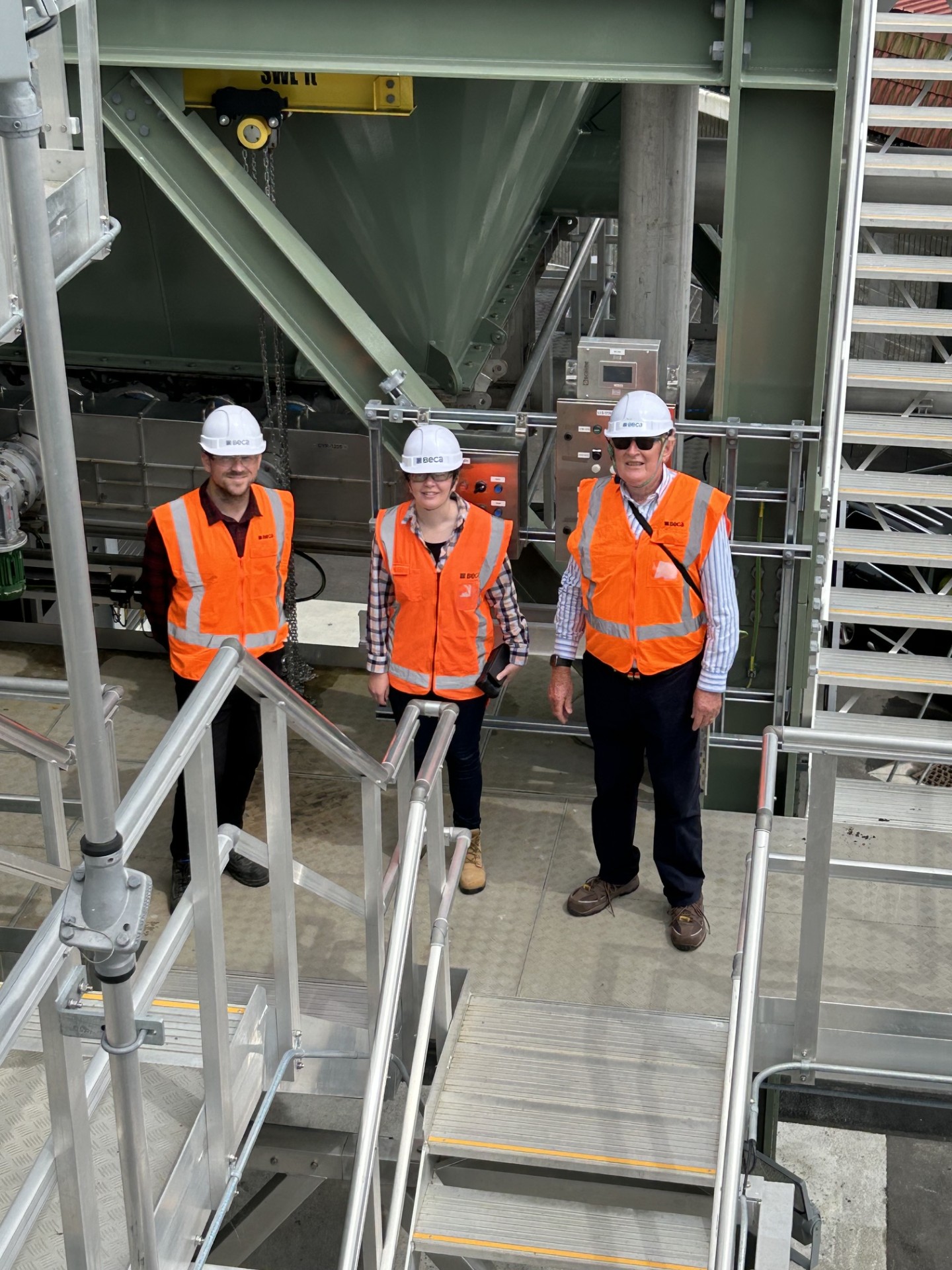
Beca was a key player in the project team appointed to design and support the build of the replacement facility, working alongside main contractor Downer and thermal equipment supplier Haarslev.
The treatment plant uses bacteria to ‘eat’ the wastewater as part of the treatment process. This causes the number of bacteria to grow, and the system syphons off surplus bacteria as sludge. That sludge is then dried until all pathogens are sterilised in the thermal dryer to form a nutrient-rich fertiliser, which is sold around the country as Bioboost®.
“The team here in Beca’s New Plymouth office feel very lucky to live and work in such a beautiful part of Aotearoa,” Project Manager Chad Williams says. “The fact that we had the first thermal dryer in the country and that our new thermal dryer is drawing the attention of other local authorities who come to see how it’s done – it all helps to showcase this very special region and the talented people we have here,” he says.
Brett Wilkinson is a Senior Project Manager for Beca, also based in the New Plymouth office. On this occasion, he was the client’s representative, seconded to NPDC to make sure the entire project team delivered the facility within the Council’s approved time and budget.
“To me, what has been special about this project is not only the chance to continue the Bioboost® story, but also to build on the very good relationship we have with Council and our project partners. It was a pleasure for NPDC, Beca, Downer and Haarslev to work together as one team,” he says.
“Beca has been heavily involved with the project, right from the options study commissioned back in 2015, through to the green light for the implementation three years ago, and the ribbon-cutting ceremony in March 2026,” Beca Branch Manager Hywel Edwards says. “We provided services including project and design management; procurement support; digital model development; planning; monitoring; as well as geotechnical, civil, structural, architecture, building services, mechanical and electrical engineering design for the facility – excluding the design of the dryer itself.
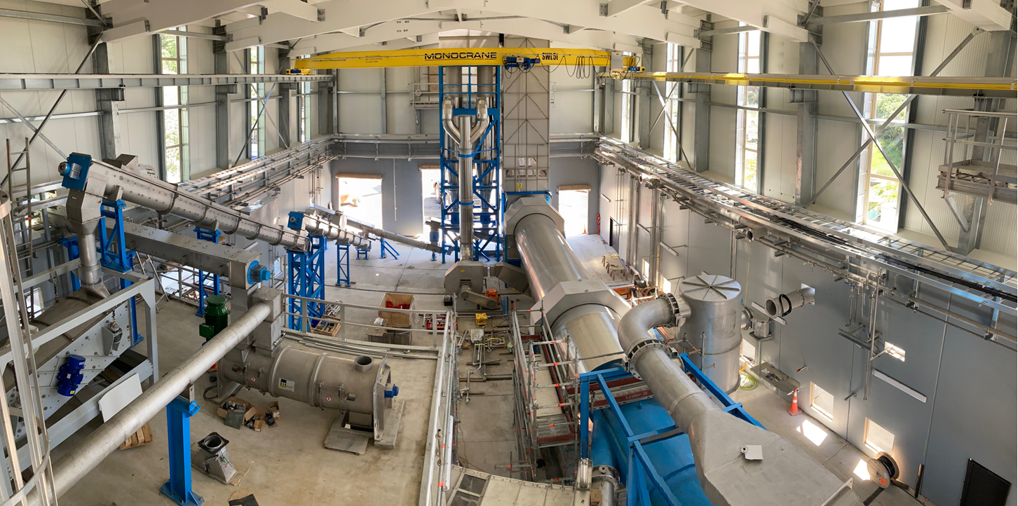
The interior of the new Thermal Dryer facility
“It has been really rewarding for our local New Plymouth team to deliver this project for the community, drawing on the breadth and depth of technical capability and experience we have right across our business. Over the course of the five-year project, around 300 Beca people from more than 50 different teams had the opportunity to be involved, working out of 16 offices based in five different countries. This is how we bring Beca’s global expertise to help deliver local projects,” Hywel says.
The facility can process around 20% more volume than the original dryer and has improved energy efficiency and safety systems. The facility showcases NPDC’s circular economy thinking: creating a marketable product from wastewater sludge is still relatively rare in New Zealand.
The facility has also been designed with the capability to operate on a green hydrogen–natural gas fuel blend, providing NPDC with a practical pathway to reducing its future carbon emissions.
Project Facts
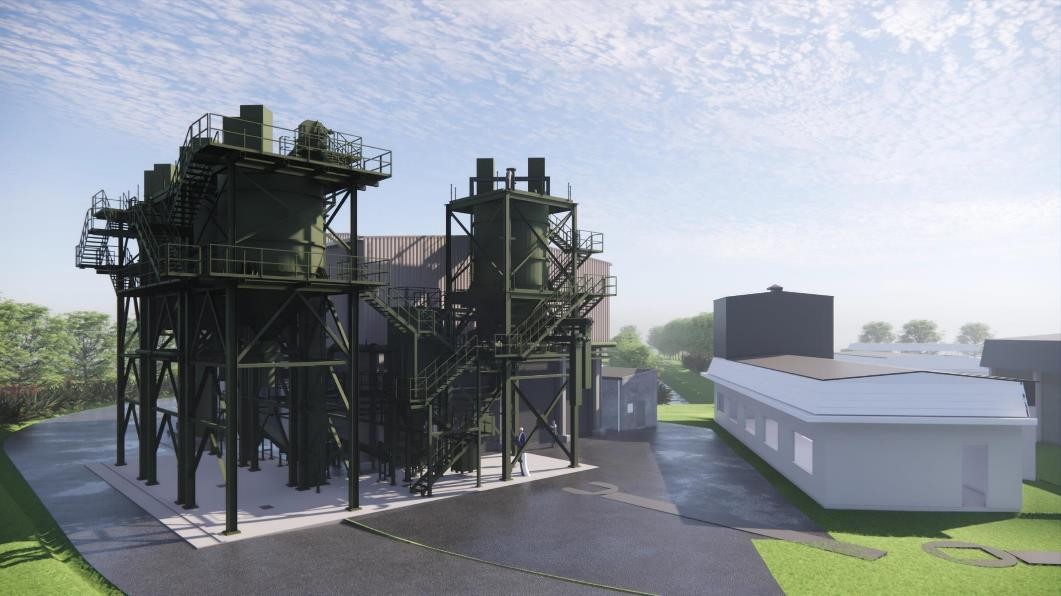
The NPWWTP treats about 10.8 million cubic metres of wastewater each year
NPDC's Thermal Dryer produces approximately 1,870 tonnes of Bioboost each year
When it was built in 1984, the NPWWTP was the first of its kind in New Zealand.
Rather than using drinking water, the plant reuses 500,000 litres of treated effluent every day as part of its operation.
The plant handles wastewater from nearly 62,000 residents from Waitara to Ōakura.