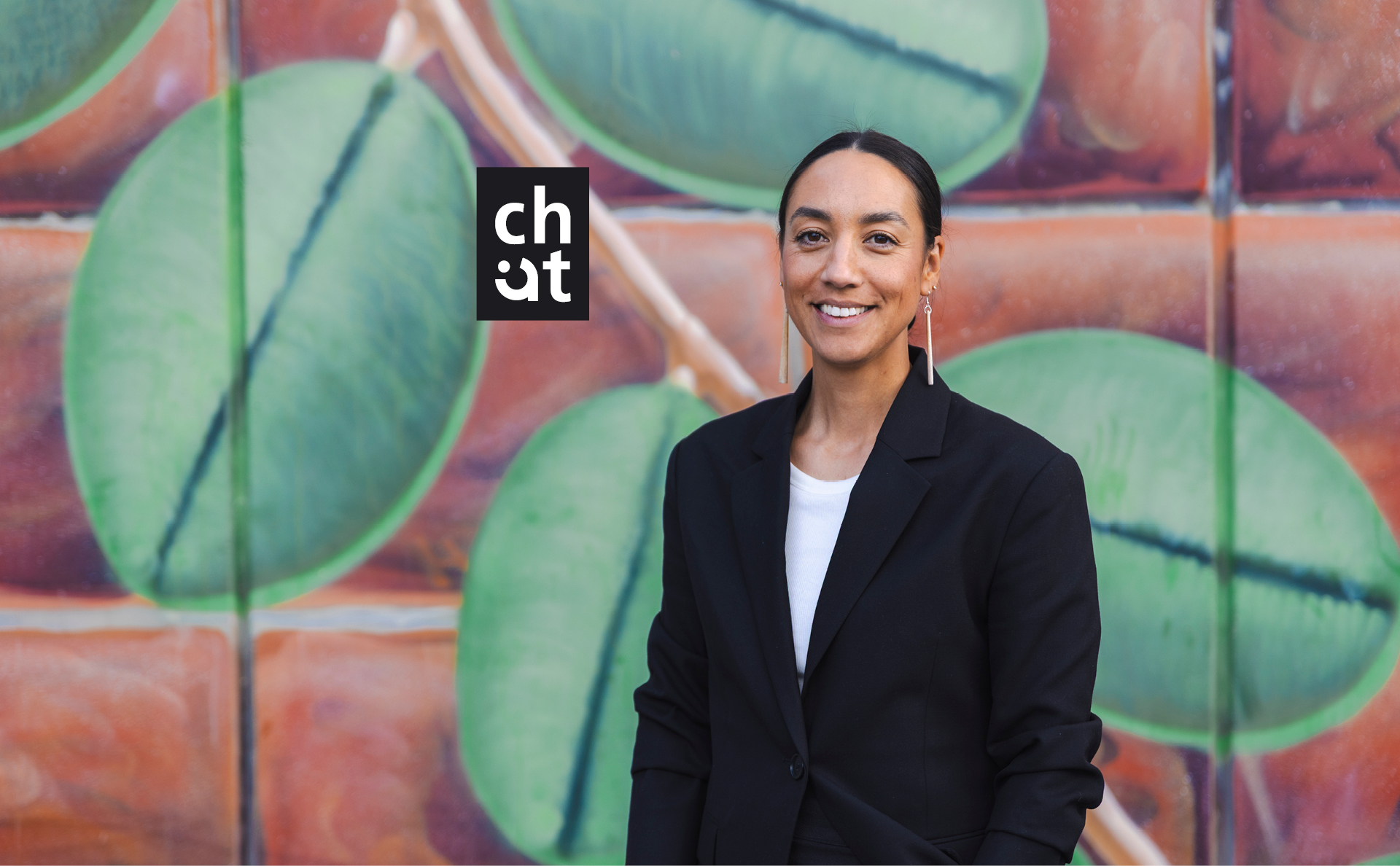
As part of a series of stories profiling people of influence from around Beca, we asked Kaiwhakatere Jenna Poff (Raukawa) to tell us about her career journey to date, and life outside of work.
When you were a kid, want did you want to be?
I wanted to be a lawyer. I had this altruistic view of justice and fighting for what’s right. My childhood logic was that lawyers do that.
I shared that with one of my kaumatua (elders) recently and he looked at me and said: “It’s not too late. Do it”. Maybe one day.
Tell us about your job title. Can you explain what the word Kaiwhakatere means, and what it is at Beca?
Kaiwhakatere means navigator. Traditionally, it would have referred to the person guiding a waka on its journey.
When I think about my role through that lens, it resonates strongly. A navigator isn't always the person at the front leading. They might be in the middle or at the back of the waka, but their role is to help the crew move towards a destination.
Over the years, I've had opportunities to support teams in different ways, whether that's working alongside iwi Māori on projects, helping shape engagement approaches, connecting people or providing strategic advice. While the work itself can vary, the common thread is supporting people to move forward together and achieve a shared outcome.
Where did you grow up?
I was born in Masterton and when I was 2 years old we moved to Ōtepoti (Dunedin) for my Dad’s job. I would describe my exposure to te ao Māori in Dunedin as limited. My tūrangawaewae is in the North Island and we rarely travelled back there when I was a kid.
When did that change?
I always had a deep pull to understand and know more of my culture. I was involved with kapa haka at intermediate and started learning te reo Māori at high school. At the end of my first year of high school, we moved to Ōamaru. At my new school, there was no te reo Māori class, no kapa haka, so it fell away again. I was Head Girl; I look back and wish I used my position to influence change for girls that were coming after me.
After high school I started to travel up north and spend summers with my kaumātua (grandparents), listening to stories about their childhood, connecting with whānau and learning about my whakapapa.
Tell us about your family
My Dad grew up in Te Puke, then went to Hato Paora College, a Māori boys’ boarding college. After school he trained in broadcasting, became a radio announcer and worked in the radio industry for more than 20 years. Back then, there was no social media that accompanied radio so listeners painted a picture in their mind as to what the broadcaster looked like. I recall going with Dad to different community events in Dunedin and watching fans get a surprise that the person they listened to every morning was Māori. He enjoyed challenging people's perception of the industries Māori can be represented in and breaking down barriers for others.
My Dad is a hard worker and a bit of a perfectionist. I vividly recall sitting in the recording studio for what felt like hours on end while he would record an advert over and over again until he was satisfied with every intonation. He is also forever learning. He’s been studying something to complement whatever career pivot he’s taken throughout my whole life.
My Mum has Scottish heritage and grew up in Ōamaru. Mum stayed at home for the majority of my childhood and kept our household running. As a mother now myself, I finally appreciate how much she sacrificed and supported our whānau.
I have two younger siblings. My sister is a social worker and my brother works for a social impact company. We learned about the importance of community and caring for others from my parents. It wasn’t unusual to have someone who was struggling or homeless at our place for dinner and several of our Christmas lunches were spent volunteering in a community kitchen. Those experiences were woven into my childhood – supporting those in need was very normal to us.
So you were headed for law school – and then what happened?
I was offered a scholarship to Otago Polytech, which doesn’t offer Law, so I went and did a Bachelor of Design instead – art has always been an interest of mine. After I graduated, I moved to Wellington to work for a Māori magazine. However, the industry didn’t quite have the connection to community that I wanted, so I returned to Dunedin and completed a Graduate Diploma in Applied Science.
I did a paper on the Psychology of Dress and one of our field trips was to the Otago Museum. We went to the storage area in the basement and saw rows and rows of taonga Māori (Māori treasures). I had been to many museums before but never into the storerooms and was quite taken aback by the number of taonga held there. That experience left me with lots of questions and was the start of my career in the museum industry. I worked with taonga Māori at Tūhura Otago Museum and Tāmaki Paenga Hira, Auckland Museum.
After some years in Auckland my family and I moved to Ōtautahi, Christchurch. I worked for Te Pae Christchurch Convention Centre for a couple of years before joining Beca as part of Te Ahi Tūtata four years ago.
How do you feel about being asked to help develop Beca’s Māori strategy?
This journey was started many years ago by many other people - I’m just another person helping to shape the path. But I’ve enjoyed weaving people and stories together to shape our rautaki Māori into something that I hope everyone can be proud of.
Sometimes it feels taumaha (heavy) too. I don’t take the responsibility lightly and it can be hard being wahine Māori in some spaces, especially advocating for change – you have to learn to use your voice. However, I have immense support and I appreciate the opportunity to influence positive change in our industry.
Tell me about your journey with te reo
For myself and my husband, we have language loss on both sides of our families, stretching back three generations. We didn’t grow up speaking our language so when we became parents we made a decision that our kids would have their language. We sent them to kōhanga reo (Māori language preschool) and kura kaupapa Māori (Māori language primary school). For the last four years, my husband and I have been learning te reo Māori. Our kids’ fluency means that often they’re teaching us and certainly enjoy correcting our mistakes.
It is within our collective memory here in Aotearoa that corporal punishment was handed out to children who spoke te reo Māori at school – my grandparents’ generation – so we don’t take for granted the position we are in today. It’s important to me that my children know what many people before them went through so that they can have access to their language. So for our whānau, language reclamation is important for our tūpuna (ancestors) and our future mokopuna (grandchildren) as much as it is for ourselves.
What do you want for your children’s future?
Although still young, my kids can decipher whether they’re in a space where te reo Māori is spoken or tikanga Māori is accepted and they determine very quickly who they should ‘be’, which I find deeply sad. So, my hope is that in all spaces in Aotearoa they can stand strong and proud in their identity as tangata whenua.
I’m grateful that through my mahi, I may have a small part to play in helping shape the kind of society I want my children to grow up in.