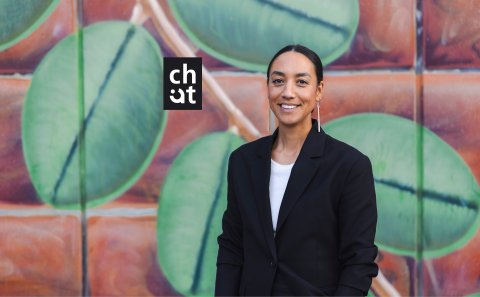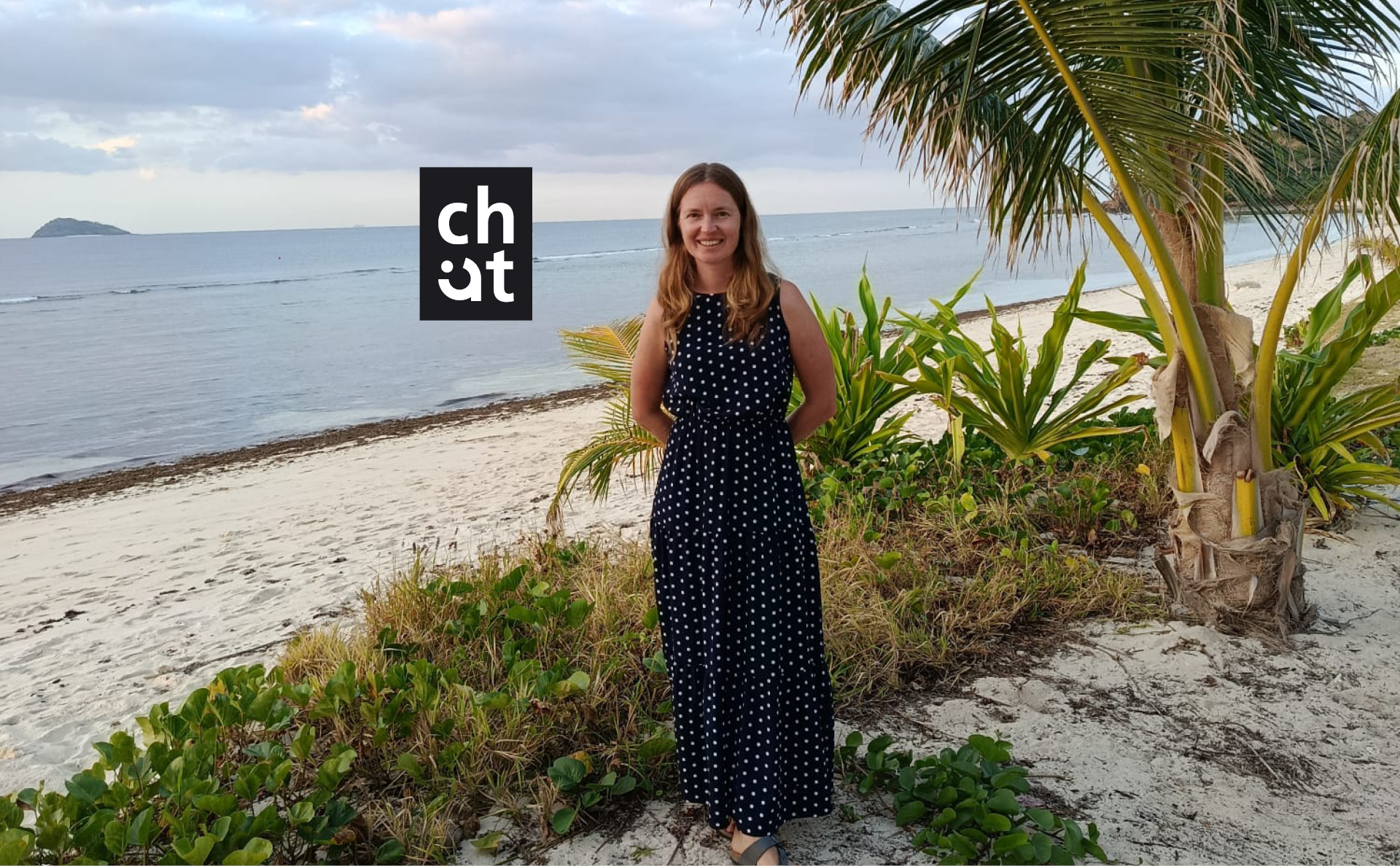
As part of a series profiling people of influence from across Beca, we asked Associate Architect Alana Smith to tell us about her career journey, her passion for mentoring future architects and why she spends her spare time developing a food forest.
Did you always want to be an architect?
I wanted to be a doctor all my school life until probably about six months before I finished school when I suddenly thought: Do I want to be a doctor or have I always just said I’m going to be a doctor?
So I chatted with careers advisors and landed on architecture because it was a mixture of creativity, problem solving, variety… I could combine that with the more technical, mathematical side of things because I liked both – I took graphic design and art at school alongside maths and physics. So architecture seemed to be a really good blend of those.
I’m actually super excited that I chose architecture, because of that variety. No two days are the same – if I’d become a heart surgeon, I would have just seen hearts every single day. In architecture, there are so many options for you to shape your career, so many different pathways. We have a huge variety of personalities within our team because we each bring something different.
What keeps you busy outside of work?
My family keeps me very busy. I have two children, a 10-year-old girl and an 8-year-old boy, and we’re a very outdoorsy family. We do lots of active recreation together: sailing, snow skiing, orienteering.
I’m also an avid gardener. I have a food forest, about an acre in size, which I’ve been developing on some family land. I quite often run gardening workshops here in the Tauranga office and present about what we’re doing. We’ve got a little gardening chat group where we post photos of what we’ve been harvesting, and I’ve hosted tours through the garden as well.
In typical architecture fashion, I probably researched it for about a year before I put a plant in the ground. I spent a lot of time looking into syntropic agroforestry and permaculture and organic principles. Three years in, it’s quite a substantial development with a mixture of really densely-planted areas, a veggie garden, an orchard and a more traditional sort of paddock with trees dotted along the edge.
What’s the most interesting thing you’re growing?
I’ve got so many different species of trees that I didn’t even know existed when I started this, like a cherimoya which is a custard apple. My tree is little so it hasn’t produced fruit yet, but I’m super excited to try when it does.
I’ve become a big fan of something called yacón, which is a vegetable from South America that you can eat raw or cooked, you can grate it into coleslaws, you can eat it like an apple, you can roast it. It’s become a family staple and a few years ago I’d never heard of it!
Tell us about your current role.
I’ve been at Beca almost 17 years now, starting as a graduate architect, and I’ve always been based in the Tauranga office but working with and visiting our other offices around New Zealand over the years.
As I’ve become more senior, my role has broadened quite a bit.
I still undertake lead architect roles, but I’m very passionate about design management and working as a team leader across large multidisciplinary projects. I’ve also taken on the role of market leader for the Pacific within our architectural team.
What draws you to working in the Pacific?
I like doing a diverse range of projects, and the Pacific offers exactly that: A diverse range of countries, cultures, a whole lot of different building codes and local partners on island. I also feel like there’s real meaning in what I do, you can see the impact of your work.
One area I particularly enjoy is education – you can really see a clear benefit for the people using those spaces. Sometimes students are learning in dark, poorly ventilated, substandard facilities and when you can give them something that materially improves the environment they learn in, that’s really rewarding. Even if it’s what I call ‘grassroots architecture’ – it might not look flash, but it’s accessible for children to attend, it’s made of robust materials to cope with the really harsh climatic conditions of the Pacific, ventilated, well lit… And it’s ultimately helping the kids get a quality education.
Is there a project that’s particularly stayed with you?
There’s one we’ve recently started working on that really touches my heartstrings. It’s called the Women and Youth Skills, Empowerment and Resilience project in the Marshall Islands.
A large number of women who start in education in the Marshall Islands don’t finish, often because they have children to look after or they need to work to support their family. So two buildings are being designed as part of the project. One is a childcare centre at the College of Marshall Islands so that mothers have a safe place for their children to be while they study so they don’t have to make the choice between their education and childcare.
The second building is a women and youth centre, where women and youth who are often overlooked or in a vulnerable state can have a place to learn and seek support. It’ll be a place where they can learn practical skills like building a canoe, or typing, or making arts and crafts to sell. It’ll also be a space where women can access counselling and healthcare.
We visited in May and met a whole heap of the people who are going to be working out of this building, facilitating these programmes. Hearing what they do and seeing the need first hand for these sorts of facilities was really eye opening, and the fact that Beca was able to send a team of all women to meet with these organisations that are often run by women, for women – it was really powerful.
You’re also passionate about helping people coming through the architecture profession. Why is that important?
Yes, I’m very passionate about mentoring women and graduates coming through architecture. To me, it’s about giving back and supporting people through the process that I went through becoming a grad and going through the extremely stressful process of architect registration while trying to work at the same time.
Beca is a big company, so helping them find their feet and make connections, build client relationships… It’s been very rewarding to get to a stage in my career where I can give back.
What makes good architecture?
My final-year university project was centred around that question: how do you make architecture meaningful and memorable?
If you walk through a building and never think about it again, then it probably didn’t have much impact on you. For me, architecture should resonate with the people who use it and it should improve their experience. Sometimes that’s through beauty. Sometimes it’s through functionality. Sometimes it’s a combination of both.
A building might be successful because it’s healthy, light-filled, safe and comfortable. It might be successful because it reflects the culture of the place it sits within. It might be successful because it takes people on a journey through the space.
Everybody experiences buildings differently, so meaningful architecture will be different for everybody. But it should leave an impression and improve the experience of the people who use it.
What has kept you at Beca for nearly 17 years?
The multidisciplinary aspect. I can walk down the corridor and talk face-to-face with an engineer and have a really detailed conversation about a challenge I’m facing. It’s highly collaborative.
It’s great being able to have conversations with experts who can say, “there’s a totally different way we can approach this”. Sometimes they’ll point out an alternative pathway that completely changes the solution and makes everybody’s job easier.
It’s those engagements, those relationships and that collaborative atmosphere all in one place that I really value. The opportunity to form relationships and have mentors and career advisors outside of architecture has also been incredibly rewarding because they bring a different lens to the challenges you’re dealing with.